
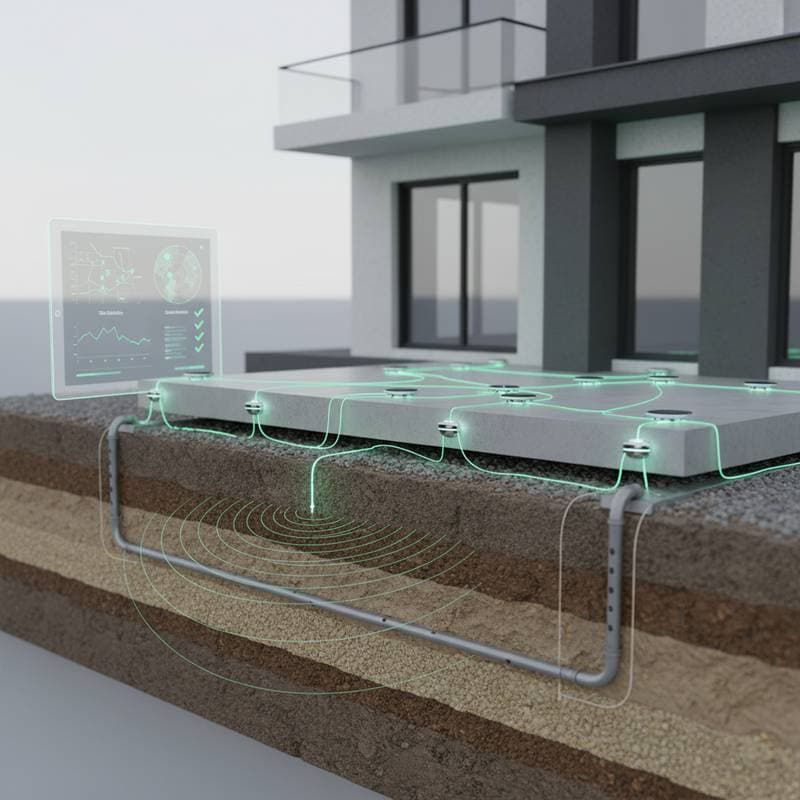
How Smart Foundations Detect Earthquakes Before They Damage Your Home
Key Overview
Smart foundations blend robust structural engineering with integrated sensors that monitor vibrations, tilts, and soil displacements. These tools issue early alerts to prevent escalating damage. Primary expenses stem from sensor precision, data processing, and installation challenges in existing structures. The greatest hazard involves overreliance on unmaintained systems, which can foster misplaced security.
Essential Visual Inspections
Observe initial indicators of foundation stress through routine examinations, independent of sensor input. Proceed methodically around the property.
- Inspect exterior walls and roof edges for any leaning or sagging.
- Roll a marble or small ball across floors to identify slopes or depressions indicating uneven settling.
- Examine interior corners for fractured plaster or doors that stick, suggesting shifts.
- Review basement walls for efflorescence, moisture stains, or cracks exceeding the width of a dime.
- In crawl spaces, probe for unstable soil or standing water adjacent to support piers.
- Verify that exterior gutters direct water far from the base and that ground inclines away from the structure.
Smart systems augment these observations by capturing subtle motions invisible to the eye. Human inspection, however, reveals overarching issues like water accumulation and weight distribution that sensors alone cannot fully assess.
Critical Warning Indicators
- Persistent cracks reappearing in patched areas.
- Seasonal misalignment of doors or windows creating significant openings.
- Abrupt earthy smells emanating from subterranean levels.
- Shifted bricks or deteriorated mortar along the base.
- Frequent activation of sump pumps during dry periods.
- Unexpected vibration notifications from sensor arrays.
- Disconnected networks or inconsistent data outputs.
These symptoms often indicate concealed moisture, ground instability, or load stresses. Neglect escalates expenses from basic drainage adjustments to comprehensive foundation reinforcement or slab renewal.
Common Remedies and Approximate Expenses
Addressing Drainage and Site Grading:
Basic reshaping of the terrain or lengthening downspouts incurs costs in the low hundreds. Installing boundary drains or sump setups escalates to thousands. Such measures benefit every foundation type.
Sealing Foundation Fractures:
Injecting epoxy or polyurethane into minor fissures costs several hundred dollars per linear foot. Recurring fissures suggest underlying soil dynamics, necessitating more invasive interventions.
Stabilizing Soil and Adding Supports:
Sensor data revealing irregular subsidence may prompt engineers to recommend helical piers or micropiles. Budget thousands per unit, influenced by site accessibility, ground composition, and force distribution.
Deploying Smart Sensors:
Incorporating wired units in fresh builds increases foundation expenses by one to two percent. Retrofitting wireless devices starts at hundreds per unit, with comprehensive networks and subscriptions reaching mid-five figures for expansive residences.
Linking Systems:
Basic alert interfaces remain affordable yet constrained. Advanced platforms with seismic data fusion and predictive analytics command higher prices but yield superior foresight and documentation to mitigate insurance liabilities.
Ongoing Upkeep:
Yearly adjustments and component refreshes involve modest fees. Oversight here produces unreliable outputs, eroding system credibility.
Deciding Between Repair and Replacement
For the Foundation:
Prioritize drainage corrections. Persistent motion confirmed by metrics beyond acceptable limits may warrant targeted bolstering. Full replacement suits cases where both the structure and subsoil defy localized fixes.
For Sensors:
Opt for repairs or recalibrations initially. Numerous alerts arise from signal disruptions or power failures rather than true threats. Swap components only when they become outdated or precision falls short.
For Upper Framing Elements:
Retain intact sill plates and beams if free of decay. Renew solely where deterioration impairs bearing strength. Sensors can track wood humidity levels to avert concealed rot.
The Mechanics of Smart Foundations
These systems employ networks of embedded or attached sensors gauging vibrations, inclinations, and tensions. Data routes to a central processor that screens inputs and triggers notifications upon surpassing set limits. Certain configurations connect to broader earthquake monitoring grids.
They sense preliminary seismic pulses, which propagate quicker than severe jolts, affording preparation time. Effectiveness hinges on responsive measures. In residences, notifications enable residents to seek shelter or isolate services swiftly.
Persistent surveillance establishes normal operational norms. Over time, anomalies from this standard highlight gradual soil migration or cyclic expansions predating visible fissures.
Weighing Expenses, Hazards, and Returns
Smart foundations serve as proactive safeguards. Initial investments are tangible, while benefits emerge through deferred repairs and enhanced security.
Budget-Friendly Option:
Deploy select wireless inclination sensors at critical points for app-based tracking. This approach offers pattern insights sans complex setup, ideal for moderate-risk areas focused on subsidence monitoring.
Balanced Approach:
Install a sensor mesh with on-site processing and remote archiving. It captures oscillation profiles and interfaces with professional services. Expenditures grow, but reliability advances.
Premium Setup:
Incorporate seismic inputs, tension monitors, and automated responses. Best for new builds or vital assets, providing quake precursors, erosion detection, and alerts for adjacent activities.
Complacency poses the chief danger. Systems alert to changes but do not avert harm. Resilience relies on solid drainage, adequate reinforcement, and sturdy design.
Assembling the Right Team and Workflow
Foundation Inspector:
Select one versed in conventional and technological foundations to pinpoint vulnerabilities pre-installation.
Structural Engineer:
Involve from the outset to set alert parameters aligned with local geology and building specifications.
General Contractor:
They orchestrate digging, cabling, and sealing, safeguarding sensors amid pours and finishes.
Sensor Expert:
Bring in IoT and quake specialists for optimal positioning, synchronization, and cybersecurity.
Service Technician:
Arrange routine verifications, encompassing software enhancements and alignments.
Expert oversight inflates budgets by ten to twenty percent but curtails delays and fosters synergy between physical and digital elements. Faulty timing frequently results in inaccessible or severed units.
Prioritizing Project Elements
-
Manage Moisture:
Validate drainage efficacy and gutter function prior to sensor deployment. Water threatens both concrete and circuits alike. -
Ensure Structural Soundness:
Mend fissures, bolster footings, and adjust slopes before sensor integration. -
Design Sensor Placement:
Target vulnerable areas like edges, primary supports, and boundary junctions. -
Refine Data Gathering:
Focus on pertinent metrics to avoid signal overload. -
Build Integrations:
Connect to ancillary systems post-stabilization of primary surveillance.
Steer clear of superfluous elements such as ornate interfaces or audio cues. Prioritize dependable insights over flair.
Planning Budget and Timeline
-
Halt water intrusion and secure terrain.
-
Evaluate integrity via on-site reviews and preliminary sensors.
-
Introduce advanced monitoring after physical stabilization.
-
Enable alerts once norms solidify.
-
Analyze data every three months alongside tangible assessments.
Defer cosmetics, grounds work, and internal enhancements. Securing the base averts pricier interventions. A minor seal pales against the outlay for neglected water-induced upheaval.
Insights from Industry Professionals
A Pacific Northwest engineer noted, “Sensors prove as effective as their deployment. Mispositioning renders information useless.” An interior contractor observed, “Fundamentals begin with manual tools. If runoff directs toward the base, technology offers no rescue.”
These perspectives reinforce a core truth. Innovations amplify perception, not protection. Durable, dry foundations bear the burden; sensors merely document performance.
Sustaining Long-Term Performance
Regular care sustains smart foundations. Swap power sources, verify signals, and scan trends for anomalies. Abrupt deviations may denote geological shifts or equipment faults, both requiring swift attention.
Update all digital components for reliability. Safeguards shield against breaches. In remote settings with spotty connectivity, onboard storage ensures uninterrupted records.
Preserve access for diagnostics. Label positions during renovations or coatings to facilitate checks.
Steps to Implement for Your Home
For established properties, initiate a thorough moisture and stability survey using the guide below. Determine if surveillance enhances protection. Often, enhanced site management resolves settling without tech.
For new constructions, consult engineers on sensor inclusion from planning stages. Route pathways and nodes during foundational work to minimize future expenses.
Inspection Guide for Existing Homes
- Verify roof alignment, clear troughs, and secure seals.
- Confirm wall verticality and secure cladding under overhangs.
- Ensure seamless gutters with remote outlets.
- Maintain outward slopes and distant plantings.
- Secure dry basements sans scents, with functional pumps or channels.
- Test floor evenness with rolling objects.
- Inspect electrical setups for cleanliness, absent warmth or hums.
- Check pipes for integrity and drips.
- Assure window seals and protective coverings.
Selecting Reliable Contractors
- Obtain three local endorsements.
- Secure a descriptive plan aligned with visuals.
- Demand itemized bids.
- Review timelines noting delayed supplies.
- Validate credentials and coverage.
- Expect routine progress reports.
These criteria empower oversight. Coordinated efforts across specialists avert redundancies.
Safeguarding Your Property's Future
With sensors operational and data normalized, the setup quietly mitigates threats. Quarterly reviews of charts detect subtle variances, such as isolated settling. Post-storm verifications of flow paths maintain vigilance.
This integration yields peace through informed action, preserving home integrity against unseen forces.