
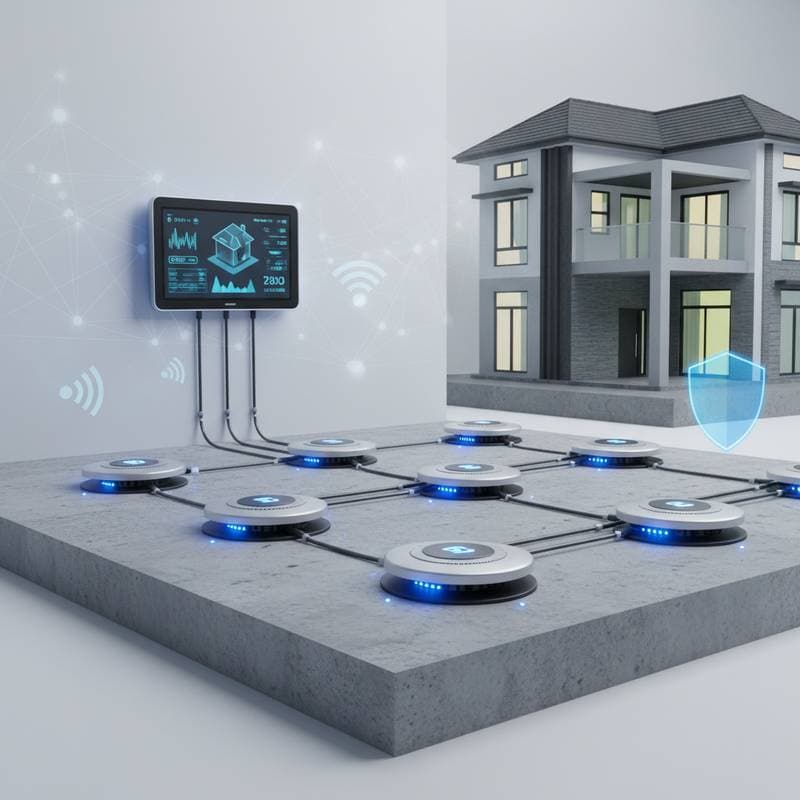
Smart Sensors Predict Foundation Settling Early
Every building relies on a stable foundation for long-term durability. Homeowners often overlook subtle shifts that can compromise structural integrity until cracks form or doors misalign. Smart sensors address this challenge by detecting foundation settling well in advance. These devices integrate Internet of Things (IoT) technology with precise monitoring to deliver timely alerts. Such early detection minimizes repair expenses and prolongs the building's lifespan. This guide details the functionality of smart sensors, installation procedures, and strategies to shift foundation maintenance toward proactive oversight.
Key Takeaways
- Cost Range: Residential smart foundation monitoring systems range from $1,500 to $4,000. Hardware accounts for 40 percent of the total, software and data services for 30 percent, and installation plus calibration for the remaining 30 percent.
- Measurement Precision: Sensors identify vertical movements as minute as 0.01 inch and tilt changes within 0.05 degree. This level of real-time accuracy surpasses traditional visual assessments.
- Data Frequency: Systems capture and send data at intervals of 15 to 60 minutes. This enables detailed trend analysis across days or months.
- Decision Factors: Elements such as soil composition, building dimensions, foundation style, and regional moisture levels guide sensor placement and overall system design.
- Response Time: Early detection of settling permits corrective measures within 2 to 4 weeks. These actions avert damage that might otherwise require tens of thousands of dollars in fixes.
Planning a Smart Monitoring System
Site evaluation precedes any installation to align the system with specific conditions. Focus on foundation design and soil dynamics to select appropriate sensors and positions.
Assessing Site Factors
Soil composition influences sensor requirements. Clay soils, prone to swelling and shrinking with moisture changes, necessitate additional moisture detectors. Sandy soils, which shift under load, suit tilt and pressure monitors.
Water table depth plays a critical role. Elevated water levels call for hydrostatic pressure sensors to track fluid impacts on the foundation.
Foundation type dictates sensor distribution. Slab-on-grade setups benefit from sensors at major load-bearing points. Basements or crawl spaces demand vertical alignment checks to monitor wall stability.
Climate affects sensor choice. In areas with freezing temperatures, frost heave can skew data, so opt for temperature-compensated models that adjust readings accordingly.
Permits and Regulations
Local authorities may view structural monitoring as essential safety equipment. Review building codes for guidelines on electrical connections and wireless data transmission. Certified installers typically manage permit processes. Homeowners must confirm adherence to avoid delays during inspections.
Executing the Installation
Follow a methodical process to guarantee accurate data collection and sustained performance.
1. Mount Sensors Securely
Position each sensor on the target surface with robust mechanical anchors or industrial adhesives. Use a precision level and calibration device to ensure proper orientation.
2. Connect to Power and Data Network
Link sensors to the central hub via wiring or enable wireless pairing. Test registration on the monitoring platform for every unit before enclosing connections.
3. Calibrate the System
Conduct a baseline assessment to log current foundation alignment and soil states. These initial measurements serve as benchmarks for ongoing comparisons.
4. Configure Alerts and Thresholds
Set boundaries for normal movement, including 0.05 inch for vertical shifts and 0.02 degree for tilts. The platform activates notifications when values surpass these limits.
5. Verify Performance
Monitor readings over the initial days for consistency. Reposition or recalibrate sensors if irregularities arise.
Troubleshooting Common Challenges
Advanced systems occasionally encounter hurdles that require targeted solutions.
Inconsistent Readings
Variable data points to insecure attachments or environmental interference. Tighten mounts and confirm temperature adjustment features function correctly.
Data Transmission Errors
Interruptions stem from barriers or power shortages. Examine antennas, swap batteries, or install signal boosters as needed.
False Settlement Alerts
Abrupt data jumps without physical evidence often result from external vibrations, such as nearby construction or traffic. Validate against auxiliary vibration sensors prior to intervention.
Software Integration Issues
Incompatible data from diverse sensor brands can disrupt platforms. Employ vendor-specified gateways or integration tools to harmonize formats.
DIY Potential and Professional Involvement
Homeowners with basic technical skills may handle simple installations on stable, single-story properties. However, engage experts in these scenarios:
- Existing cracks exceed 0.25 inch in width.
- Soil displays significant expansion or contraction potential.
- The structure bears multiple levels or substantial loads.
- Regulations mandate certified work for insurance validity.
Professionals ensure compliance and precision, reducing long-term risks.
Strategies for Long-Term Reliability
Combine foundation sensors with complementary tools like moisture controls, sump systems, or environmental stations. This integration provides comprehensive insights into influencing factors.
Address alerts promptly through actions such as regrading soil or enhancing drainage. These steps halt minor issues before they escalate.
Archive all data logs, calibration records, and inspection notes digitally. Such documentation aids professionals in pinpointing root causes over time.
Train household members on alert interpretations and response protocols. Designate clear contacts for urgent notifications.
Secure uninterrupted operation with backup power options, including uninterruptible supplies or solar panels for isolated sensors. Regular maintenance schedules further safeguard system effectiveness, ensuring ongoing protection for your home's foundation.