
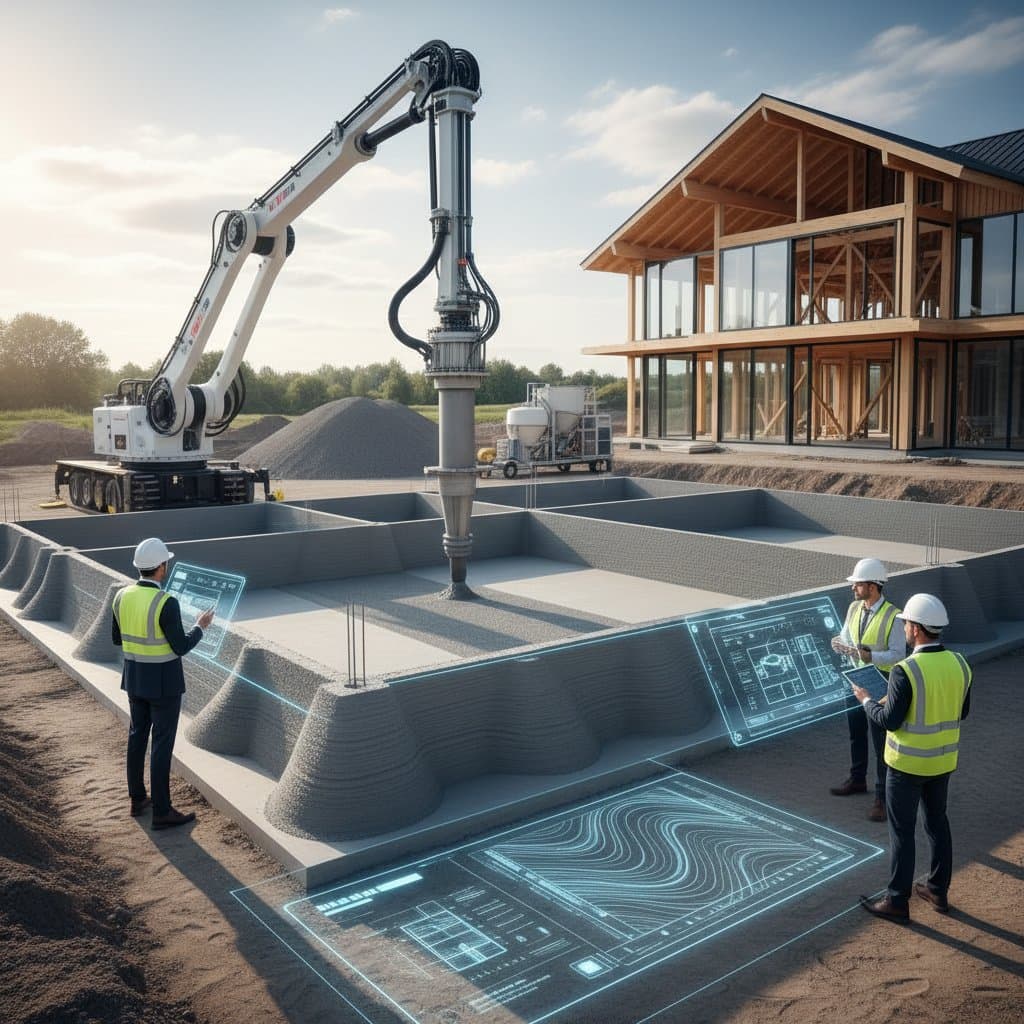
Understanding 3D Printed Foundations
3D printing transforms foundation construction by layering concrete with robotic precision, reducing material waste and labor demands. This method excels in creating complex shapes and custom integrations that traditional pouring struggles to match. Builders achieve faster timelines and lower expenses, but only when initial conditions align perfectly with the technology's requirements.
Before committing to a print, evaluate the site's suitability. Stable soil supports the printer's weight and the foundation's load, while poor drainage can undermine even the strongest print. Address these factors early to avoid costly rework.
Site Preparation Essentials
Assessing Existing Foundations
Examine any current foundation for stability, dryness, and absence of structural issues. If it remains sound without horizontal cracks, bulging, or persistent water intrusion, integrate the printed addition using epoxy-anchored dowels and specialized bonding agents compatible with layered concrete. Proceed to full replacement only if cracks span continuously, walls show deformation, or water problems persist despite redirection efforts.
This evaluation prevents unnecessary demolition and preserves structural integrity. Conduct a professional inspection to document conditions, which aids in permitting and insurance processes.
Managing Drainage
Effective water control forms the backbone of any foundation's longevity, including printed ones. Begin by correcting surface grading to direct runoff away from the structure, ensuring slopes of at least one inch per foot for the first ten feet. Printed materials resist pressure well, but they cannot compensate for unchecked hydrostatic buildup.
Install perimeter drains or French drains if the site history indicates water accumulation. These measures safeguard the print from erosion and ensure the foundation performs as designed.
Considerations for Basements
While 3D printing suits basement walls in ideal conditions, moisture poses significant challenges in low-lying or wet areas. Limit printing to above-grade portions unless the site elevation guarantees dryness. In damp soils, printed basements risk vapor entrapment, necessitating expensive vapor barriers and coatings that offset initial savings.
Opt for hybrid approaches, such as printed footings with traditional walls, to balance innovation and reliability. Always incorporate radon mitigation if local risks exist.
Slabs and Crawl Spaces
For slabs or crawl spaces, printed perimeter beams pair effectively with conventional poured interiors. Deploy these beams in areas with moderate frost heave or soil shifts, where their uniformity enhances load distribution. In regions with expansive clays or frequent flooding, revert to reinforced concrete systems for proven resilience.
This selective use maximizes printing's advantages without exposing the project to undue risks. Verify soil compaction to at least 95 percent before placement.
Additions to Existing Structures
Additions represent a prime application for 3D printing, leveraging speed for minimal disruption. When the primary house rests on solid concrete, design the printed extension to align precisely in elevation, securing connections via embedded steel plates or interlocking keyways. Confirm levelness with laser surveying prior to the initial layer.
Such precision minimizes adjustments during framing, streamlining the overall build. Consult load path analyses to ensure the addition supports future expansions seamlessly.
Building the Right Team and Process
3D printed foundations transfer much of the execution risk to upfront digital planning, as the machine follows the model's instructions exactly. Assemble a collaborative team to mitigate errors from the outset, emphasizing cross-verification of designs and setups.
Key Team Members
Involve an inspector versed in both conventional and additive construction methods. This expert verifies compliance with building codes and validates the concrete mix alongside reinforcement strategies against local requirements.
Engage an architect or structural engineer during initial design phases to specify wall thicknesses, bearing points, and load transfers. Include the printer operator and technician for equipment calibration and material flow management. The general contractor oversees site readiness, timelines, and trade coordination, while a waterproofing specialist addresses any moisture-prone history.
Professional oversight typically increases costs by 10 to 20 percent, yet it averts overruns through proactive issue resolution. Facilitate joint reviews of the digital model by engineers, operators, and contractors to align perspectives early.
Step-by-Step Process
Follow a disciplined sequence to harness printing's efficiency without introducing delays.
- Conduct soil testing and complete grading adjustments.
- Mark layouts and calibrate the printer on-site.
- Perform a dry run to verify mobility and reach without dispensing material.
- Execute the print for walls or beams, monitoring layer adhesion.
- Allow curing under protective covers to regulate moisture.
- Measure dimensions and alignments prior to framing commencement.
Omitting the dry run frequently leads to misalignments of one or two inches, which cascade into framing and roofing complications. Maintain logs of each step for accountability.
Prioritizing Project Scope
After printing the foundation, target upgrades that enhance performance and safety for maximum return on investment. These elements leverage the print's accuracy to simplify subsequent work.
- Seal air gaps and insulate rim joists and slab edges to boost energy efficiency.
- Install drainage systems and impermeable barriers immediately before backfilling.
- Route electrical and plumbing through pre-planned chases in the printed structure.
- Design framing connections that accommodate the exact geometry of printed walls.
Steer clear of ambitious alterations like reconfiguring stairs or finishing moisture-vulnerable basements, as they dilute the technology's benefits. Retain intact masonry or stone features for aesthetic continuity, applying texture treatments to printed sections for seamless blending. Unnecessary removals squander resources and historical value.
Budgeting and Sequencing for Efficiency
Proper timing in printed foundation projects amplifies savings, as curing demands consistent environmental controls and tight trade scheduling.
Recommended Work Order
- Eliminate water ingress by finalizing grading and drainage solutions.
- Stabilize the subsoil through compaction and bearing capacity tests.
- Proceed with printing, employing a compact, expert crew.
- Apply waterproofing membranes to pristine surfaces.
- Position anchor bolts or plates during partial curing for optimal adhesion.
- Erect framing and enclose the structure to shield from elements.
Gaps between phases disrupt momentum, so coordinate trades meticulously. Allow full curing periods to prevent strength loss or cracking from rapid drying.
Strategies for Cost Management
Solicit comprehensive bids rather than isolated per-foot rates, as setup fees can inflate totals unexpectedly. Monitor concrete mix consumption live to detect calibration issues promptly.
Reserve a 10 percent contingency for printer malfunctions or weather interruptions. Record layer thicknesses throughout printing to support quality assurance and financing documentation.
Disciplined execution ensures printing's speed translates to real savings, avoiding the pitfalls of disorganized traditional pours.
Ensuring Long-Term Foundation Health
Printed foundations demand ongoing vigilance akin to any concrete system, focusing on water exclusion and structural monitoring.
Routine Inspections
Examine gutters and downspouts seasonally to prevent overflow-induced saturation. Annually review site grading, as settling can invert slopes toward walls.
Scan for chalking, spalling, or other surface degradation indicating curing flaws or freeze-thaw damage. Track hairline cracks by marking and measuring them; widening suggests active movement requiring intervention.
Enhancing Durability
Many printed mixes incorporate fibers or polymers for superior tensile performance, but drainage remains paramount. Clear perimeter drains regularly and maintain dry soil conditions to avert degradation.
In adjacent crawl spaces or basements, deploy dehumidifiers to control humidity levels below 60 percent.
Planning Future Changes
Retain digital print files for potential expansions, enabling accurate extensions without resurveying. Seek engineering approval before modifying printed walls, as their layered composition differs from monolithic concrete.
Documentation for Protection
Compile test results, mix formulations, and curing records to satisfy insurers and lenders. Thorough paperwork bolsters buyer trust during resale, minimizing value depreciation.
Adapting to Evolving Regulations
Building codes for 3D printed structures continue to develop, emphasizing material certification and performance testing. Stay informed through local authorities and industry associations to ensure designs incorporate the latest standards. Early compliance checks integrate seamlessly into planning, avoiding retrofits.
Practical Tips for Optimal Results
Begin with modest applications, such as grade beams or edge retainers, to build familiarity before scaling to full walls. Maintain mix uniformity by monitoring temperature and humidity with on-site sensors, adjusting as needed for consistent curing.
Incorporate reinforcement from the design stage, selecting printers capable of embedding rebar or relying on fiber-enhanced mixes based on soil and loading demands. Capture a detailed photo log of layers and inspections to establish project credibility and facilitate diagnostics.
Approach printing with grounded expectations: it halves foundation expenses and doubles pace when preparation aligns perfectly, delivering foundations that endure and inspire confidence in innovative building.