
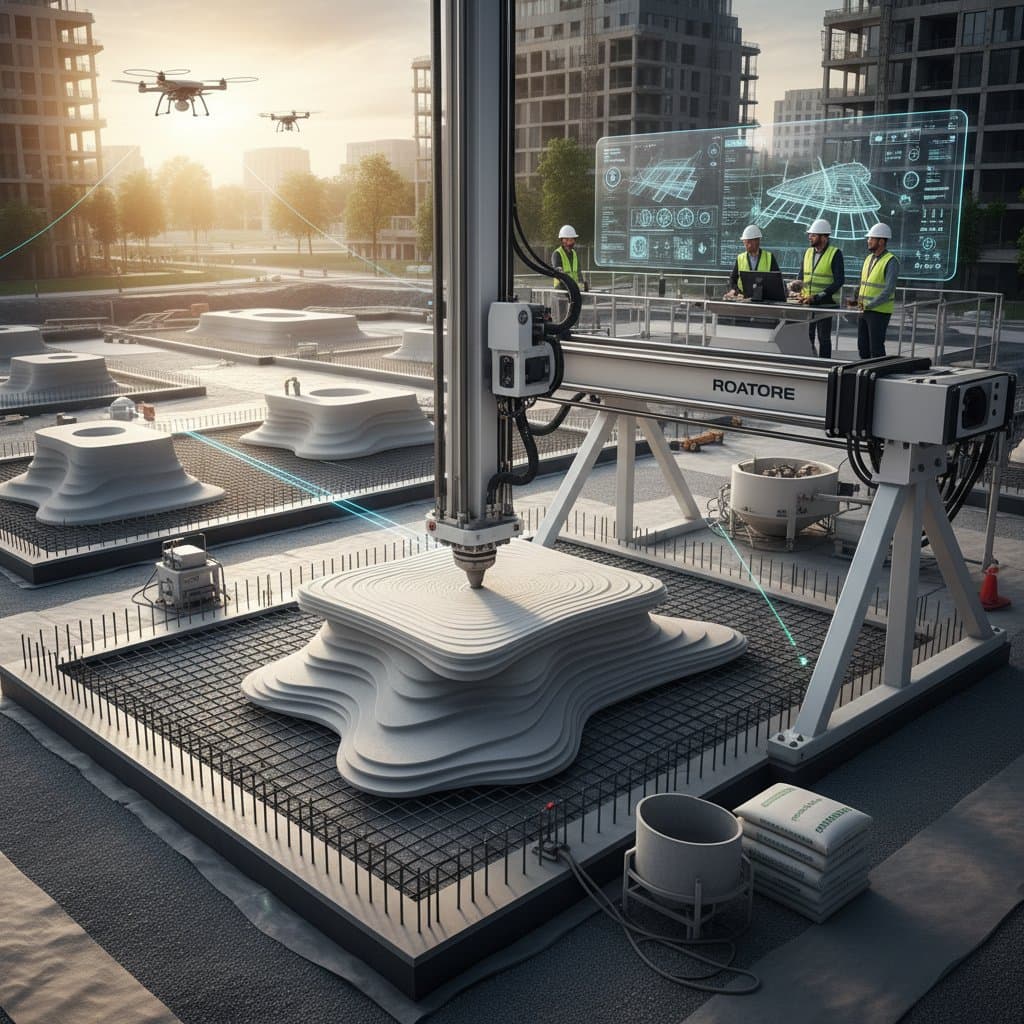
Introduction to 3D Printed Foundations
Traditional foundation construction often involves labor-intensive processes like formwork, pouring, and curing concrete, which can extend project timelines significantly. In contrast, 3D printing technology applies layers of concrete through automated nozzles, enabling rapid assembly with minimal human intervention. This method not only accelerates the process but also enhances accuracy and reduces material waste.
Projects using 3D printed foundations report time savings of up to 70 percent compared to conventional techniques. The approach integrates digital design software with robotic printers, allowing for complex geometries that strengthen the overall structure. Builders benefit from fewer on-site errors and the ability to construct in challenging environments, such as remote or uneven terrain.
Sustainability plays a key role as well. Specialized concrete mixes incorporate recycled aggregates and lower cement content, decreasing the carbon footprint associated with production and transportation. As construction demands grow, this technology positions itself as a vital tool for efficient, eco-conscious development.
The Technology and Its Advantages
At its core, 3D concrete printing uses gantry or robotic arm systems to extrude semi-liquid concrete in precise layers, guided by computer-aided design files. The printer follows a digital blueprint, depositing material only where needed, which eliminates excess and supports intricate designs impossible with manual methods.
One primary advantage lies in speed. A standard foundation that might take days to form and pour can be printed in hours, depending on size and complexity. Precision comes from controlled extrusion, ensuring uniform thickness and alignment that bolsters load-bearing capacity.
Environmental benefits include reduced labor needs, which lower overall emissions, and optimized material use that minimizes leftovers. Studies show these systems can cut energy consumption by integrating on-demand mixing stations. For builders, the result is a foundation ready for immediate integration with upper structures, streamlining the entire workflow.
Site Preparation Essentials
Effective site preparation forms the foundation of successful 3D printing projects. Begin by surveying the area to identify soil composition, elevation, and potential obstacles like rocks or utilities. Clear vegetation and debris to create a level base, using grading equipment to achieve a tolerance of no more than one inch per ten feet.
Next, compact the subsoil to prevent settling. Test compaction levels with a plate load tester to ensure stability under expected loads. Install temporary barriers if weather poses risks, such as heavy rain that could erode the site.
Mark the foundation outline using stakes and strings based on the digital plan. Verify measurements with laser levels for accuracy. This phase typically requires one to two days, setting the stage for seamless printing operations.
Material Selection and Procurement
Choosing the right materials ensures print quality and structural integrity. Opt for a specialized concrete mix designed for extrusion, featuring fine aggregates, polymers, and accelerators to maintain flow without segregation. Include a 10 percent buffer in volume calculations to account for test prints and adjustments.
Reinforcing elements, such as steel rods or fiber mesh, must align with engineering specifications to handle tensile stresses. Bonding additives strengthen connections between printed sections, particularly in multi-day builds. Source curing covers or blankets to shield layers from rapid drying or environmental exposure.
Materials List with Buffer
- Concrete mix or printing compound: Calculate base volume plus 10 percent extra for calibration and overfills.
- Reinforcing rods or mesh: As detailed in structural plans.
- Bonding additives: For seamless joints in segmented prints.
- Curing blankets or covers: To regulate moisture and temperature post-printing.
Purchase an additional 10 percent of the concrete mix to cover calibration runs and minor overfills. Consult suppliers for mixes tested in 3D applications to guarantee compatibility with your printer.
Essential Equipment Setup
Reliable equipment underpins the printing process. A stable power source, such as a generator, provides consistent electricity to the printer and auxiliary systems, preventing interruptions that could compromise layer adhesion.
Position the printer gantry over the prepared site, securing it to anchors for stability. Calibrate nozzles and pumps using test extrusions on scrap material to fine-tune flow rates. Include backup batteries or fuel reserves for the generator to handle extended sessions.
Safety gear, including gloves, goggles, and dust masks, protects workers from concrete particles and machinery hazards. A digital control station allows real-time monitoring of print progress and adjustments.
Step-by-Step Printing Process
Initiate the process by loading the digital model into the printer's software. The system generates a toolpath that the nozzle follows, starting from the perimeter and filling inward.
Begin printing at a controlled speed, typically 100 to 300 millimeters per second, adjusting based on mix viscosity. Pause between layers if reinforcement insertion is required, embedding rods precisely within the fresh concrete.
Monitor environmental conditions; ideal temperatures range from 50 to 80 degrees Fahrenheit to avoid cracking. Complete the print in continuous sessions where possible, or use bonding agents for interruptions.
After the final layer, allow initial setting before applying covers. Full curing takes 24 to 48 hours, during which inspect for voids and apply minor repairs if needed.
Beyond the Build: Finishing and Maintenance
Applying Finishing Touches
Once the concrete firms to a workable state, smooth exposed edges using a trowel for a clean finish. This step enhances aesthetics and ensures proper integration with subsequent construction phases.
Apply a penetrating sealer to the surface, which improves resistance to water and wear. For connections to framing, embed anchor bolts during the print or install them after curing by drilling precise holes.
Conduct a final inspection to verify dimensions and strength, using non-destructive testing tools if available. These measures extend the foundation's lifespan and facilitate smooth project progression.
Avoiding Common Pitfalls
Inadequate site leveling often results in uneven layers and structural misalignment, so double-check elevations before starting. Improper mix moisture levels lead to nozzle clogging or weak adhesion between layers; test batches on-site to confirm consistency.
Neglecting reinforcement diminishes the foundation's ability to withstand loads over time. Always follow engineering guidelines to integrate these elements effectively. Addressing these issues upfront prevents costly rework and ensures compliance with building codes.
Realizing Long-Term Benefits
Adopting 3D printed foundations delivers measurable gains in project efficiency and cost control. Reduced timelines translate to earlier occupancy or revenue generation, while precision minimizes change orders and disputes.
The technology supports scalable applications, from residential homes to commercial complexes, adapting to diverse site conditions. As printers evolve, integration with smart sensors for ongoing monitoring will further enhance durability.
Builders who embrace this method gain a competitive edge in delivering high-quality, sustainable structures. The shift toward automation promises a future where construction aligns more closely with environmental and efficiency goals.