
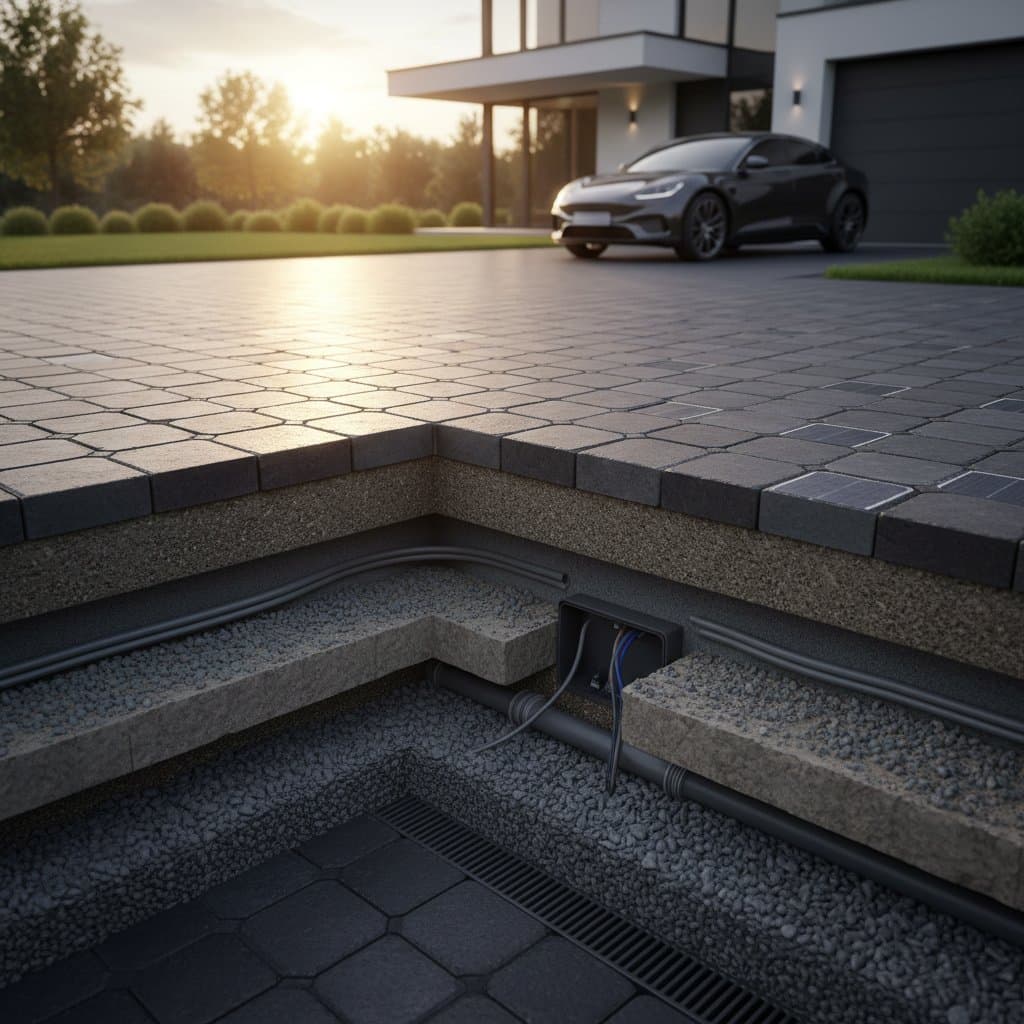
Comparing Roof-Mounted Solar Panels and Driveway Pavers
Roof-mounted solar panels deliver higher energy efficiency per square foot compared to solar pavers. However, pavers provide easier access for maintenance and seamless integration with the landscape. Opt for solar pavers when roof space is insufficient, shaded, or structurally unsuitable for panels.
Solar pavers combine functionality with aesthetics, turning underutilized driveway areas into productive energy sources. They endure vehicle traffic while generating power, but their success depends on robust groundwork. Proper preparation ensures longevity and optimal output, distinguishing high-performing installations from those that underdeliver.
Assembling the Right Team for Installation
Engage a civil engineer or inspector experienced in load-bearing surfaces and drainage systems at the outset. This professional evaluates soil composition, compaction levels, and natural slopes to identify potential issues. Early involvement prevents costly adjustments later.
Incorporate an electrician familiar with solar systems to review panel capacity, wiring paths, and integration with the home's electrical setup. Avoid installers lacking electrical expertise; instead, seek partnerships between paver specialists and licensed electricians. This collaboration streamlines conduit installation and compliance with safety standards.
Consider an architect for complex sites involving slopes, retaining walls, or landscape features. An architect designs layouts that harmonize energy production with visual appeal and water flow. A general contractor oversees the entire project, coordinating excavation, electrical work, and paving to minimize delays and overlaps.
For grid-tied systems, utilities mandate inspections and approvals before energizing the setup. Schedule these steps early to avoid bottlenecks. Verify the installer's track record by requesting examples of prior permitting documentation and successful utility handoffs.
Professional oversight increases project costs by 10 to 20 percent, yet it mitigates risks of overruns, errors, and rework. Solar paver projects demand synchronized efforts across trades, making expert management indispensable for seamless execution.
Prioritizing Key Elements of the Project Scope
Follow this sequence to build a foundation that supports both structural integrity and energy efficiency:
- Water Management: Establish proper grading and drainage to direct runoff away from the installation area. Install French drains or permeable borders if standing water persists.
- Base Stabilization: Excavate and compact the subgrade, then add and layer bedding stone for uniform support. Achieve at least 95 percent compaction to resist settling under load.
- Electrical Infrastructure: Verify the main panel's capacity for solar input and route conduits through stable paths. Use weatherproof materials to protect wiring from environmental exposure.
- Paver Placement: Position solar modules evenly, ensuring full surface contact and alignment for maximum sunlight capture. Secure connections without compromising the paver's load-bearing capability.
- Final Testing: Commission the system by measuring voltage output, monitoring initial performance, and confirming drainage functionality under simulated loads.
Focus investments on high-impact elements like premium base aggregates, durable conduits, and precise slope adjustments. Defer aesthetic enhancements, such as custom patterns or integrated lighting, until the core system demonstrates reliability over a full seasonal cycle. These additions often introduce maintenance challenges that outweigh their benefits.
Retain existing curbs and edging whenever feasible, as they provide essential anchoring against shifting. Replace only those sections showing severe deterioration, such as deep cracks or rot, that undermine stability. Professional assessment determines the extent of necessary replacements.
Managing Budget and Project Timeline
Effective sequencing controls expenses and timelines in solar paver installations. Initiate with site grading and drainage improvements, as these foundational steps prevent future failures regardless of technological advancements.
Proceed to base preparation by excavating to the required depth, then compacting subgrade materials in lifts of six to eight inches. This layered approach eliminates air pockets and ensures even load distribution. Electrical work follows immediately, embedding conduits before placing the bedding layer to avoid disruptive retrofits.
Once pavers are laid and modules connected, conduct zone-by-zone testing to identify faults early. Apply manufacturer-specified sealants only to non-glass areas, avoiding products that could retain moisture beneath solar surfaces. This preserves both waterproofing and optical clarity.
Anticipate a multi-week timeline from initial excavation to full commissioning, influenced by weather patterns and inspection availability. Arrange alternative parking solutions if the driveway provides primary access. Buffer the schedule by two weeks to accommodate unforeseen delays.
Budget for comprehensive soil testing and engineering consultations upfront, as these inform accurate cost projections. Total expenses range from moderate to high depending on site conditions, but disciplined planning yields the best return on investment.
Evaluating Performance and Return on Investment
Solar pavers generate less power per square foot than traditional panels, yet they expand usable solar capacity by repurposing driveway space. Pairing with battery storage enhances their value by capturing excess energy for off-peak use. Local utility rates, net metering policies, and available incentives significantly influence payback periods.
Homeowners typically recoup a portion of costs through bill credits within five to ten years, with full recovery extending longer based on system durability and maintenance. The driveway's dual role as a functional surface and power source amplifies overall benefits, potentially increasing property appeal and value.
Primary durability concerns include stress from vehicle weight and thermal expansion in freeze-thaw climates. Select modular designs allowing individual tile replacement without dismantling the entire array. Robust connectors and protective encapsulation extend service life beyond a decade.
Strategies for Long-Term Maintenance
View solar pavers as an integrated electrical and paving system requiring seasonal vigilance. Conduct inspections at the beginning of each season, checking for surface cracks, subsurface moisture, and secure electrical terminations. Clear debris from drains and joints to maintain flow and prevent erosion.
Perform monthly energy output logging to track performance trends. A abrupt decline often indicates shading, damaged connections, or debris accumulation. Prompt repairs preserve efficiency and avert broader system issues.
Routine cleaning sustains output levels; gently rinse surfaces with water to remove dirt without abrasive tools. Steer clear of chemicals that could damage glass coatings or seals. In snowy regions, use plastic snow removal tools to avoid scratching solar modules.
As one Vermont-based field electrician notes, “Keep the current dry and the base solid, and the system will take care of itself.” This principle underscores the primacy of moisture prevention and structural soundness in all climates.
Taking Action on Your Solar Paver Project
Assess your driveway post-rainfall to observe water drainage patterns. Ensure flow directs toward streets or designated outlets without pooling, and test surface firmness under foot traffic. These observations reveal site suitability.
Consult a licensed electrician to inspect your electrical panel for solar compatibility, including breaker availability and conduit feasibility. Obtain detailed quotes from civil contractors and solar specialists, comparing their proposed scopes side by side.
Solar pavers deliver innovative energy solutions grounded in practical engineering. By emphasizing stable bases, coordinated expertise, and ongoing care, homeowners secure a resilient investment that powers homes while enhancing property functionality.