
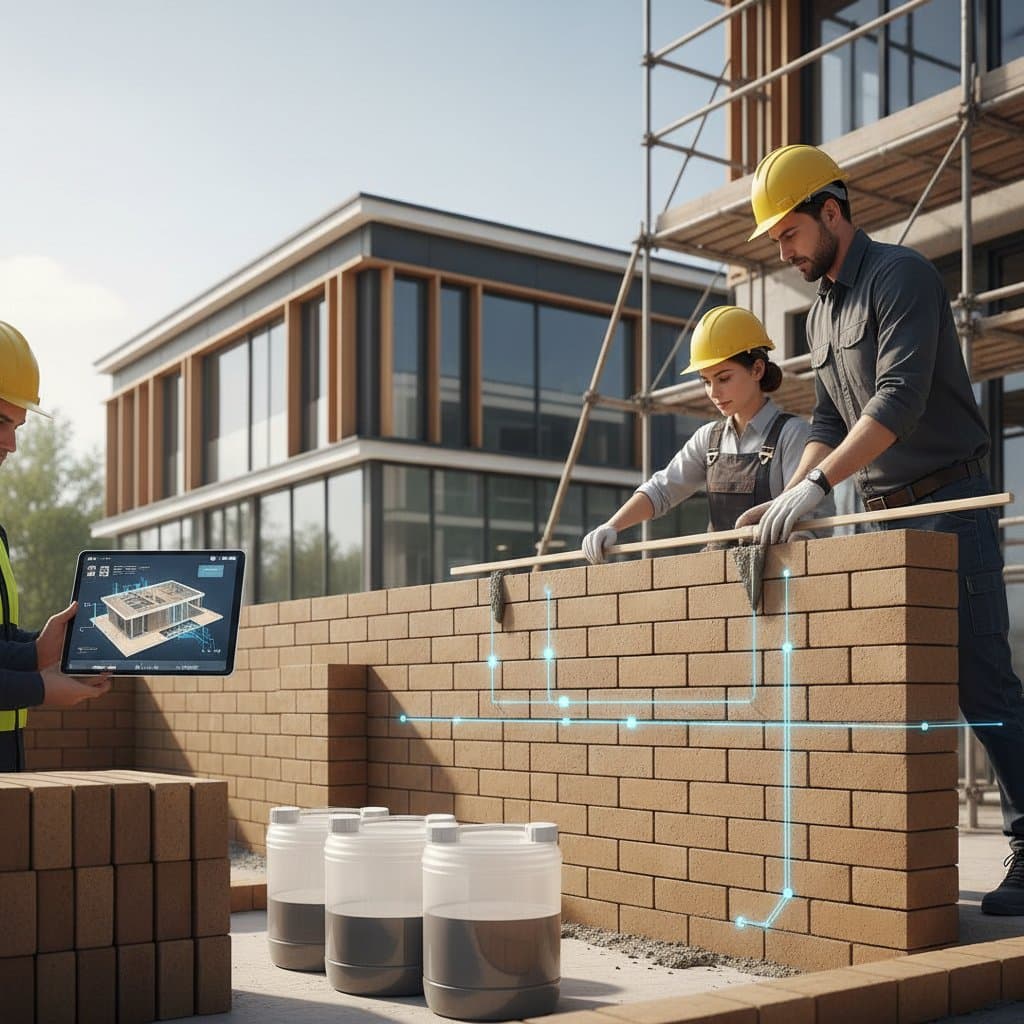
Why Zero-Cement Bricks Will Shape Masonry in 2026
Quick Overview
Cement has supported masonry for over a century, yet it imposes substantial carbon emissions and heightens moisture vulnerabilities in established structures. Zero-cement bricks, typicallybinders, address these issues effectively. They lower emissions significantly, exhibit reduced water absorption, and cure more rapidly in managed environments. Initial expenses arise primarily from production infrastructure and limited availability, rather than raw material costs.
Essential On-Site Evaluations
For professionals handling brickwork or planning construction projects, initiate assessments that highlight key performance attributes.
- Surface Texture: Zero-cement bricks feature a dense, smooth finish with minimal porosity. Strike them lightly with a chisel handle; a clear, resonant sound indicates thorough curing.
- Color Consistency: Uniform hue reflects precise mixture control. Variations suggest inadequate binder distribution.
- Edge Strength: Corners withstand gentle manual pressure without fragmentation.
- Water Absorption Check: Apply several tablespoons of water to the surface. Beading should persist for at least one minute prior to absorption.
- Mortar Compatibility: Standard cement mortars often fail to adhere properly. Opt for geopolymer or lime-based options to ensure strong bonds.
Conduct these evaluations directly at the site prior to finalizing bulk purchases or examining prototypes.
Critical Warning Signs
- Brick surfaces developing a chalky appearance shortly after placement.
- Emergence of white salt residues from retained alkalis.
- Prompt fissures appearing along mortar lines.
- Variations in brick dimensions that complicate alignment or gaps.
- Vendors lacking documentation on curing processes or material makeup.
- Assertions of perpetual maintenance-free performance. All masonry requires ongoing drainage oversight and joint examinations.
These indicators point to lapses in quality assurance or incompatible elements, potentially resulting in service calls and water penetration issues.
Practical Solutions and Estimated Expenses
Efflorescence on surfaces typically resolves with gentle acid cleaning and resealing, costing less than one dollar per square foot. In cases of inadequate curing, replacing affected sections may incur fifteen to twenty dollars per square foot, accounting for labor and preparation. Transitioning to geopolymer jointing from cement mortar increases overall masonry expenses by approximately ten percent, yet enhances longevity and reliability. Application of breathable coatings in freeze-thaw prone areas adds about one dollar per square foot.
Superficial remedies, such as painting over spalled areas or over-sealing, merely confine moisture and promote deeper fractures and discoloration. Address water pathways at the source rather than surface symptoms. Project expansions frequently occur during re-pointing or re-grouting of entire walls following isolated breakdowns, so establish boundaries upfront.
Strategies for Repair and Replacement
Individual Bricks: Apply compatible patching mortar to mend cracks or minor edge damage if the core bond holds firm. Substitute units only if deterioration extends fully through the material.
Mortar Joints: Re-point using geopolymer or lime formulations to align with flexibility and vapor permeability. Steer clear of rigid cement blends that retain internal dampness.
Complete Wall Systems: Maintain open ventilation spaces and functional flashing. Intervene with replacement solely for widespread cracking or outward displacement.
Surface Treatments: Select mineral-based paints that permit vapor escape. Acrylic or latex applications accelerate deterioration by trapping humidity.
Follow this principle: retain functional components and replace those compromised to their core depth.
Assembling the Right Team and Workflow
Engage a mason versed in geopolymer applications for initial mockups and installations. Have an architect scrutinize details to verify consistent thermal and vapor barriers. Consult a structural engineer for integrations into load-bearing configurations during retrofits. General contractors must factor in adjusted curing timelines and supply logistics when estimating.
Concurrent supplier evaluations streamline the process. Solicit bids from at least two providers, including laboratory verification data. Appointing a project manager may elevate costs by ten to twenty percent but ensures orderly progression and minimizes corrections. Proactive collaboration prevents material mismatches, particularly at interfaces with conventional foundations or concrete elements.
Key Implementation Focus Areas
Prioritize these high-impact actions:
- Adopt geopolymer bricks for external walls and elevations.
- Combine with lime or geopolymer mortars to sustain balanced permeability.
- Incorporate drip edges and through-wall flashing for effective water management.
- Apply breathable sealants exclusively in high-exposure conditions.
De-emphasize low-value efforts like ornamental veneers or wholesale facade overhauls on intact existing brickwork. Direct resources toward junctions, water diversion, and load paths over aesthetic enhancements.
Planning Budgets and Project Phases
Commence with water management foundations. Ensure site grading and drainage routes divert moisture from wall bases. Verify that downspouts extend beyond footing perimeters. Subsequently, reinforce structural stability and flashing prior to material transitions.
Address safety elements next, including electrical conduits and wall anchors. Zero-cement bricks frequently offer superior compressive capacity, necessitating adapted drilling or fastening techniques.
Proceed to enhance cavity insulation and airtightness. With the enclosure secured against moisture, apply final treatments and coatings. Reserve pigmentation for the conclusion, as geopolymer surfaces interact differently with colors compared to traditional fired clay.
This phased approach mitigates risks and circumvents expensive revisions stemming from post-installation adjustments to drainage or anchorage.
Ensuring Long-Term Performance
Zero-cement bricks deliver extended durability, yet demand regular monitoring. Clear weep holes periodically. Examine sealant joints seasonally for fissures or contraction. Monitor for moisture trails beneath windowsills or atop parapets.
As one regional materials engineer observed, moisture management surpasses formulation precision in importance. This principle applies universally across clay, lime, or geopolymer constructions. These innovative bricks curb emissions and lessen upkeep needs, but they do not compensate for flawed design or drainage oversights.
Builders and property owners who apply meticulous attention to structural integrity and water control in zero-cement masonry will secure decades of dependable, economical operation. The transition accelerates as it resolves longstanding cement-related challenges.