
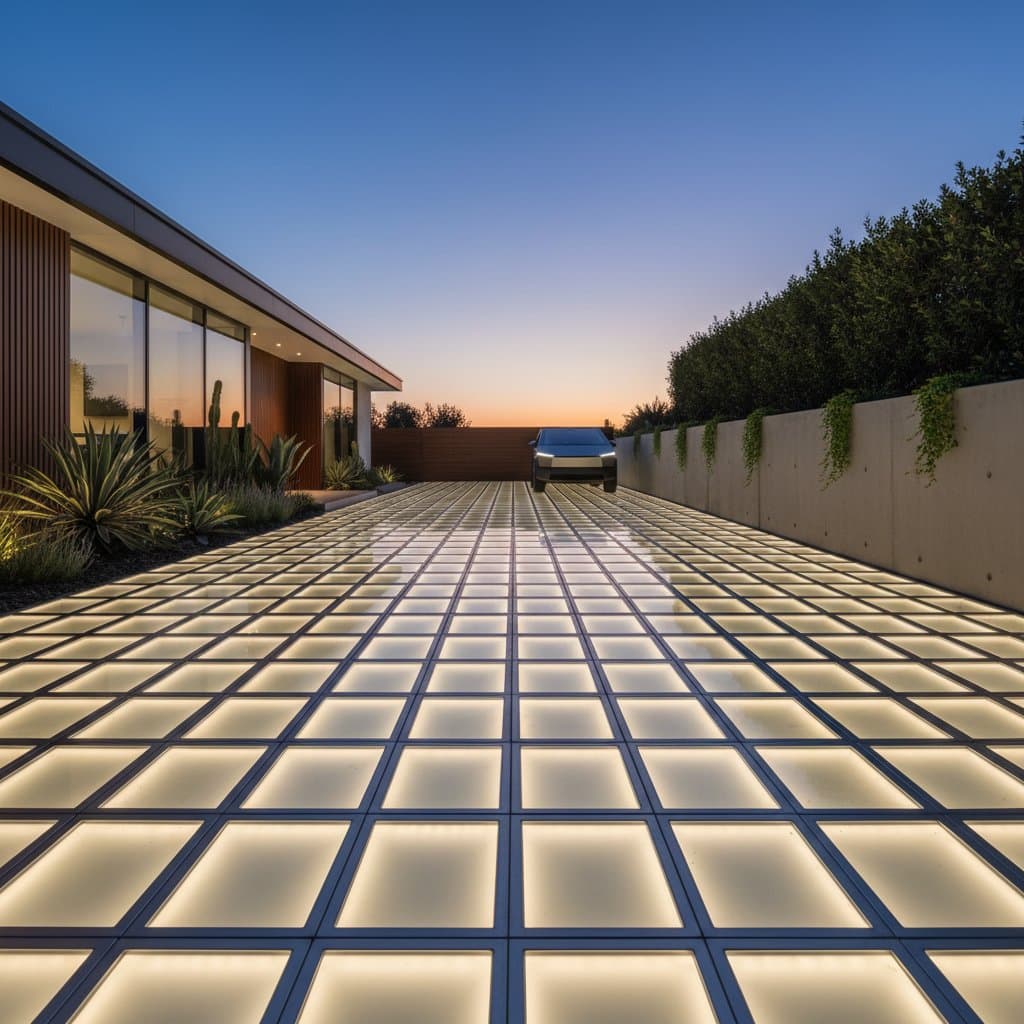
Solar Pavers: Harnessing Sunlight for Self-Illuminating Driveways
Solar pavers integrate photovoltaic cells within sturdy paving stones to gather solar energy by day and activate embedded LED lights at dusk. These units function independently, eliminating the need for electrical connections or trenches. The result is a seamless blend of functionality and aesthetics, guiding footsteps safely through driveways, patios, and garden paths.
Homeowners appreciate how this technology simplifies outdoor lighting while promoting energy independence. Each paver charges autonomously, typically providing 8 to 12 hours of glow on a full day's exposure. Select models even adjust brightness based on ambient light, ensuring efficient performance year-round.
Advantages and Drawbacks
Advantages
- Generate electricity on-site, slashing expenses for exterior illumination
- Deliver integrated guidance lighting that enhances nighttime navigation and security
- Introduce a sleek, innovative aesthetic to paved surfaces like driveways and patios
- Minimize excavation and cabling demands relative to conventional systems
- Integrate seamlessly into existing paver designs and foundational setups
Drawbacks
- Command a premium initial investment over plain concrete or clay options
- Internal batteries degrade after several years, requiring periodic swaps
- Emit softer light levels than high-voltage alternatives
- Perform suboptimally under persistent cover from foliage, snow, or grime
- Sourcing exact replacements for style and hue can prove challenging
Pricing Breakdown
Expect to pay between $12 and $30 per square foot for solar paver materials alone, influenced by LED intensity, material texture, and pattern intricacy. Professional installation pushes totals to $20 through $45 per square foot, factoring in gravel bases, sand layers, and skilled labor. Budget escalates for nonlinear designs, extensive digging, or sites with limited access.
Key variables affecting expenses include:
- Illumination strength and energy storage. Units with robust diodes and extended-run batteries incur higher costs.
- Finish quality. Options like antiqued or rough-hewn surfaces elevate the price tag.
- System configuration. Full-grid replacements demand more than targeted accents for pathways.
For a standard 200-square-foot driveway, anticipate $2,400 to $6,000 in materials and $4,000 to $9,000 installed. Savings emerge over time through eliminated utility fees and reduced upkeep compared to wired setups.
Durability and Upkeep Essentials
Premium solar pavers endure 15 to 20 years under normal conditions, though batteries often last 7 to 10 years before needing refresh. To sustain peak operation:
- Gently cleanse solar faces quarterly with a soft cloth to clear pollen, leaves, or pollutants.
- Position installations south-facing where possible, trimming overhanging branches to optimize daily exposure.
- Inspect and swap out dimming modules or power cells promptly to avoid cascading issues.
Steer clear of abrasive cleaners or pressure washers, which might etch protective coatings. Opt for a solution of dish soap and lukewarm water, followed by a thorough rinse and air dry.
Essential Specifications to Evaluate
Prior to purchase, verify these attributes for suitability:
- Weight capacity. Driveway models should support at least 8,000 pounds per square foot to withstand vehicles.
- Weatherproofing level. Seek IP67 certification or better to guard against moisture and particulates.
- Traction features. Prioritize grooved or patterned tops to prevent slips in rain or frost.
- Light tone. Warm whites (around 2700K) foster inviting atmospheres; cool whites (5000K) sharpen visibility.
- Power source details. Favor rechargeable lithium-ion types for superior cycle life and quick recharges.
Consult manufacturer warranties, which typically cover defects for 5 to 10 years, and confirm compatibility with local climate demands.
Project Planning and Site Preparation
A successful solar paver installation mirrors traditional paving protocols, starting with a firm, permeable foundation. Dig down 6 to 12 inches to accommodate gravel sub-base, leveling sand, and paver depth, aiming for a 1/8-inch-per-foot pitch to direct rainwater away. Survey the site for obstructions like eaves or evergreens that could limit solar intake to under 6 hours daily.
Contact utility services at least 48 hours ahead to mark underground lines. Review municipal regulations or community guidelines, as some areas mandate energy-efficient lighting certifications or restrict visible glow.
Soil testing proves wise in expansive projects; amend clay-heavy ground with additional drainage aggregate to avert pooling.
Step-by-Step Installation Guide
- Design the arrangement and glow zones. Sketch solar placements to accentuate high-traffic edges or curves, ensuring even distribution.
- Dig the foundation. Clear topsoil to the calculated depth, preserving straight edges for alignment.
- Layer and firm the sub-base. Spread 4 to 6 inches of angular gravel, compacting in 2-inch increments with a plate tamper.
- Level the sand bed. Pour 1 inch of coarse masonry sand, screeding it flat with pipes as guides.
- Lay the main pavers. Start from a fixed string line, tapping each into place with a rubber mallet for uniformity.
- Embed solar elements. Intersperse them thoughtfully, avoiding clusters that might overload circuits.
- Secure borders. Install plastic or metal edging to lock the assembly against shifting.
- Joint and stabilize. Sweep polymeric sand into gaps, mist to set, and reapply as it settles.
- Validate functionality. Expose to sunlight for a full cycle, then test activation and duration in darkness.
Allow 24 to 48 hours post-install for sand to cure before vehicular use.
Layout Inspirations and Variations
Traditional patterns such as staggered rows, zigzag herringbone, or interwoven baskets accommodate solar integrations effortlessly. Rather than outfitting every stone, deploy solar variants as linear borders, spaced delineators, or focal clusters to temper costs while achieving uniform radiance. On driveways, prioritize placements at approaches, bends, and garage thresholds to illuminate critical maneuvers.
Experiment with mixed media: pair solar pavers with permeable concrete for eco-drainage or luminous gravel accents for softer edges. Custom cuts enable fluid curves around landscaping beds.
Tackling DIY or Hiring Experts
Ambitious homeowners equipped with a shovel, tamper, and level can manage modest walkway projects spanning under 100 square feet. Familiarity with gravel compaction and edge setting minimizes errors in simpler layouts. Engage professionals for:
- Load-bearing driveways demanding precise engineering
- Challenging terrains with slopes exceeding 5 percent or unstable substrates
- Elaborate motifs requiring cuts or hybrid electrical tie-ins
- Installations triggering code reviews or structural assessments
Professionals often guarantee work for 1 to 2 years, providing peace of mind for intricate endeavors.
Troubleshooting Frequent Issues
Fading illumination or brief operation: Scrub surfaces for buildup and relocate shading elements. If persistent, diagnose with a multimeter; refresh batteries showing under 80 percent capacity.
Moisture intrusion: Seal breaches immediately to avert shorts; discard compromised units to safeguard neighbors.
Surface instability: Probe for voids beneath, excavate minimally, add base material, and reseat firmly.
Document serial numbers for warranty claims, and stock spares for isolated faults.
Adapting to Local Conditions
In temperate zones prone to freezing, select pavers engineered for thermal expansion, with flexible joints to absorb ice heave. Post-winter, brush away accumulations promptly to resume charging. Coastal dwellers should prioritize galvanized components against salt spray, while arid regions benefit from models featuring thermal vents to dissipate heat buildup.
Monitor seasonal variances: supplement with manual cleanses during monsoon seasons or position away from reflective heat sources in intense summers.
Viable Alternatives
For budget-conscious setups, low-voltage LED inserts connected to a central solar hub deliver reliable output without per-unit batteries. Freestanding solar lanterns along borders offer flexibility and zero pavement disruption, ideal for renters or trial runs.
Hybrid approaches combine solar pavers with motion-sensor floods for layered security at lower overall outlay.
Realizing Your Illuminated Outdoors
Solar pavers transform ordinary driveways into efficient, self-sustaining features that enhance security and elegance without ongoing power draws. By thoughtfully selecting placements and committing to basic care, you secure years of reliable performance. Invest in this forward-thinking upgrade to elevate your property's nighttime presence and environmental footprint.