
Introduction to Zero-Cement Geopolymer Bricks
Zero-cement geopolymer bricks emerge as a breakthrough in sustainable construction materials. Unlike traditional clay or cement bricks, these rely on industrial byproducts like fly ash and slag activated by alkaline solutions. This approach eliminates Portland cement, a major source of carbon dioxide emissions, while delivering comparable or superior performance.
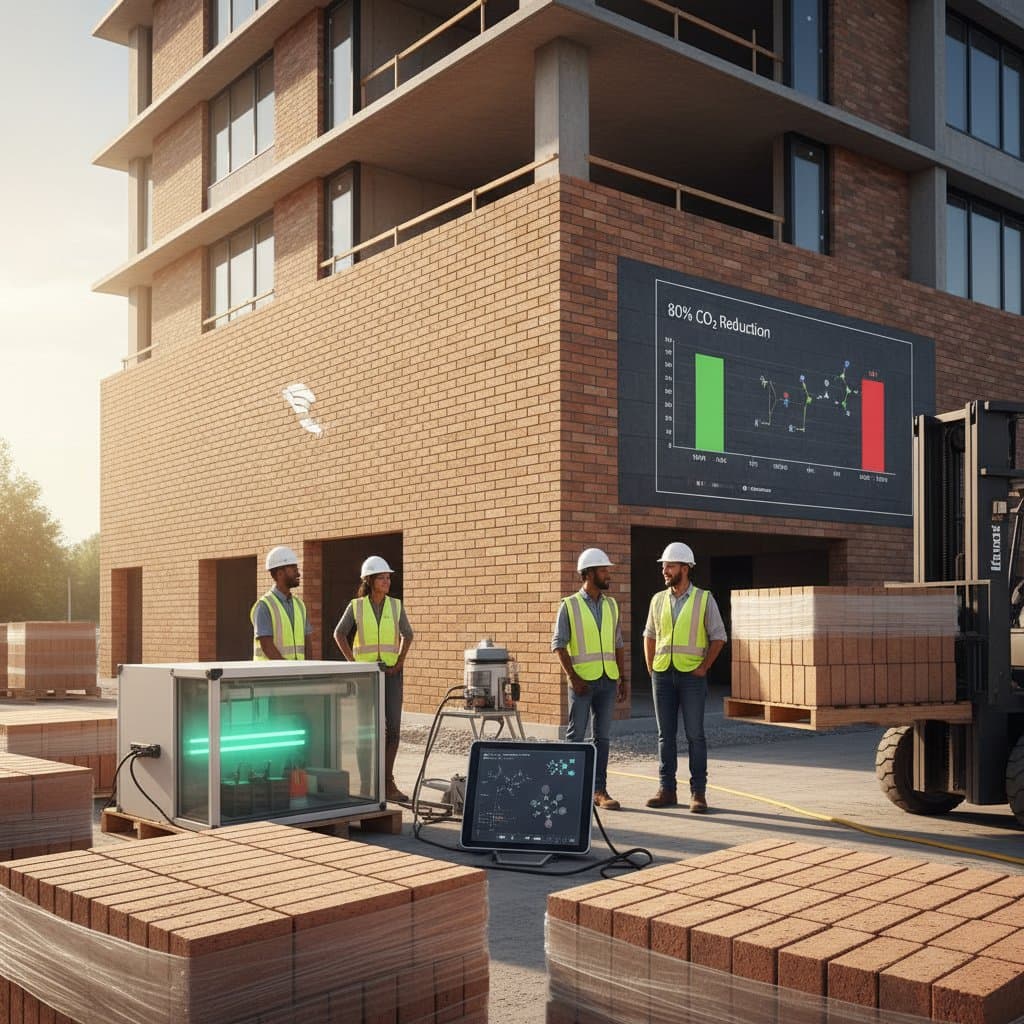
By 2026, widespread adoption could cut the construction industry's carbon footprint significantly. Projections indicate an 80 percent reduction in emissions per brick compared to conventional options. Builders benefit from faster production cycles and enhanced longevity, aligning with global sustainability mandates.
This guide details the production process, cost considerations, and implementation strategies for geopolymer bricks. Readers gain practical insights to integrate this innovation into projects, from small-scale DIY efforts to large commercial developments.
Cost Planning for Geopolymer Brick Projects
Initial material expenses for zero-cement bricks exceed those of standard clay or cement varieties by 10 to 20 percent. Fly ash and slag, sourced from industrial waste, keep raw input costs low, but alkaline activators like sodium silicate add to the upfront investment.
Project-wide savings quickly materialize through efficiencies. Shorter curing periods reduce labor hours, while diminished energy demands during production lower operational expenses. Enhanced durability minimizes repair needs over time, yielding a return on investment within five years for most structures.
Scale influences economics profoundly. In high-volume manufacturing, automated mixing and molding equipment cuts labor by 30 percent. Bulk procurement of activators further stabilizes costs, making geopolymer bricks competitive for mid-sized residential developments.
Site Preparation and Equipment Setup
Effective site preparation underpins successful geopolymer brick production and installation. A dedicated, organized workspace prevents contamination and ensures uniform quality. Ventilation and shading protect workers and materials from environmental variables.
Select a level, dust-free area with access to water and electricity. Cover storage zones to shield dry components from moisture. Implement waste management protocols to recycle excess aggregates and solutions, promoting sustainability from the outset.
Essential Equipment Checklist
- Mixing unit: High-capacity drum mixer that achieves even distribution of powders and aggregates.
- Molds: Durable steel or high-density polymer forms designed for precise brick dimensions, typically 8 by 4 by 2 inches.
- Curing chamber: Enclosed system regulating temperature between 68 and 86 degrees Fahrenheit and humidity at 60 to 80 percent.
- Testing tools: Hydraulic compression tester rated for 10,000 psi, digital moisture meter, and precision calipers for measurements.
- Safety gear: Chemical-resistant gloves, safety goggles, full-face respirators, and protective aprons for handling activators.
Store alkaline solutions in corrosion-resistant, sealed containers away from direct sunlight. Conduct daily equipment inspections to maintain reliability and safety standards.
Step-by-Step Geopolymer Brick Production Process
Producing geopolymer bricks involves precise measurement, mixing, and curing to activate the chemical bonds. Follow these steps methodically to achieve bricks with compressive strengths exceeding 5,000 psi, rivaling traditional masonry.
Source materials from certified suppliers to ensure purity. Fly ash class F provides the primary binder, complemented by ground granulated blast-furnace slag for enhanced reactivity.
1. Measure and Mix Dry Components
Accurately weigh ingredients per the mix design: 50 percent fly ash, 30 percent slag, and 20 percent fine aggregates such as sand or crushed stone. Use a digital scale for precision within 1 percent tolerance.
Combine in a clean mixing unit for five to ten minutes until the blend appears homogeneous. Visual inspection confirms no clumps or separations, setting the foundation for strong polymerization.
2. Prepare the Alkaline Activator Solution
Dissolve sodium hydroxide pellets in distilled water at a 10 to 14 molar concentration, stirring until fully solubilized. This exothermic reaction generates heat, so use insulated containers.
Blend the solution with sodium silicate at a 1:2.5 ratio by weight. Allow cooling to below 77 degrees Fahrenheit over 30 minutes to avoid thermal shock during incorporation.
3. Combine, Mold, and Compact the Mixture
Introduce the activator to the dry mix incrementally over two to three minutes, blending continuously to form a cohesive, pourable paste. The consistency resembles thick mortar, free of lumps.
Pour into prepared molds, vibrating or tamping to eliminate voids. Smooth the top surface with a trowel for even curing and aesthetic finish.
4. Cure the Molded Bricks
Transfer molds to the curing chamber immediately. Maintain conditions for 24 to 48 hours, monitoring with data loggers to sustain optimal polymerization.
Direct sunlight or high humidity disrupts the process, leading to weak bonds. Demold gently once the bricks achieve initial set, typically after 24 hours.
5. Test and Store Finished Bricks
Select random samples for rigorous evaluation. Apply compressive loads incrementally until failure, targeting at least 4,000 psi for structural use.
Measure water absorption via submersion tests; acceptable levels fall below 10 percent. Stack cured bricks on pallets in a shaded, dry area, separated by spacers to prevent adhesion.
Quality Assurance and Performance Standards
Consistent quality control safeguards the integrity of geopolymer bricks. Implement checks at each production stage to identify deviations early.
Use standardized protocols for testing: ASTM C109 for compression and ASTM C67 for absorption. Document results in a log to track batch performance and refine mix designs.
Reject units showing defects such as hairline cracks or warping. High-quality bricks exhibit low porosity, dimensional stability, and resistance to freeze-thaw cycles, ensuring reliability in diverse climates.
Addressing Production Challenges
Challenges in geopolymer brick making often stem from material inconsistencies or environmental factors. Proactive adjustments resolve most issues without halting operations.
- Soft bricks post-curing: Elevate activator molarity by 1 to 2 units or prolong curing to 72 hours for complete reaction.
- Surface cracking: Optimize water-to-binder ratio below 0.35 and shield from temperatures above 95 degrees Fahrenheit.
- Color inconsistencies: Extend dry mixing to 15 minutes and standardize curing humidity to eliminate variations.
- Insufficient strength: Recalibrate ratios, testing for activator potency, and source fresh, uncontaminated fly ash.
Consult material safety data sheets for handling guidelines. Training programs for operators reduce error rates by 50 percent over time.
Long-Term Maintenance and Durability
The inherent density of zero-cement bricks confers exceptional longevity, often surpassing 75 years with proper care. Their low permeability resists moisture ingress and chemical degradation.
Annual inspections detect early wear. Address efflorescence through gentle rinsing, preserving the material's integrity.
Compatible mortars, formulated with geopolymer binders, enhance joint performance. In harsh environments, apply breathable sealants to further protect exposed surfaces.
Routine Inspection Checklist
- Examine for fissures exceeding 1/16 inch in width, which may indicate settlement.
- Assess mortar integrity, repointing as needed to maintain weatherproofing.
- Confirm effective drainage to avoid water accumulation at base levels.
- Reapply protective coatings every 10 to 15 years based on exposure and local conditions.
Installation Options: DIY Versus Professional
Ambitious DIY enthusiasts produce limited quantities using tabletop mixers and basic molds, potentially reducing expenses by 40 percent for non-load-bearing features like garden walls.
Structural applications necessitate expert involvement. Engage certified masons versed in geopolymer systems to comply with building codes.
Request portfolios of prior installations and third-party test reports. Verify credentials through professional associations to ensure project success.
Advancing Sustainable Building with Geopolymer Masonry
Adopting zero-cement bricks advances environmental responsibility in construction. These materials lower emissions dramatically, accelerate timelines, and uphold rigorous performance standards.
For homeowners and developers alike, geopolymer options align with regulatory shifts toward green building. As supply chains mature and standards solidify, this technology promises enduring impact on masonry practices.