
Zero-Cement Bricks Set to Transform Construction by 2026
The construction industry faces increasing pressure to adopt materials that minimize environmental impact while maintaining high performance. Zero-cement bricks, powered by geopolymer technology, emerge as a leading solution. These bricks replace traditional Portland cement with industrial by-products, offering superior strength and reduced carbon emissions. This article examines their benefits, implementation steps, and potential to reshape building practices for professionals and homeowners alike.
Essential Performance Highlights
Zero-cement bricks provide measurable advantages over conventional options. Builders appreciate their efficiency in both large-scale projects and smaller renovations.
- Cost Breakdown: Expect $4.50 to $7.00 per square foot, where materials constitute 55 percent, labor 35 percent, and equipment with curing 10 percent.
- Strength Levels: Achieve compressive strengths of 6,000 to 9,000 PSI, surpassing the 3,500 to 5,000 PSI typical of concrete bricks.
- Curing Speed: Reach full strength in 7 to 14 days, compared to 21 to 28 days for cement-based alternatives.
- Insulation Benefits: Deliver 15 to 20 percent better energy efficiency in buildings through enhanced thermal properties.
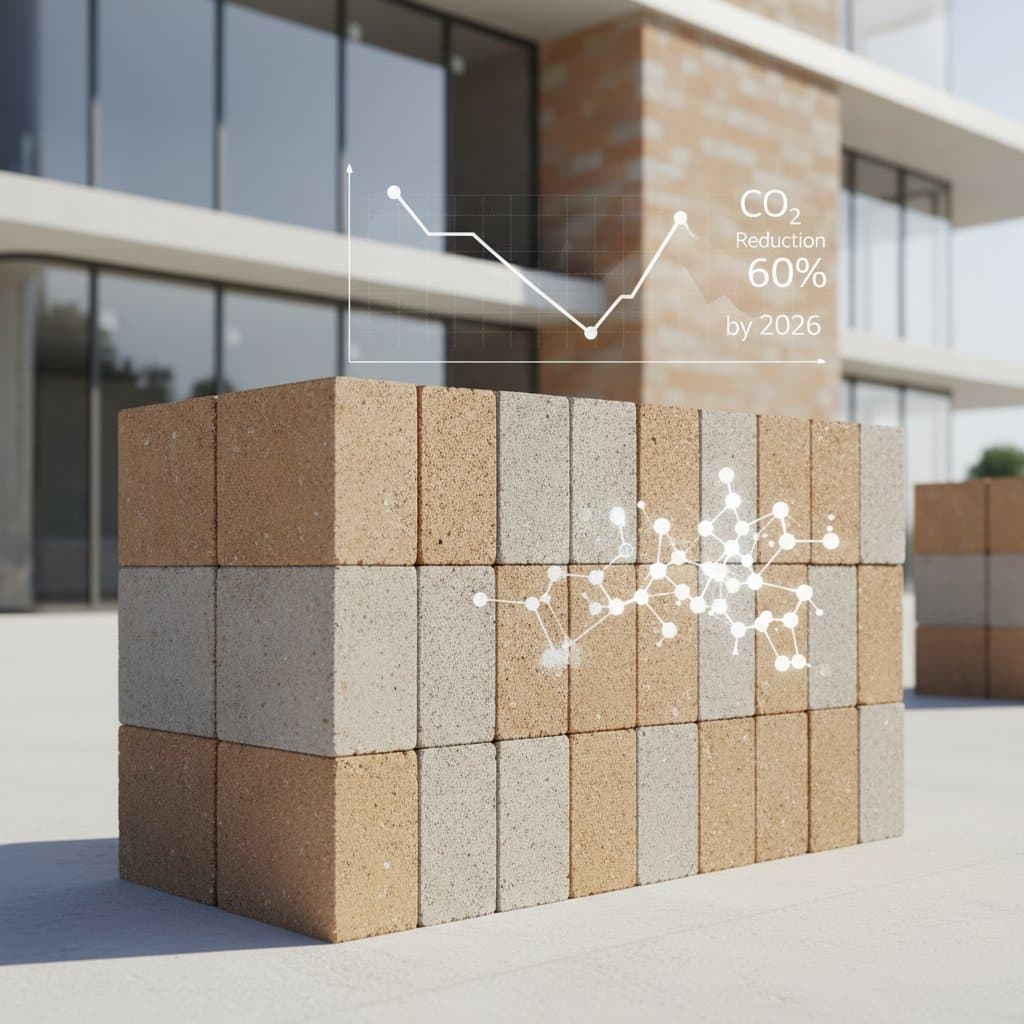
- Carbon Reduction: Emit 60 to 80 percent less embodied carbon, supporting greener construction standards.
These attributes position zero-cement bricks to capture a significant market share by 2026, driven by regulatory incentives and cost savings over time.
Navigating Permits and Regulations
Integrating zero-cement bricks into projects demands careful attention to local standards. Authorities often classify geopolymers as innovative materials, requiring specific approvals.
Securing Approvals
Start by engaging your local building department during initial planning. Submit comprehensive test results covering compressive strength, water absorption rates, and fire resistance capabilities. Align with ASTM C67 and ASTM C140 for standardized testing protocols. Confirm eligibility under International Building Code Section 104.11, which addresses alternative materials.
Early consultation prevents delays and ensures seamless integration. For residential builds, highlight how these bricks meet seismic and wind load requirements through documented performance data.
Budgeting for Implementation
Initial expenses for zero-cement brick walls run 5 to 15 percent higher than standard concrete units. Factors such as reduced curing energy and minimal long-term repairs recover this premium in 3 to 5 years. Homeowners pursuing DIY approaches can cut costs by 20 to 30 percent through on-site production with geopolymer kits and regionally sourced by-products like fly ash.
Factor in scalability: Larger projects benefit from bulk material discounts, while small batches suit custom designs. Track expenses across phases to optimize resource allocation.
Preparing the Construction Site
Effective site setup lays the foundation for successful geopolymer brick installation. Focus on controlled conditions to maximize material performance.
- Create a Stable Base: Position a waterproof tarp or poured concrete slab to shield against ground moisture and contaminants.
- Maintain Optimal Environment: Select shaded, well-ventilated spots with temperatures from 70°F to 90°F and humidity levels of 40 to 60 percent for ambient curing.
- Ready Molds and Agents: Apply a thin layer of mineral oil or water-based release spray to molds, ensuring easy demolding without residue.
- Inspect Raw Materials: Confirm fly ash or slag particles are finely milled and devoid of impurities like unburned carbon, which could impair binding.
These preparations minimize defects and enhance overall project efficiency. Monitor weather forecasts to adjust timelines accordingly.
Ensuring Quality Through Testing
Rigorous evaluation guarantees that zero-cement bricks meet structural demands. Conduct tests on samples that represent the full production run.
- Strength Assessment: Aim for a minimum of 6,000 PSI in compression tests.
- Absorption Control: Limit water uptake to under 12 percent by weight to prevent weakening.
- Efflorescence Check: Watch for white salt deposits, signaling issues with soluble compounds or curing methods.
- Size Precision: Keep variations within ±1/8 inch for uniform stacking and aesthetics.
For professional applications, utilize ASTM C140 laboratory protocols. DIY enthusiasts can employ portable compression testers for on-site verification, providing quick feedback on batch quality.
Regular testing builds confidence in material reliability. Document results to refine future mixes and demonstrate compliance to inspectors.
Long-Term Care and Durability
Zero-cement bricks demand less upkeep than traditional masonry due to their robust composition. Their low permeability wards off common deterioration factors.
Routine Maintenance Guide
Perform annual inspections for cracks wider than 1/8 inch, addressing them promptly to maintain integrity. In moist regions, scan for fading colors or salt buildup on surfaces. Refresh mortar joints every 15 to 20 years with geopolymer-compatible formulations. Consider breathable sealants for areas prone to heavy rain or marine exposure.
These steps preserve appearance and function over decades. Integrate maintenance into broader property care schedules for efficiency.
Expected Service Life
Well-crafted geopolymer bricks endure 75 to 100 years with minimal wear. Exceptional fire resistance and resistance to chemicals suit demanding settings like factories and seaside installations. Compared to cement bricks, they exhibit less expansion and contraction, reducing stress on surrounding structures.
This longevity translates to fewer replacements and lower lifecycle costs. Engineers value their predictability in modeling building lifespans.
Practical Strategies for Optimal Results
Experienced users share techniques to elevate geopolymer brick outcomes. These insights apply across project scales.
- Manage Water Precisely: Overhydration compromises bonds; use calibrated measures for mixes.
- Maintain Batch Consistency: Adhere to fixed ratios of activators and aggregates for reliable strength.
- Log Environmental Data: Record temperature, humidity, and curing times per batch to troubleshoot variations.
- Secure Material Storage: Store precursors in sealed containers to avoid premature moisture exposure.
- Test on a Small Scale: Construct a sample wall to validate processes before full deployment.
Implementing these practices accelerates adoption and minimizes errors. Collaborate with suppliers for tailored advice on local conditions.
Advancing Sustainable Builds with Geopolymer Bricks
Zero-cement bricks mark a pivotal advancement in eco-conscious construction. They deliver reduced emissions, enhanced durability, and versatile production methods that align with modern demands. Professionals and DIY builders who incorporate this technology secure environmental benefits alongside economic gains. As adoption grows toward 2026, these materials will drive the industry toward a more resilient future.