
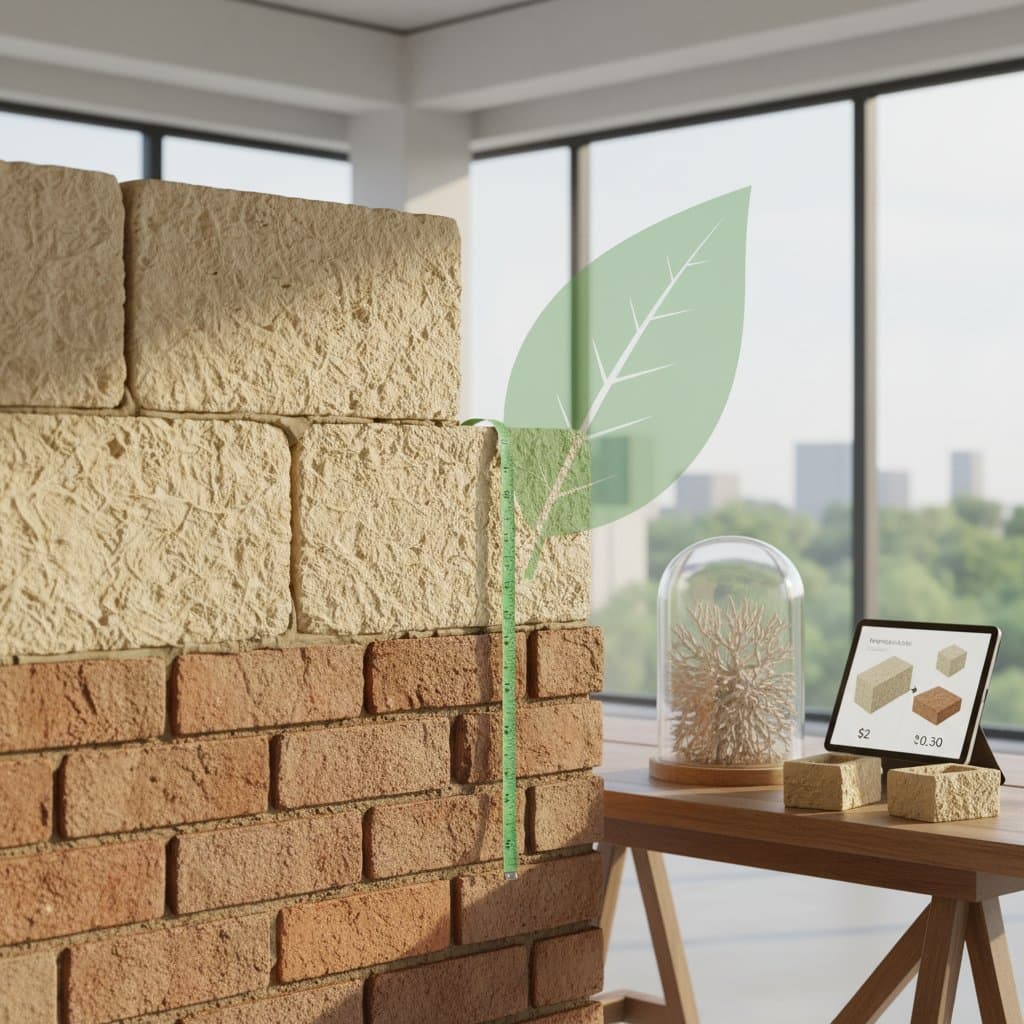
Introduction to Fungus Bricks
Fungus bricks emerge from the innovative use of mycelium, the root-like structure of fungi, combined with organic waste materials. This bio-based approach produces bricks that grow in molds over days or weeks, eliminating the need for energy-intensive firing processes required in traditional clay production. Builders and architects increasingly turn to these materials for their environmental benefits and versatility in modern construction.
These bricks weigh significantly less than clay counterparts, easing transportation and installation. Their production leverages local resources, such as sawdust or straw, fostering a circular economy. As sustainability demands rise, fungus bricks position themselves as a viable path to greener building practices.
Key Properties of Fungus Bricks
Fungus bricks exhibit unique characteristics that set them apart in the construction landscape. Density ranges from 25 to 35 pounds per cubic foot, making them far lighter than standard materials. Compressive strength typically falls between 200 and 900 pounds per square inch, suitable for non-structural elements like partitions and insulation.
Thermal conductivity measures 0.05 to 0.07 watts per meter-kelvin, providing excellent insulation with an R-value of 3 to 4 per inch of thickness. Water absorption remains moderate, necessitating protective coatings in damp environments. Fire resistance proves moderate, enhanced through treatments like boric acid infusions; small-scale flame tests confirm performance before broader use.
Moisture content in finished bricks should stay below 10 percent to prevent fungal regrowth. A uniform appearance, free of discoloration and with consistent density, signals a high-quality batch. These properties make fungus bricks ideal for interior applications where insulation and sustainability take priority.
Comparing Fungus Bricks with Traditional Clay Masonry
Performance Characteristics
Fungus bricks and clay masonry differ markedly in key attributes, influencing their suitability for various projects.
| Property | Mycelium Brick | Clay Brick |
|---|---|---|
| Density | 25-35 lb/ft³ | 120-130 lb/ft³ |
| Compressive Strength | 200-900 PSI | 2,500-4,000 PSI |
| Thermal Conductivity | 0.05-0.07 W/m·K | 0.6-1.0 W/m·K |
| Fire Resistance | Moderate with treatment | High |
| Water Absorption | Moderate | Low |
| Carbon Footprint | Negative or neutral | High positive |
Mycelium bricks outperform in insulation and ecological impact, absorbing carbon during growth. Clay bricks, however, dominate in load-bearing capacity and durability against moisture. Hybrid designs often pair mycelium for infill and insulation with clay for foundational support, optimizing both strength and efficiency.
Cost Comparison
Initial production costs for fungus bricks at small scales exceed those of mass-produced clay bricks, often reaching $2 per unit versus pennies for clay. Over the building lifecycle, however, advantages emerge. Energy savings from reduced heating needs, lighter transport logistics, and simplified disposal cut total project expenses by 20 to 35 percent.
Large-scale manufacturing could further drop costs below $1 per brick, rivaling clay economics. Projects incorporating fungus bricks benefit from potential green building incentives, amplifying financial returns. Long-term, their compostability eliminates demolition waste fees, enhancing overall value.
Troubleshooting Common Challenges
Cultivating fungus bricks involves monitoring to address potential issues early.
- Uneven growth often stems from contamination or fluctuating moisture levels. Employ sterile tools and sustain humidity at 80 to 90 percent.
- A crumbly texture suggests incomplete mycelium colonization or hasty drying. Prolong the growth phase by one to two days and dry gradually.
- Mold contamination arises in unfiltered environments. Introduce clean air filtration or a laminar flow hood to safeguard the culture.
- Excessive shrinkage results from over-drying or uneven airflow. Maintain balanced conditions in the curing chamber with gentle ventilation.
Regular checks during the 7- to 14-day incubation period mitigate these problems, ensuring reliable outcomes.
Maintenance and Longevity
Installed fungus bricks demand little upkeep, provided they avoid prolonged moisture exposure. Seal surfaces with breathable coatings to repel water while allowing vapor escape.
Inspection Checklist:
- Examine for moisture intrusion or fungal activity every six months.
- Verify coating integrity, particularly on exposed walls.
- Replace compromised units immediately to halt decay progression.
Under sheltered or indoor conditions with proper sealing, these bricks endure for decades. At lifecycle end, they decompose naturally or feed into new substrate cycles, supporting regenerative practices.
DIY Feasibility Versus Professional Production
Home builders can produce fungus bricks with accessible setups, including molds, substrates, and spawn kits.
DIY Advantages:
- Achieve up to 50 percent savings on material expenses.
- Customize compositions and dimensions to fit specific needs.
- Gain hands-on insight into sustainable processes, blending education with impact.
DIY Limitations:
- Cultivation spans weeks, demanding patience and space.
- Structural testing remains essential for safety in applications.
- Sterility proves challenging without dedicated equipment.
Professionals scale production efficiently, ensuring consistency for commercial projects. Beginners start small to build expertise before expanding.
Pro Tips for Success
Mastering fungus brick production requires attention to detail.
- Sterilize all substrates and tools via autoclaving or boiling to eliminate competitors.
- Test varied substrates, such as hemp hurds or cardboard, to optimize strength and weight.
- Stabilize humidity with misting systems during colonization.
- Validate small batches through compression and insulation tests prior to full runs.
- Store completed bricks in cool, dry areas with good airflow to preserve integrity.
These strategies elevate results, turning experimental efforts into dependable builds.
Advancing Sustainable Building Practices
Fungus bricks embody a shift toward biology-inspired construction, utilizing waste streams and low-energy methods. They integrate seamlessly into walls, panels, and insulation, balancing ecology with functionality.
Adopting these materials lowers emissions, conserves resources, and inspires innovative designs. Builders who master their cultivation contribute to resilient structures that harmonize with natural cycles, paving the way for widespread regenerative architecture.