
Geopolymer Bricks: Cement-Free Future Dominates 2026
Sustainable construction has evolved from an ideal into an essential practice that influences building methods worldwide. Geopolymer bricks stand at the forefront of this transformation as a cement-free option that enhances masonry efficiency, balances costs, and promotes environmental accountability. This guide details the nature of geopolymer bricks, their operational principles, and the reasons they appeal to forward-thinking builders seeking sustainable materials.
Key Takeaways
- Estimated cost range: $4.50 to $6.00 per square foot, including 55 percent for materials, 35 percent for labor, and 10 percent for equipment
- Curing time: 24 to 48 hours, in contrast to the seven days required for cement-based bricks
- Compressive strength: 5,000 to 8,000 PSI, surpassing the performance of many standard concrete blocks
- Temperature resilience: Maintains stability up to 1,200°F, ideal for environments with elevated heat levels
- Decision factors: Availability of source materials, selected curing approaches, demands of structural loads, and compliance with regional building codes
Understanding Geopolymer Bricks and Their Composition
Geopolymer bricks emerge from a chemical process involving aluminosilicate-rich substances, such as fly ash, metakaolin, or slag, combined with an alkaline activator like sodium hydroxide or sodium silicate. This method bypasses the use of Portland cement entirely. The interaction forms a robust three-dimensional matrix that integrates aggregates into a compact and resilient structure.
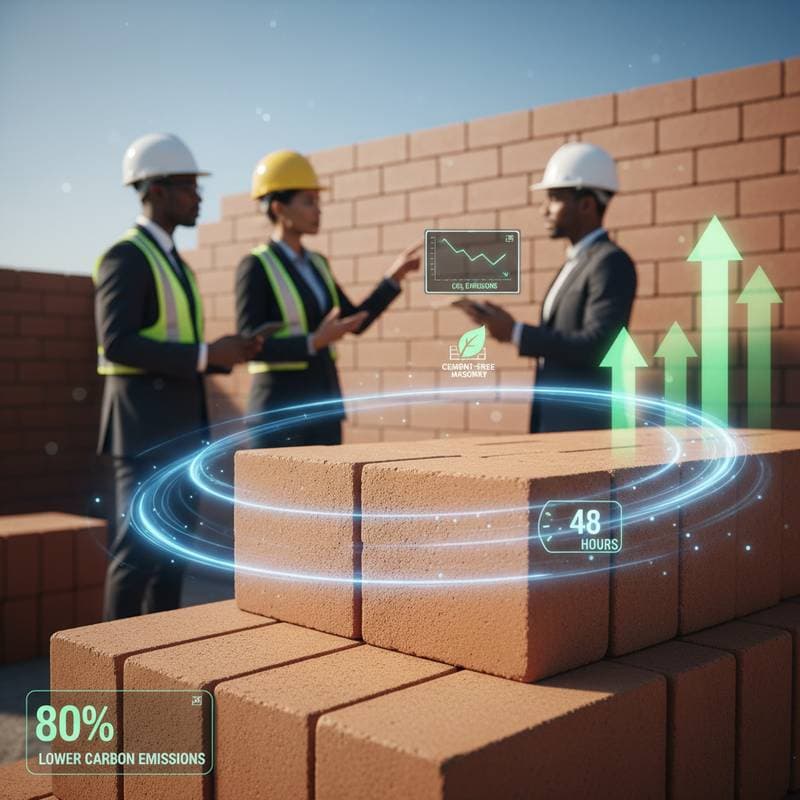
These bricks match or exceed the strength of conventional concrete while slashing carbon emissions by as much as 80 percent. Production eliminates the need for limestone calcination, which represents the primary emission source in traditional cement processes. Builders benefit from a material that aligns strength with ecological advantages.
Planning Requirements and Cost Considerations
Prior to launching a project with geopolymer bricks, verify that local building codes approve alternative binding agents. Certain areas mandate laboratory evaluations of strength or certifications from independent entities for materials without cement. Permit applications often necessitate proof of structural reliability and fire resistance.
Cost Breakdown Overview:
- Raw materials (fly ash, slag, activators): $2.00 to $3.00 per square foot
- Labor: $1.50 to $2.00 per square foot, reflecting efficiencies from quicker setting times
- Equipment and curing systems: $0.50 to $1.00 per square foot
While upfront expenses for materials may exceed those of standard masonry, overall savings arise from shorter curing durations and decreased energy consumption. Projects gain long-term value through these efficiencies.
Preparing the Site and Materials
Thorough preparation guarantees uniform quality in geopolymer bricks. Precise measurement and regulated mixing prove essential to reach the targeted compressive strength. A dedicated workspace minimizes risks of inconsistency.
Essential Materials:
- Fly ash or slag: Core binding components sourced from industrial waste streams
- Alkaline activator: A blend of sodium hydroxide and sodium silicate in solution form
- Fine aggregates: Cleaned sand or pulverized stone to provide volume and support
- Molds: Durable steel or polymer frames to standardize brick sizes
- Protective gear: Gloves resistant to chemicals, safety goggles, and aprons during the mixing phase
Keep the mixing zone free of debris, as impurities can disrupt the polymerization reaction and compromise final results.
Step-by-Step Execution Process
-
Measure and mix materials accurately: Start by blending dry components, followed by gradual incorporation of liquid activators. Aim for a texture akin to conventional mortar that holds shape without excessive flow.
-
Mold and compact the mixture: Transfer the prepared mix into forms and employ vibration tools or hand pressure to eliminate trapped air. This step promotes even density and bolsters overall strength.
-
Cure under controlled conditions: Position the molds in an environment heated to 140°F to 180°F for 24 to 48 hours. Such conditions hasten polymerization and solidify the bricks. In warmer regions, natural ambient curing serves as an option, though it extends the timeline.
-
Inspect and test before use: Examine units for fissures, color variations, or irregularities. Perform compression tests on representative samples to validate load-bearing capacity.
Troubleshooting Common Challenges
- Uneven strength: Often results from imbalanced activator proportions or inconsistent temperatures; recalibrate ratios and monitor environmental controls
- Surface efflorescence: Minimize by lowering water addition or fine-tuning activator levels to prevent salt deposits
- Cracking during curing: Stems from swift evaporation; shield molds with coverings to preserve internal moisture
- Color inconsistency: Arises from variable fly ash quality or fluctuating heat; standardize suppliers and temperature settings for uniformity
Addressing these issues promptly ensures reliable outcomes and avoids project delays.
Maintenance and Long-Term Performance
Geopolymer bricks demand little upkeep due to their dense structure and immunity to chemical degradation. Annual reviews of outer walls focus on mortar joints, with sealing recommended for openings exceeding 1/8 inch. This routine preserves appearance and function.
When installed and cured correctly, these bricks endure beyond 75 years without notable decline in integrity. Their capacity to withstand thermal extremes positions them well for factories, marine settings, or areas prone to salt corrosion, where ordinary masonry falters.
Adopting Geopolymer Bricks for Sustainable Projects
Integrating geopolymer bricks supports enduring durability alongside reduced ecological impact. Smaller endeavors can proceed with DIY methods using ready-mixed formulations and simple heating setups. Larger builds benefit from expert consultation to handle engineering assessments and regulatory adherence.
Builders who prioritize these materials contribute to a greener industry. Explore suppliers of quality fly ash and activators to initiate your next project with confidence.