
Introduction to Geopolymer Bricks
Geopolymer bricks represent an innovative advancement in construction materials. These bricks form through a chemical reaction involving industrial by-products such as fly ash or slag, activated by alkaline solutions. Unlike traditional clay or concrete bricks, which rely on high-temperature firing or cement production, geopolymer bricks cure at ambient temperatures. This process yields a material with remarkable properties suited for modern masonry demands.
The rise of geopolymer bricks aligns with global pushes for sustainability. Construction accounts for a significant portion of worldwide carbon emissions, primarily from cement manufacturing. Geopolymer alternatives address this issue directly, offering builders a path to greener projects without sacrificing performance.
Key Advantages of Geopolymer Bricks
Geopolymer bricks excel in several critical areas that traditional masonry materials often struggle to match. Their compressive strength frequently surpasses that of standard clay bricks, reaching values over 20 megapascals in optimized mixes. This durability ensures reliable performance in load-bearing walls and seismic zones.
Thermal insulation stands out as another benefit. Geopolymer compositions can incorporate porous structures that trap air, reducing heat transfer by up to 30 percent compared to dense concrete blocks. Homeowners and architects appreciate this feature for energy-efficient designs that lower heating and cooling costs over time.
Sustainability defines the core appeal of these bricks. Production utilizes waste materials from power plants and steel mills, diverting millions of tons from landfills annually. Carbon emissions drop dramatically, with studies indicating reductions of 80 percent or more relative to Portland cement-based products. This eco-profile supports compliance with stringent environmental regulations in regions like Europe and North America.
Cost efficiency emerges as a practical draw for contractors. While initial material prices may align with premium options, long-term savings accumulate through faster curing times. Bricks set within hours rather than days, allowing crews to proceed without delays. For small-scale projects, labor costs can decrease by up to 30 percent due to simplified installation processes.
Challenges and Cost Considerations
Adopting geopolymer bricks involves navigating certain hurdles. Activator chemicals, essential for the geopolymerization reaction, add to upfront expenses. Safety equipment, such as protective gear for handling alkaline substances, represents another investment. Curing control systems, including humidity monitors, ensure optimal conditions but may offset some labor savings on initial projects.
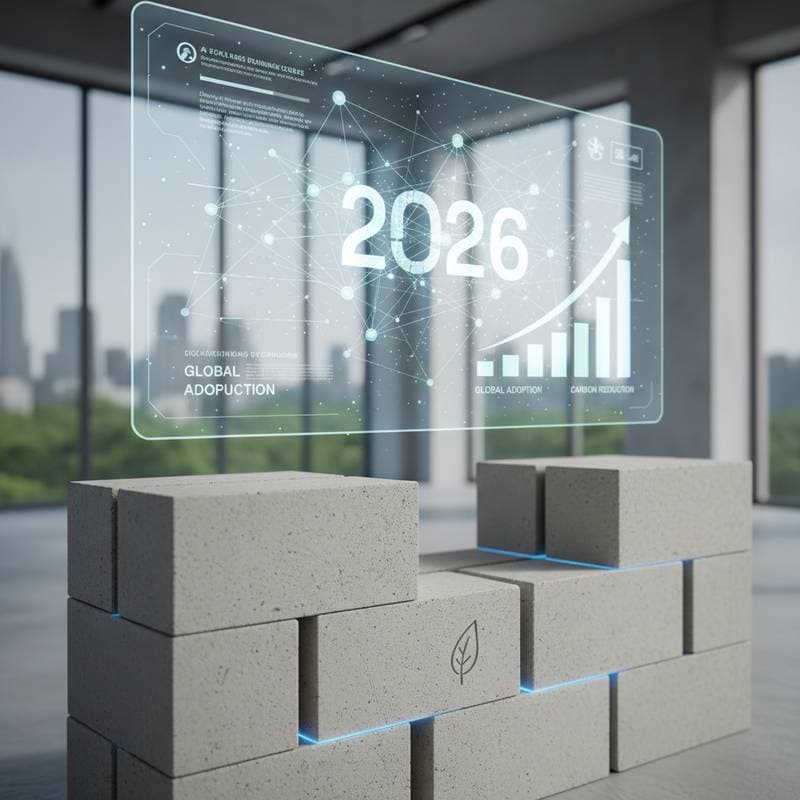
Builders must account for these factors during budgeting. For instance, a mid-sized residential build might see material costs rise by 10 to 15 percent, balanced later by reduced energy use in the finished structure. As production scales and supply chains mature, these expenses are projected to decline, making geopolymer bricks more accessible by 2026.
Selecting Professionals for Geopolymer Projects
Success with geopolymer masonry hinges on expert involvement. Verify that contractors hold valid licensing for structural masonry work. Insurance coverage protects against liabilities in case of installation errors.
Request compressive strength test reports from past projects to gauge reliability. These documents detail how materials performed under real-world stresses, providing assurance of quality.
Confirm warranty terms, which typically span 10 to 15 years for both materials and workmanship. Such protections safeguard investments in long-term durability.
Experienced teams manage critical aspects like mix ratios and curing environments. For large-scale or load-bearing applications, their oversight prevents issues such as uneven setting or reduced strength. Prioritizing qualified professionals minimizes risks and maximizes the benefits of this innovative material.
The Path to Industry Dominance by 2026
Multiple indicators point to geopolymer bricks leading masonry practices within the next few years. Building codes increasingly mandate low-carbon materials, with jurisdictions in Australia and parts of Asia already incorporating geopolymer standards. Research from institutions worldwide validates their performance, accelerating adoption among forward-thinking developers.
Scaling production plays a pivotal role. Facilities now operate at capacities that support widespread distribution, driving down costs through economies of scale. Innovations in mix designs further enhance properties, such as fire resistance and water absorption rates below 5 percent.
The synergy of strength, efficiency, and environmental gains positions geopolymer bricks as indispensable. They enable structures that withstand extreme conditions while contributing to climate goals. By 2026, market analysts predict these bricks will capture over 40 percent of new masonry projects in sustainable-focused markets.
Implementing Geopolymer Bricks in Your Project
Transitioning to geopolymer masonry requires deliberate steps for optimal results. Begin by sourcing reliable materials. Select fly ash or metakaolin from certified suppliers to ensure consistency in particle size and reactivity.
Master the chemistry involved. Maintain precise ratios of activators, typically sodium silicate and sodium hydroxide, at levels around 10 to 15 percent by weight. Control curing conditions, aiming for temperatures between 20 and 40 degrees Celsius and relative humidity above 70 percent to achieve full strength.
Document all performance metrics. Record compressive strength tests, which should exceed local code minimums, and absorption values to verify weather resistance. These records support compliance and future maintenance planning.
Train your team thoroughly. Instruct masons on safe handling of alkaline components, including the use of gloves, goggles, and ventilation. Supervisors should oversee mix preparation to avoid common pitfalls like over-alkalinity, which can weaken the final product.
Realizing Benefits Through Geopolymer Adoption
Integrating geopolymer bricks elevates project outcomes across multiple dimensions. Structures gain enhanced resilience against environmental stresses, from freeze-thaw cycles to chemical exposures. Occupants benefit from improved indoor comfort due to superior insulation.
Economically, the shift yields returns through lifecycle savings. Reduced maintenance needs and energy bills compound over decades, often recouping any premium costs within five years. Environmentally, each project contributes to broader sustainability efforts, aligning with corporate responsibility mandates.
Builders who embrace this technology position themselves as leaders in an evolving industry. Geopolymer bricks not only meet current standards but exceed them, fostering innovation in design and construction practices. The result is a built environment that balances performance with planetary health.