
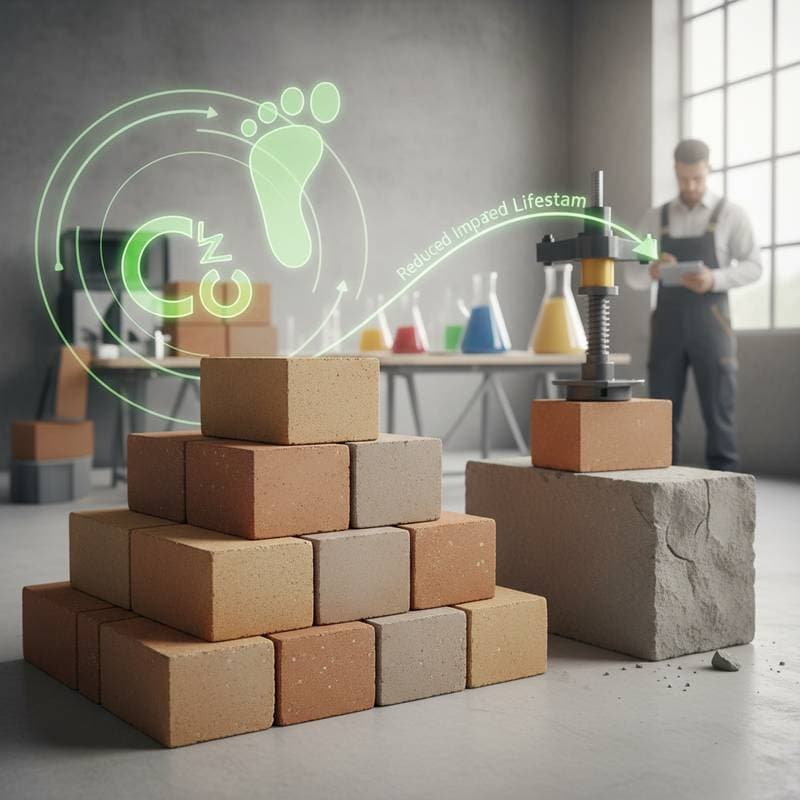
Why Geopolymer Bricks Dominate Modern Masonry
Geopolymer bricks represent an innovative class of masonry units formed by activating aluminosilicate materials like fly ash, slag, or calcined clay through alkaline solutions. This process creates a durable binder that mimics the performance of cement while generating significantly less carbon. Builders increasingly select these bricks for their superior strength, environmental benefits, and reliability in challenging conditions such as high heat or moisture.
These bricks integrate seamlessly with conventional construction techniques, addressing key limitations of traditional fired clay or Portland cement blocks. They harden at room temperature, withstand chemical degradation, and incorporate industrial byproducts as primary ingredients. For project managers or homeowners considering new builds or renovations, grasping the unique advantages of geopolymer bricks enables informed decisions that balance performance and sustainability.
Cost Ranges
Material costs for geopolymer bricks typically range from $0.80 to $1.50 per unit for basic wall applications. Installed pricing falls between $10 and $18 per square foot, influenced by factors like wall thickness, design complexity, and site accessibility.
Premium options, including custom shapes or specialized finishes, command higher prices, particularly for projects distant from manufacturing facilities. Economies emerge through on-site bulk production or sourcing local byproducts like fly ash from power plants. Labor expenses align closely with those for concrete masonry, and the accelerated curing process often reduces overall timelines.
Key Specifications to Verify
Selecting geopolymer bricks requires scrutiny of essential performance metrics to ensure suitability for your project:
- Compressive strength: Target a minimum of 4,000 psi for general walls; opt for higher ratings in load-bearing applications.
- Water absorption: Limit to less than 10 percent by weight to support exterior exposure.
- Freeze-thaw resistance: Ensure passage of at least 50 cycles without surface deterioration for regions with harsh winters.
- Dimensional accuracy: Confirm tolerances within one-sixteenth inch to facilitate precise jointing.
- Efflorescence prevention: Review manufacturer data aligned with ASTM standards or equivalents.
- Fire resistance: Expect ratings surpassing four hours for thicker assemblies.
Obtain certified test results tailored to the batch or formulation intended for your site.
Installation Guidelines
Follow these steps to achieve a robust geopolymer brick installation:
- Site layout: Mark guidelines with chalk lines for walls and openings; verify perpendicular corners.
- Foundation setup: Establish a level base course using full mortar beds; employ string lines for straight alignment.
- Mortar preparation: Adhere to producer guidelines on activator proportions and blending duration.
- Brick placement: Apply mortar to end joints, position units gently, and ensure uniform joint depths.
- Joint finishing: Tool joints after initial hardening to enhance protection against weather.
- Curing process: Moisten surfaces or cover with sheeting for a minimum of two days.
- Post-installation cleaning: Remove surplus activator or mortar promptly to prevent permanent marks.
Steer clear of Portland cement mortar with geopolymer bricks unless explicitly endorsed by the supplier, as mismatched expansion rates may induce fractures.
DIY Projects Versus Professional Installation
Geopolymer bricks suit do-it-yourself efforts in select scenarios:
- Non-structural elements like garden borders, barbecue areas, or ornamental features.
- Straightforward layouts with basic bonding and limited need for cuts.
- Availability of ready-to-use geopolymer mortar or modular interlocking designs.
Engage certified masons for more demanding situations:
- Structures supporting weight or integrating with foundational systems.
- Locations prone to water runoff or ground freezing.
- Intricate patterns, arches, or non-linear forms.
- Compliance with regulations for fire safety or earthquake resilience.
Experienced installers excel in managing cure times and adapting mixtures to ambient conditions. They also navigate permitting and verification processes efficiently.
Adapting to Regional Conditions and Climates
Tailor geopolymer brick applications to local environments for optimal longevity:
In cold areas: Prioritize freeze-thaw certified units and seal joints meticulously. Incorporate sloped tops or protective caps to divert precipitation.
In arid or warm locales: Shield fresh masonry from direct sun and apply light misting during setting. Prevent hasty drying that leads to fissures.
Near coastlines: Select low-permeability bricks to counter salt buildup; periodic rinsing maintains appearance.
In polluted industrial settings: Leverage inherent corrosion resistance to acidic atmospheres, outperforming cement alternatives.
In earthquake-prone regions: Benefit from reduced mass and strong adhesion, but adhere strictly to seismic reinforcement protocols.
Essential Safety Measures and Regulatory Compliance
Prior to excavation or base laying, identify underground utilities by consulting regional locator services.
For material handling and fabrication:
- Don protective eyewear and respiratory gear.
- Employ water-fed cutting tools to suppress airborne particles.
- Use gloves when working with alkaline components and rinse any skin exposure immediately.
Consult local authorities regarding approvals for geopolymer materials. Many areas require submission of producer validation reports to confirm adherence to alternative construction criteria.
Expert Recommendations for Optimal Results
Implement these practices to elevate your masonry project:
- Initiate construction from the foundation's lowest elevation to sustain level courses.
- Opt for a soft-faced mallet over metal tools to preserve brick edges.
- Verify verticality and horizontality after every third or fourth row; precise dimensions amplify minor deviations.
- Integrate control joints in walls exceeding 30 feet to accommodate thermal shifts.
- Wait 48 hours minimum before sealing or decorating surfaces.
Such attentions safeguard structural integrity and yield a refined, enduring finish.
Preserving Geopolymer Brick Structures
Geopolymer masonry demands minimal upkeep post-construction. Conduct annual visual assessments for joint fissures, encroaching foliage, or foundational shifts. Clear adjacent vegetation to inhibit moisture retention from root systems.
Address discoloration with mild detergents, eschewing abrasive tools that might etch surfaces. For repairs, extract compromised units carefully, prepare the opening, and secure replacements with compatible bedding material.
Embracing Geopolymer for Sustainable Builds
Geopolymer bricks offer a compelling path to reduce environmental footprints without sacrificing durability. By integrating these materials, builders and owners alike advance toward resilient, low-emission infrastructure that withstands time and elements effectively.