
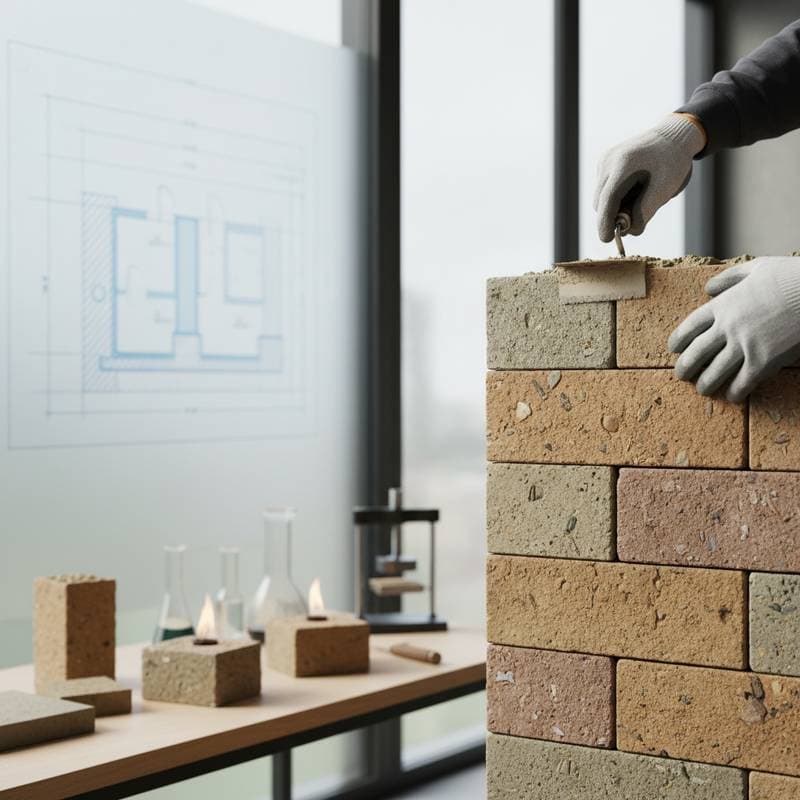
Understanding Geopolymer Bricks
Geopolymer bricks offer a cleaner and stronger alternative to traditional fired clay or cement blocks. These bricks combine industrial by products such as fly ash, slag, or metakaolin with an alkaline activator. The mixture creates a chemical bond at low temperatures. This process forms a dense material without high heat kilns or Portland cement.
The core reaction is called polymerization. It produces a stone like structure similar to natural rock. The resulting material delivers high compressive strength, low shrinkage, and strong resistance to heat and chemicals. Geopolymer bricks also trap waste minerals and cut carbon emissions compared with conventional cement production.
Why Geopolymer Technology Matters in Masonry
Traditional masonry relies on energy intensive materials that release large volumes of greenhouse gases. Cement production alone accounts for a major share of construction emissions. Geopolymer bricks reuse industrial waste that would otherwise need disposal. This approach pairs environmental gains with measurable performance improvements.
These bricks provide reliable thermal insulation that helps maintain steady indoor temperatures. They withstand fire and salt exposure more effectively than many cement blocks. Lower water absorption reduces efflorescence and cracking risks. In seismic or flood prone zones the added resilience improves safety and cuts long term repair expenses.
Planning Project Use
Assess structural needs and site conditions before selecting geopolymer bricks. They suit garden walls, retaining structures, paving, and load bearing walls when properly engineered.
Site Assessment
Examine soil type and drainage patterns. Although the bricks resist water, the foundation must stay stable and well drained. Avoid areas with potential standing water. On slopes, design controlled runoff paths.
Required Measurements
Calculate wall height, length, and thickness to determine brick quantities. Account for half inch mortar joints. Add ten percent extra material for cuts and waste. For retaining or load bearing walls, confirm that weight distribution meets local codes or consult an engineer.
Environmental Considerations
Geopolymer bricks perform well in moderate to hot climates. In colder regions verify frost resistance ratings from the supplier. Low porosity limits freeze thaw damage, yet proper drainage remains essential.
Potential Supply Challenges
Availability can vary by region because geopolymer products are newer than standard masonry. Confirm stock levels and lead times early. Verify that the chosen brick and mortar system are chemically compatible.
Material Options
Fly Ash Based Bricks
- Lightweight and strong with excellent sustainability.
- Color variation may appear and specific curing conditions are required.
- Usually lower cost than cement blocks.
- Suitable for intermediate skill levels.
- Ideal for walls and landscaping features.
Slag Based Bricks
- Deliver very high compressive strength and low permeability.
- Heavier than fly ash versions with a limited color range.
- Moderate to premium pricing.
- Best for intermediate to advanced skill levels.
- Recommended for structural and retaining applications.
Metakaolin Based Bricks
- Provide consistent texture, color, and high durability.
- Higher raw material cost.
- Premium pricing.
- Require advanced or professional skill levels.
- Suited to architectural finishes and high end facades.
Tools and Materials
Hand tools
- Mason trowel for spreading mortar.
- Level for straight courses.
- Mason line for alignment.
- Rubber mallet for adjustments.
- Measuring tape for layout.
Power tools
- Brick saw or angle grinder for cuts.
- Drill with mixing paddle for mortar.
- Optional vibration plate for large pavers.
Rental equipment
- Small mixer for consistent mortar.
- Scaffolding for taller walls.
- Wheelbarrow for transport.
Purchase ten percent extra bricks to cover breakage and cutting loss.
Installation Steps
- Excavate the base to six to eight inches for small structures. Compact the soil and add a gravel drainage layer.
- Place the first course on a level mortar bed. Use a level and string line to ensure accuracy.
- Continue laying courses while staggering vertical joints by half a brick. Keep mortar thickness uniform.
- Recheck level and plumb every two or three rows. Make adjustments before mortar sets.
- Tool joints to a smooth or concave profile for sealing and appearance.
- Follow manufacturer curing instructions, which may include moist curing for several days.
In hot weather cover fresh work with damp burlap to control moisture loss.
Maintenance and Longevity
Inspect walls periodically for joint cracks or drainage issues. Clean surfaces with low pressure water to remove dirt without damaging mortar. Apply breathable sealers only when recommended by the manufacturer. Proper initial installation and curing typically result in decades of service with minimal intervention.
Common Mistakes to Avoid
- Skipping base compaction, which leads to settling and cracking.
- Using incompatible mortar that fails to bond correctly.
- Allowing uneven moisture during curing, which reduces final strength.
- Ignoring specified curing times, which shortens service life.
Performance Outcomes
Builders who follow these practices gain durable masonry with lower environmental impact. The combination of waste reuse, energy savings, and structural reliability supports both project goals and broader sustainability targets.