
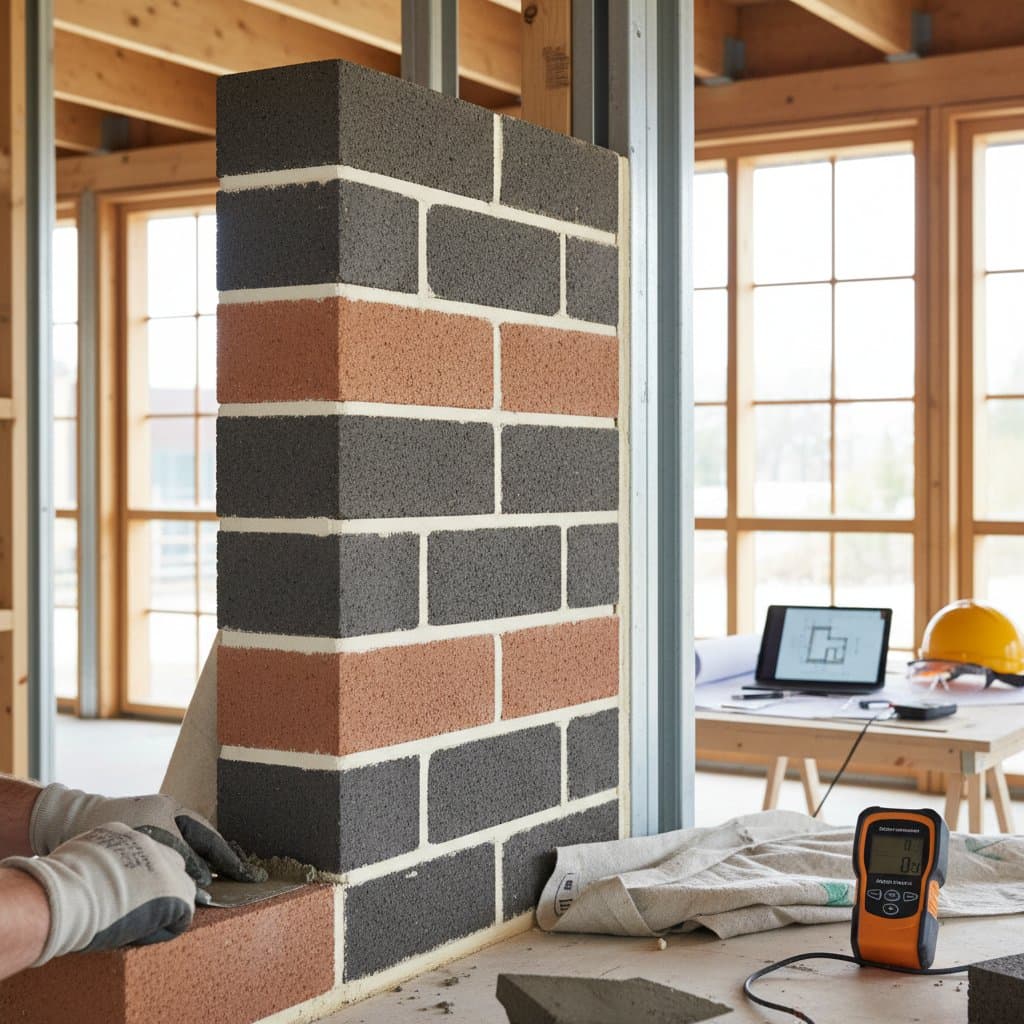
Code-Approved Zero-Cement Bricks Enable Sustainable Load-Bearing Construction
Key Insights
Zero-cement bricks, known as geopolymer bricks, now satisfy structural building codes for load-bearing applications. These materials differ from traditional Portland cement blocks in their curing process and performance characteristics. Builders must prioritize moisture control during installation and select mortars compatible with geopolymer chemistry. At scale, costs align closely with conventional masonry, though initial projects often incur a 10 to 20 percent premium due to specialized handling.
Essential Site Evaluations
Prior to selecting geopolymer bricks, evaluate site-specific factors that affect installation and longevity:
- Ensure effective site drainage to prevent splashback and pooling near walls.
- Position the foundation top at least eight inches above grade level to promote drying.
- Incorporate roof overhangs sufficient to shield walls from direct saturation.
- Design mortar joints to shed water efficiently rather than retain it.
- Verify uniformity in brick color and texture across batches to avoid visual inconsistencies.
Geopolymer bricks exhibit superior resistance to water intrusion compared to Portland-based alternatives. However, the overall wall assembly relies on meticulous detailing. During construction, tap bricks to detect hollow sounds or variations that indicate incomplete curing or moisture entrapment.
Warning Signs of Potential Issues
Identify these indicators early to mitigate risks:
- Suppliers unable to furnish mix compositions or compressive strength test results.
- Lack of verification for mortar compatibility with geopolymer formulations.
- Appearance of white crust or efflorescence on walls following initial rainfall.
- Blotchy discoloration resulting from inconsistent curing or inadequate storage.
- Absence of a drainage plane or weep holes in veneer assemblies.
Addressing these promptly preserves structural integrity and aesthetic quality.
Corrective Measures and Estimated Expenses
For minor efflorescence on surfaces, apply a low-pressure rinse with a vinegar solution; materials cost less than fifty dollars. Cracking due to improper curing typically requires partial reconstruction, ranging from twenty to thirty dollars per square foot. When mortar incompatibility arises, rake out joints and repoint, at eight to twelve dollars per linear foot.
Avoid applying water-repellent coatings as a remedy for persistent moisture penetration, since such treatments trap vapor and accelerate deterioration. Scope expansion often occurs if crews revisit flashing or drainage elements overlooked in initial planning.
Strategies for Repair or Replacement
In cases of localized failure, re-bed individual bricks instead of demolishing entire wall sections. Chemical incompatibilities with mortar may necessitate full replacement. Geopolymer bricks lend themselves to reuse after thorough cleaning, thereby reducing waste and expenses.
Transitioning from concrete units demands confirmation that bearing capacities and tie spacings comply with codes. Engage a structural engineer to review substitutions, as direct equivalency cannot be assumed without analysis.
Collaborative Team Approach
Initiate projects with a structural engineer experienced in geopolymer systems. Involve masons early for mockup construction and bond strength evaluations. Architects oversee critical details such as flashing, drip edges, and wall thicknesses.
General contractors maintain precise sequencing, given the unique setting and strength-gain timeline of these bricks compared to cement varieties. For intricate builds, professional oversight may increase costs by 10 to 20 percent yet minimizes costly rework.
High-Impact Complementary Enhancements
Integrate these upgrades for optimal performance:
- Comprehensive perimeter drainage and precise site grading.
- Uninterrupted air barriers and vapor retarders.
- Effective roof runoff management via expansive gutters and remote downspouts.
- Resilient lime-based or mineral paints that facilitate moisture evaporation.
In humid regions, defer decorative veneers until long-term durability studies confirm viability.
Budgeting and Phased Implementation
Prioritize drainage and flashing installations before erecting walls. Follow with insulation and air control layers, then apply finishes. Delay interior tasks until wall moisture content equilibrates.
As local manufacturing matures, material prices will decline; initial phases should budget for quality testing and extended curing periods.
Ensuring Long-Term Performance
Conduct inspections after the first significant rainfall event. Examine for discoloration or moisture trails at joints. Verify that weep holes remain unobstructed and downspouts direct water away from foundations. Routine vigilance averts extensive repairs.
When constructed and detailed with care, zero-cement bricks surpass the lifespan of traditional masonry, delivering enduring value through reduced environmental impact and operational efficiency.