
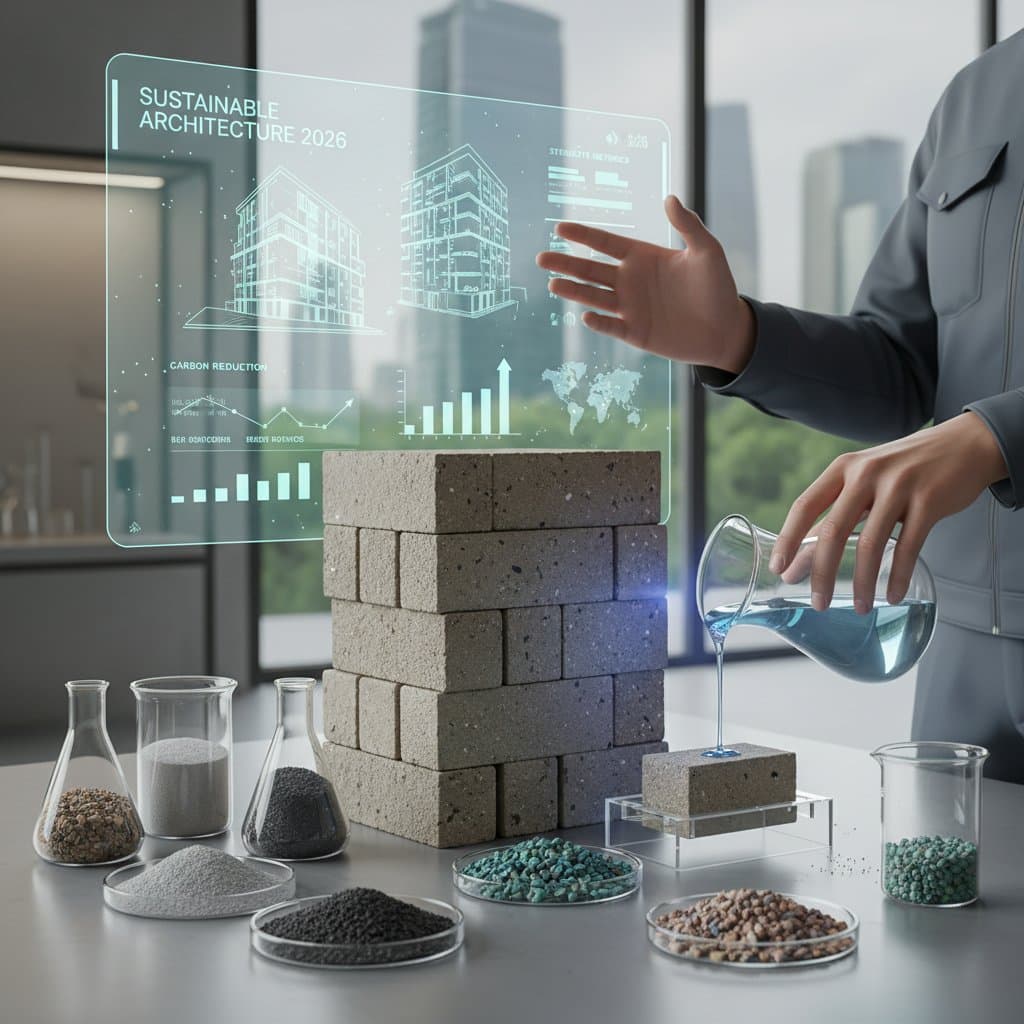
Understanding Zero-Cement Bricks
Traditional masonry relies on Portland cement to bind aggregates. Production of this cement releases substantial carbon dioxide. Each ton contributes significantly to global emissions, prompting the need for alternatives. Zero-cement bricks emerge as a viable solution, utilizing geopolymer chemistry with industrial by-products and natural minerals.
These bricks redefine durability, performance, and environmental impact. Materials like fly ash, slag, and metakaolin enable chemical reactions that form robust bonds without cement's energy-intensive calcination. The outcome matches or surpasses traditional brick strength while drastically lowering carbon emissions.
Grasping the science of their composition reveals why zero-cement bricks position themselves to lead modern masonry.
How Geopolymer Bricks Differ from Cement Bricks
Geopolymer bricks substitute cement with aluminosilicate polymers. These form through mixing reactive powders with alkaline activators such as sodium silicate or potassium hydroxide. The process yields a three-dimensional network akin to natural stone. Geopolymerization proceeds at lower temperatures and requires less water than cement hydration.
Key Differences
- Binding mechanism: Cement depends on hydration, whereas geopolymers form bonds via polymerization.
- Raw materials: Cement draws from limestone and clay; geopolymers employ fly ash, slag, or volcanic rock.
- Carbon footprint: Geopolymer production reduces emissions by over 50 percent relative to traditional cement.
- Durability: Geopolymer bricks withstand heat, acids, and salts more effectively than cement-based options.
- Curing process: Zero-cement bricks often cure at room temperature, minimizing energy use.
Such distinctions affect environmental outcomes and structural performance. Builders attain equivalent stability with materials that lessen planetary strain.
Why the Shift to Zero-Cement Masonry Matters
This transition extends beyond environmental rhetoric. Cement manufacturing demands immense energy and resources. Substituting it with by-products cuts emissions and redirects waste from landfills, fostering a circular economy.
Geopolymer bricks resolve durability issues common in sustainable materials. They exhibit strong resistance to freeze-thaw cycles, chemical corrosion, and fire. In challenging environments like coastal areas or aggressive soils, this leads to extended lifespans and reduced upkeep expenses.
For builders, architects, and homeowners, zero-cement masonry merges ecological objectives with dependable results. The focus lies on delivering enduring, superior quality.
Planning Your Transition to Zero-Cement Masonry
A thorough planning stage confirms that geopolymer bricks suit your project's structural and environmental demands.
Assessing the Site
Examine soil type, drainage, and exposure levels. Geopolymer bricks function effectively in dry or humid settings, yet soil chemistry impacts mortar choices. Test for elevated sulfate levels; although geopolymers resist attacks, matching mortars remain crucial. Evaluate slopes and water flow to avoid moisture accumulation behind walls.
Measurements to Take
Determine wall lengths, heights, and openings. Calculate total units by multiplying wall area by the brick coverage rate. Include a 10 percent buffer for cuts and breakage. For foundations or retaining walls, verify load-bearing needs, noting that geopolymer bricks possess densities slightly distinct from clay varieties.
Environmental Factors to Consider
Temperature and humidity influence curing rates. Ambient conditions suffice for most zero-cement bricks, but extreme cold may delay reactions. Prepare sheltered or warmed spaces if necessary. Adhere to manufacturer guidelines on curing times.
Obstacles to Expect
Sourcing uniform materials presents the primary hurdle. Fly ash and slag quality varies regionally. Confirm supplier dependability prior to major projects. Limited access to alkaline activators in certain locales can elevate costs and complicate logistics.
Choosing Materials
Various formulations exist for zero-cement brick systems. Selecting based on project specifics optimizes outcomes.
Option 1: Fly Ash-Based Geopolymer Bricks
Description: These incorporate fly ash activated with alkalis.
Pros: Offer high compressive strength, superior thermal insulation, and low permeability.
Cons: Rely on variable industrial waste supplies.
Cost: Economical with local fly ash access.
Skill Level: Intermediate; demands precise mixing and curing oversight.
Best Use: Structural walls, paving, and heat-exposed applications.
Option 2: Slag-Based Geopolymer Bricks
Description: Ground granulated blast furnace slag serves as the foundation.
Pros: Provide density, smooth surfaces, and reliable curing.
Cons: Incur higher costs; availability limits in some areas.
Cost: Moderate to elevated.
Skill Level: Intermediate to advanced.
Best Use: Zones with coastal or chemical exposure.
Option 3: Natural Pozzolan or Metakaolin Bricks
Description: These utilize natural minerals over industrial wastes.
Pros: Ensure steady supply and robust eco-profiles.
Cons: Command premium prices; exhibit greater mixing sensitivity.
Cost: High-end.
Skill Level: Advanced; ideal for seasoned builders.
Best Use: Architectural features and restoration efforts.
Gathering Tools and Materials
Hand Tools
- Brick trowel: Spreads mortar and shapes joints; indispensable for masonry work.
- Level: Verifies plumb and alignment.
- Mason's line: Guides straight courses.
- Rubber mallet: Positions bricks without damage.
- Jointing tool: Seals mortar joints against weather.
Power Tools
- Mixer or drill with paddle attachment: Achieves even geopolymer mixes.
- Angle grinder with masonry blade: Delivers precise brick cuts.
- Wet saw: Supports accuracy in high-volume cutting.
Rental Equipment
- Mortar mixer: Handles large batches to maintain consistency.
- Scaffolding: Facilitates elevated or multi-course construction.
- Vibrating plate compactor: Prepares bases for patios or similar.
Materials List
- Geopolymer bricks (plus 10 percent surplus)
- Matching geopolymer mortar
- Alkaline activators
- Clean water (applied minimally)
- Safety equipment: gloves, goggles, respirator
Safety Warning: Protective gear is mandatory when managing alkaline activators, which may irritate skin and eyes.
Step-by-Step Instructions for Building with Zero-Cement Bricks
-
Prepare the foundation. Level and compact the base, removing any pooled water. This step averts settling and fractures.
-
Mix the geopolymer mortar. Employ the manufacturer's prescribed ratios. Stir gradually to eliminate clumps. Aim for a consistency that holds shape yet spreads easily.
-
Lay the first course. Employ a string line and level. Begin at corners, progressing inward. Gently tap bricks to secure placement.
-
Check alignment frequently. Reassess level and plumb after every few bricks. Address minor misalignments promptly to avoid compounding issues.
-
Apply mortar evenly. Distribute a half-inch layer. Press bricks to expel air voids.
-
Cut bricks cleanly for joints and openings. Measure twice before cutting to minimize waste. Don eye protection during operations.
-
Cure at stable temperature. Cover with plastic sheeting in dry conditions for moisture control. Shield from direct rain in initial phases.
-
Inspect after curing. Scan for cracks or shifts. Repair superficial flaws with geopolymer paste.
Quality Checkpoint: Confirm each course levels properly, joints remain uniform, and mortar bonds without voids.
Pro Tip: Procure 10 percent additional bricks to account for on-site losses.
When to Call a Professional
Experienced DIY enthusiasts can manage geopolymer brick laying. However, professionals enhance outcomes for substantial structural endeavors. Engage a structural engineer for load-bearing foundations, pressure-retaining walls, or integrations with legacy masonry. Precise geopolymer handling benefits from expert monitoring of curing and testing.
Seek a certified mason for multi-story builds or installations involving utilities, absent personal engineering expertise.
Finishing Touches and Maintenance
Geopolymer bricks accommodate finishes like limewash, permeable sealers, or exposed surfaces. Clean joints and brush faces prior to application. Steer clear of impermeable coatings that retain moisture.
Routine maintenance proves straightforward. Conduct yearly inspections for joint erosion or scaling. Repoint with suitable mortar as required. Clean using mild detergent and water; eschew acidic solutions.
Pro Tip: In freeze-thaw regions, apply breathable sealers to mitigate winter water ingress.
Enhancing Your Project
Pair zero-cement masonry with eco-friendly landscapes. Integrate permeable paths or native plantings to handle runoff. Embed lighting channels in outdoor walls before completing courses. Employ varied mortar colors to highlight brick patterns for visual interest.
Future Prospects for Geopolymer Masonry
Advancements in geopolymer technology promise broader adoption by 2026. Enhanced formulations will improve scalability and accessibility. Builders embracing these bricks contribute to a low-carbon built environment, balancing innovation with proven reliability.