
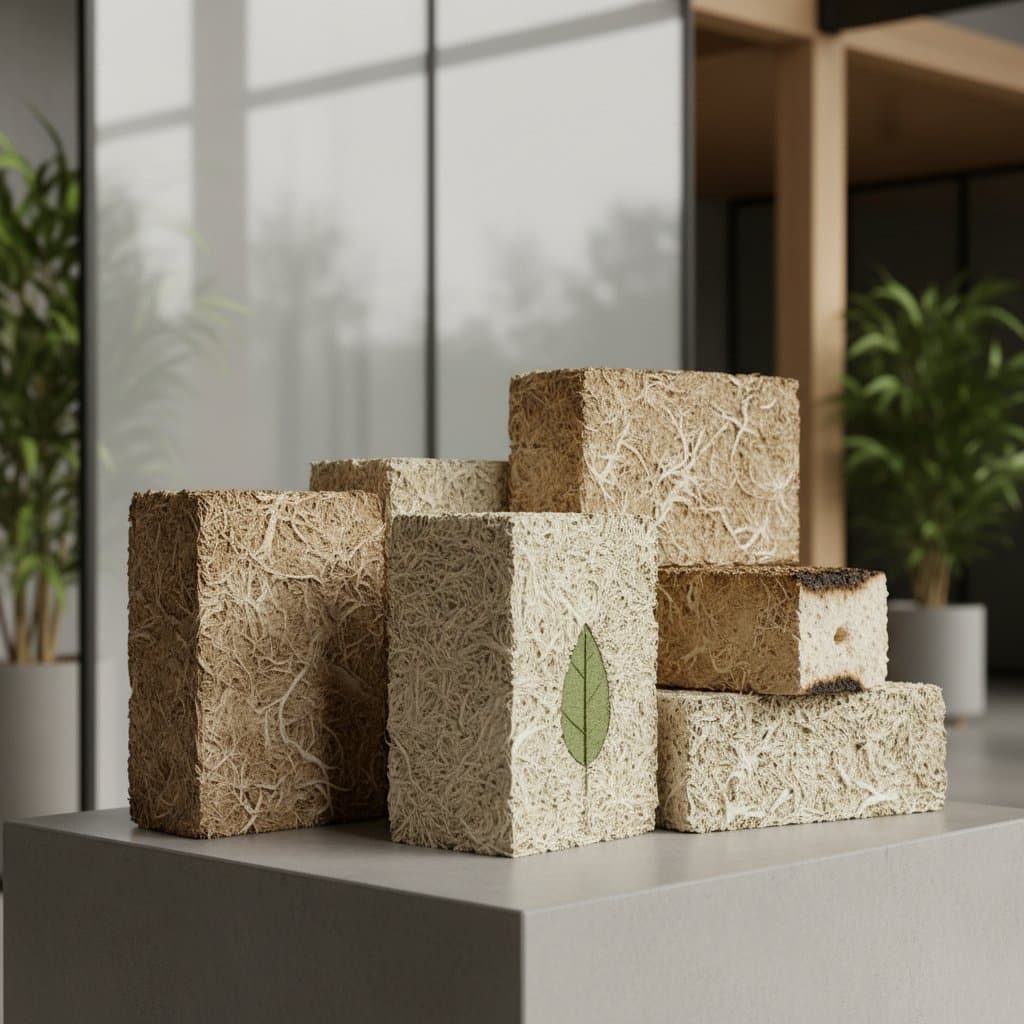
Sustainable Mycelium Bricks: Fungus Replaces Clay
Mycelium bricks form a bio-based building material from the root structure of mushrooms. Producers cultivate these bricks in molds with agricultural waste and fungal spores rather than firing clay in kilns. The outcome yields a lightweight, compostable, and fire-resistant substance suitable for blocks, panels, or insulation boards.
This method supports sustainable construction by lowering carbon emissions and diverting waste. Homeowners, builders, and designers gain access to an emerging option that relies on renewable inputs instead of mined resources.
Pros and Cons
Pros
- Low carbon footprint results from the absence of kiln firing and high-heat processing.
- Compostable and renewable composition allows the material to return to soil at the end of its service life.
- Lightweight construction simplifies handling and reduces transport expenses.
- Fire and pest resistance stems from the dense mycelium network that limits flame spread.
- Thermal and acoustic insulation arises from the porous structure that stabilizes indoor conditions.
Cons
- Limited structural strength restricts use to non-load-bearing walls or insulation layers.
- Moisture sensitivity requires sealing or protection from direct water contact.
- Variable durability depends on growth conditions, binder selection, and curing methods.
- Limited supply stems from the small number of commercial producers.
- Regulatory uncertainty persists as building codes adapt to bio-based materials.
Costs
Material costs for mycelium bricks range from 6 to 12 dollars per square foot of wall surface for infill or cladding applications. Installed costs typically fall between 15 and 30 dollars per square foot once finishes, framing, and labor enter the calculation.
Custom shapes and protective coatings increase expenses. On-site growth and interior insulation applications lower overall outlays. Scaled production should bring prices in line with mid-range brick or lightweight concrete.
Lifespan and Maintenance
A properly sealed mycelium wall section lasts 20 to 50 years based on exposure levels and finish quality. Annual inspections of sealants, coatings, and flashing prevent moisture intrusion.
Clean surface panels with a soft brush or damp cloth. Reapply bio-based resin or lime coatings every five to ten years. Replace any section that shows mold or decay after confirming surrounding materials remain dry.
Specs to Check
Confirm density and compressive strength in the 30 to 100 psi range before purchase. Higher densities suit wall infill while lower values fit insulation needs.
Review moisture absorption rates and select products with hydrophobic coatings. Verify thermal resistance near R-3 per inch and a minimum one-hour fire rating. Require mold resistance certification that meets standard fungal growth tests.
Planning and Prep
Site evaluation must confirm that mycelium bricks will not contact soil or prolonged moisture. Install a raised base, vapor barrier, or drainage layer beneath every assembly.
Maintain ventilation during curing and limit direct rain exposure. Keep indoor humidity below 70 percent for stability. Outdoor designs require overhangs or cladding that prevents standing water.
Installation Overview
- Prepare a level, moisture-protected substrate or cavity frame.
- Dry-fit bricks or panels to verify alignment.
- Apply bio-based mortar, low-VOC adhesive, or rated clips.
- Set units from a reference line while maintaining consistent joints.
- Fill gaps with compatible sealant or mycelium-based filler.
- Apply lime plaster, clay render, or natural resin coating.
Allow full curing before finishes. Heat-treat or dehydrate on-site grown bricks to deactivate spores prior to placement.
Patterns and Options
Standard blocks match clay brick dimensions for interior wall infill. Thin panels serve insulation or acoustic purposes. Decorative tiles provide custom textures. Composite units combine mycelium with hemp or flax for added strength on exposed surfaces.
DIY vs Pro
Small interior projects such as acoustic panels or garden sheds suit DIY efforts that require molds and temperature control. Structural retrofits and exterior walls require professional installation to meet sealing and code standards.
DIY builders must wear respiratory protection during cutting and must heat-treat bricks before indoor use.
Common Failures and Fixes
Surface softening occurs from excess moisture. Dry the area, reapply sealant, and add drip edges. Cracking results from uneven drying. Adjust binder ratios and use controlled curing. Mold growth requires removal of affected pieces and improved ventilation. Color fading calls for UV-protective coatings formulated for bio-based materials.
Regional and Climate Notes
Humid climates demand sealed and ventilated assemblies or composite versions with added resins. Cold regions require thicker coatings and drainage planes to manage freeze-thaw cycles. Hot, dry areas need surface protection from direct sun to avoid brittleness.
Alternatives
Hempcrete offers greater strength and moisture tolerance at higher weight and cost. Compressed earth blocks provide local availability but require extended drying. Recycled fiber panels cut easily yet deliver lower fire resistance. Straw bale walls supply excellent insulation but demand more labor.
Long-Term Benefits
Mycelium bricks lower embodied carbon and enable circular design. End-of-life components return to soil rather than landfills. Reduced shipping weight and operational energy savings further decrease total emissions.
Pro Tips for Success
Order 10 percent extra material to cover cuts and breakage. Store units dry and shaded. Test sealants on samples first. Use sharp tools and dust masks during trimming. Keep growth molds clean. Home production begins with agricultural waste mixed with fungal spawn, followed by humidity control at 60 percent and final dehydration.
Project Implementation
Each installation refines techniques and builds code acceptance. Careful moisture protection allows mycelium bricks to substitute for many conventional materials while aligning construction with natural cycles.