
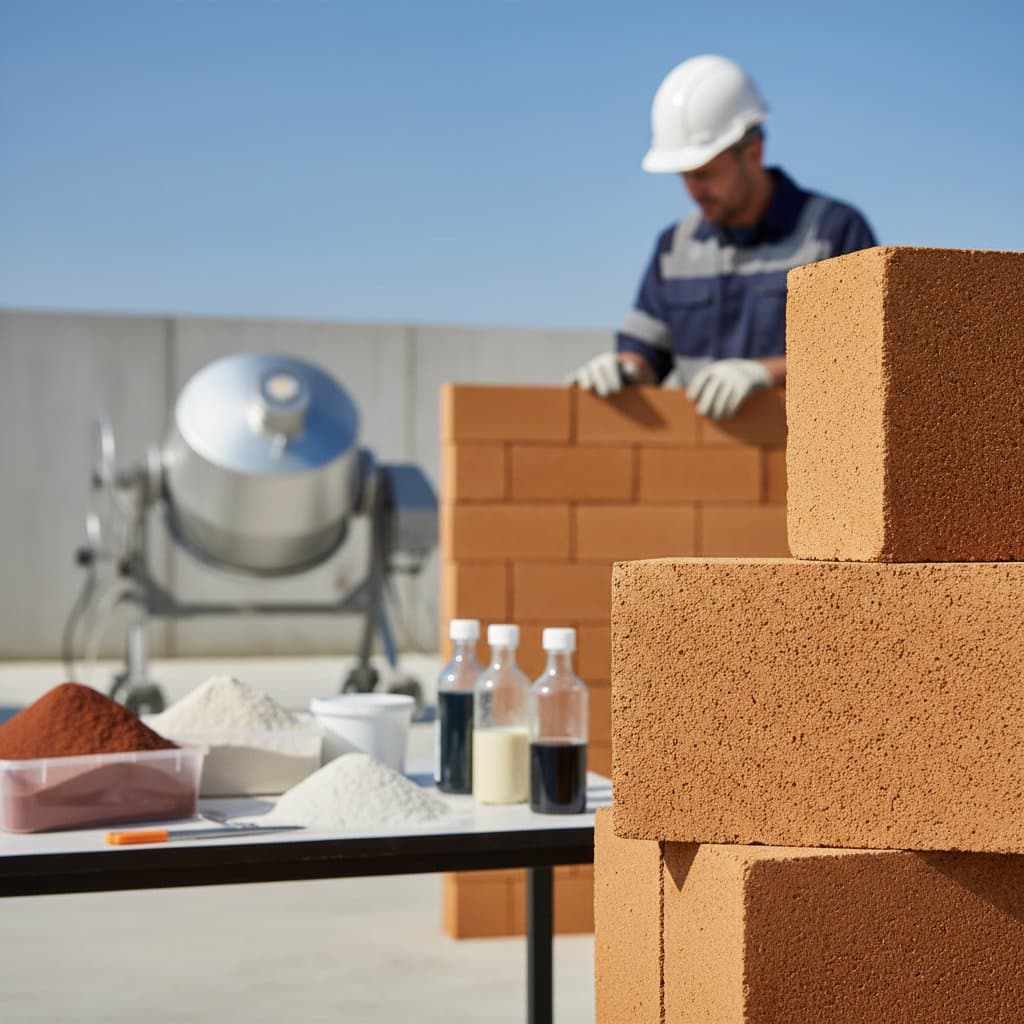
Zero-Cement Geopolymer Bricks Transform Masonry
The construction industry continues to adopt cleaner materials, and zero-cement geopolymer bricks now deliver stronger performance with far lower environmental impact. These blocks replace Portland cement with industrial by-products such as fly ash or slag. The change converts waste into durable masonry while cutting carbon emissions substantially.
Key Performance Metrics
- Cost range typically runs 10 to 25 percent higher than standard clay or cement bricks, with materials representing about 60 percent of expense, labor 30 percent, and curing or handling 10 percent.
- Compressive strength commonly reaches 5,000 to 8,000 PSI, which exceeds most conventional masonry units.
- Curing requires 24 to 72 hours under controlled heat or ambient conditions, depending on the binder formulation.
- Moisture absorption stays below 10 percent, which improves durability and reduces efflorescence.
- Embodied carbon drops 40 to 80 percent compared with cement-based alternatives.
Geopolymer Chemistry and Applications
A geopolymer binder forms when aluminosilicate materials react with alkaline activators such as sodium hydroxide or sodium silicate. The process avoids calcined limestone and its associated carbon dioxide release. Instead it repurposes industrial residues that would otherwise enter landfills. The resulting matrix offers high density, excellent strength, and strong heat resistance.
These bricks suit load-bearing walls, paving, retaining structures, and decorative facades. Their uniform density and low shrinkage support precise masonry work.
Site Preparation and Required Materials
Verify that local building codes accept non-cementitious masonry units before ordering materials. Some jurisdictions require certification or independent testing for structural use.
Essential materials include an aluminosilicate source such as fly ash, slag, or metakaolin, an alkaline activator combining sodium hydroxide and sodium silicate, fine sand or crushed stone aggregates, steel or polymer molds, and a controlled curing chamber or covered area.
Small-scale production can rely on manual presses or semi-automatic machines. Commercial operations use vibration and compression equipment to achieve higher density.
Mixing and Production Steps
Measure every ingredient by weight for consistent results. A typical mix uses one part binder to two or three parts aggregate, activated with 8 to 12 percent alkaline solution by weight of solids.
- Prepare the activator by dissolving sodium hydroxide pellets in water, then blending with sodium silicate solution. Allow the mixture to cool before use.
- Combine dry ingredients first, then add the activator gradually until the batch reaches a workable semi-dry consistency.
- Fill molds evenly, apply vibration or compression, and release the bricks carefully.
- Cure at 140 to 160 degrees Fahrenheit for accelerated strength gain or under shaded ambient conditions for several days.
Quality Checks and Installation Guidance
Inspect each batch for uniform color, shape, and density. Perform compressive strength tests on sample units. Geopolymer bricks should exhibit minimal cracking and consistent texture. Lay them with a compatible geopolymer-based or low-cement mortar to preserve chemical compatibility.
Common Production Issues and Solutions
Efflorescence appears when excess sodium silicate or uncontrolled moisture remains during curing. Reduce the silicate dosage and maintain stable humidity. Cracking usually results from uneven temperature or rapid moisture loss. Adjust curing conditions and water content. Weak bonding often traces to incorrect activator concentration or incomplete mixing. Follow precise ratios every time.
Long-Term Care of Geopolymer Masonry
Inspect walls once a year for cracks wider than 1/16 inch and repair them with matching geopolymer mortar. Clean surfaces with mild detergent and water. Avoid acidic cleaners. Properly installed work lasts decades with minimal degradation.
When Professional Oversight Is Required
DIY production works for small landscaping or non-structural projects. Load-bearing or large-scale applications need qualified contractors who understand structural codes, curing protocols, and testing requirements. Professional installation adds 15 to 25 percent to total cost yet protects long-term performance and safety.
Integrating Geopolymer Bricks into Your Next Project
Zero-cement geopolymer bricks provide a practical route to lower-carbon construction without sacrificing strength or durability. Apply the mixing ratios, curing controls, and quality checks outlined above to achieve reliable results on residential or commercial work.