
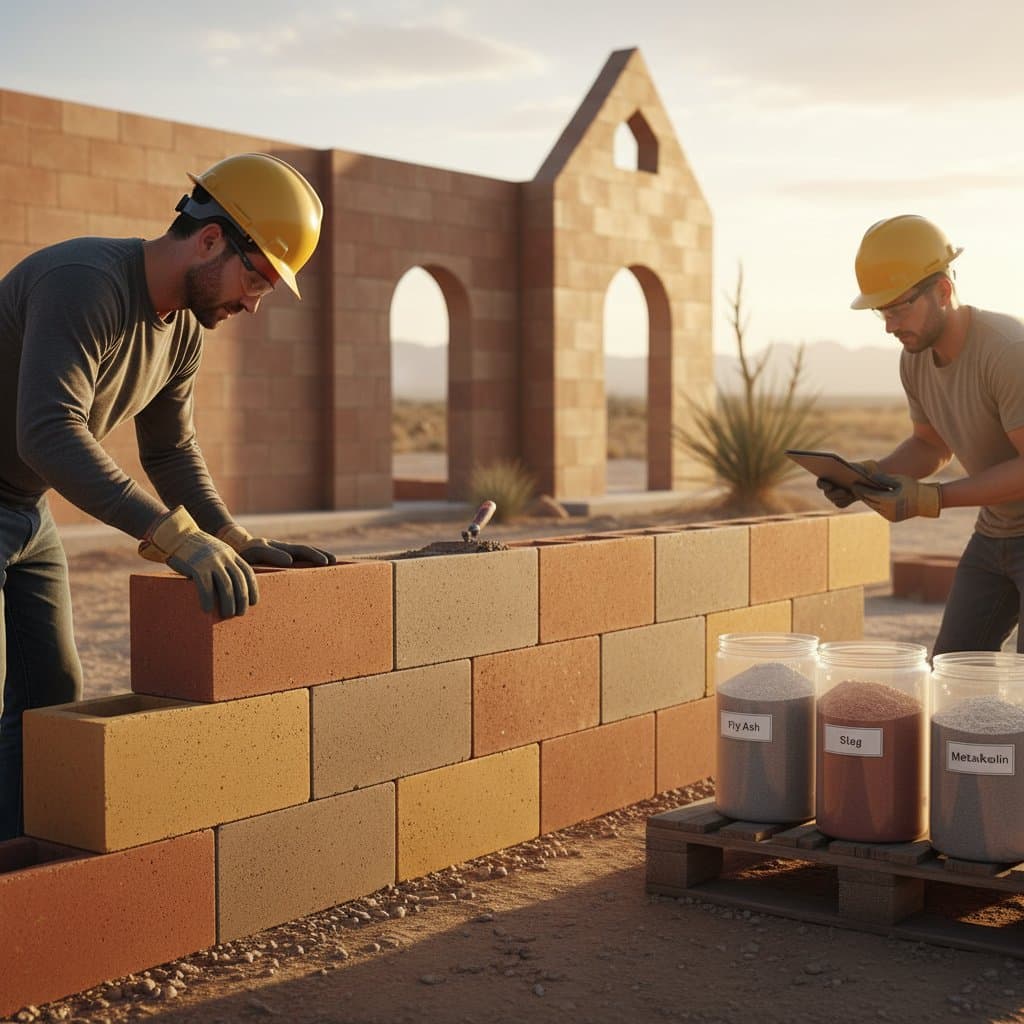
Understanding Zero-Cement Bricks
Zero-cement bricks form part of an emerging class of masonry materials that substitute traditional Portland cement with innovative binders. Geopolymer bricks stand out as a leading option, formed through chemical reactions between industrial byproducts and alkaline activators to create a solid, stone-like matrix. These bricks incorporate materials like fly ash, slag, or calcined clay, which are plentiful and typically viewed as waste products. By forgoing cement, they substantially lower the carbon footprint of construction projects while preserving or enhancing structural integrity.
The principle underlying zero-cement bricks proves straightforward yet impactful. Conventional cement demands the intense heating of limestone, which emits substantial carbon dioxide. Geopolymer processes bypass this by activating reactive minerals at ambient or modest temperatures. This approach yields a robust material independent of energy-heavy clinker manufacturing.
Reasons for the Transition
Cement manufacturing ranks among the most energy-intensive industrial activities. Each unit of cement involves considerable fuel consumption and greenhouse gas releases. Zero-cement options mitigate these issues by repurposing byproducts destined for disposal sites. They also facilitate localized production, as source materials often originate nearby, thereby minimizing transport-related emissions.
Builders benefit from these bricks through superior compressive strength, minimal water uptake, and robust resistance to thermal and chemical stresses. Homeowners enjoy enduring walls that demand less upkeep and exert reduced environmental strain. This transition extends beyond technology to foster a cultural emphasis on accountable building practices.
Required Skills and Project Scale
Projects using zero-cement bricks suit builders with intermediate to advanced expertise in masonry, including alignment techniques, mortar preparation, and load-bearing design. The underlying geopolymer chemistry demands precision, so DIY efforts typically employ pre-manufactured bricks rather than site-mixed formulations. Handling activators and managing curing demands lab-grade accuracy and protective equipment. Individuals lacking chemical background or specialized tools should opt for factory-produced bricks.
Structural elements such as load-bearing walls, retaining structures, or foundations necessitate oversight from a licensed engineer or mason. Simpler applications like landscaping borders, garden dividers, and non-structural partitions prove more feasible for proficient DIY participants.
Selecting Materials
Zero-cement masonry encompasses several primary types, each featuring unique attributes.
Fly Ash-Based Geopolymer Bricks
These bricks derive from fly ash, a residue of coal-fired power generation, combined with alkaline activators.
- Advantages: Superior compressive strength; notable resistance to heat and acids; strong environmental credentials.
- Disadvantages: Demands exact curing protocols; availability may vary by location.
- Pricing: Comparable to standard mid-tier cement bricks.
- Installation Expertise: Intermediate to advanced.
- Upkeep: Minimal; involves periodic cleaning and joint inspections.
- Ideal Applications: Load-bearing or aesthetic walls prioritizing longevity and eco-friendliness.
- Visual Traits: Even surface in gray or charcoal shades.
Slag-Based Geopolymer Bricks
These utilize ground granulated blast-furnace slag from steelmaking as the primary binder.
- Advantages: Exceptional longevity; dense composition; uniform coloration; effective in wet or coastal settings.
- Disadvantages: Increased weight; potentially needs reinforced bases.
- Pricing: Ranges from moderate to higher, based on sourcing.
- Installation Expertise: Intermediate.
- Upkeep: Low; withstands stains and corrosion from salts.
- Ideal Applications: Marine barriers, retaining walls, or moisture-exposed facades.
- Visual Traits: Pale gray to cream tones; sleek or subtly shiny finish.
Calcined Clay Geopolymer Bricks
These employ heat-treated natural clays to produce a mineral binder.
- Advantages: Relies on regional resources; consistent hues; favorable insulation properties.
- Disadvantages: Needs rigorous quality checks; performance fluctuates with clay type.
- Pricing: Economical relative to slag variants.
- Installation Expertise: Beginner to intermediate for basic walls.
- Upkeep: Infrequent; reseal in harsh conditions as needed.
- Ideal Applications: Indoor partitions, garden features, or thermally efficient residences.
- Visual Traits: Earthy colors akin to conventional clay bricks.
Construction Guide
Establish the Foundation
Dig to a depth of 6 to 8 inches in the project area. Layer and compact gravel to form a firm base. Use a straightedge to ensure evenness, supporting stability and water runoff.
Position the Initial Row
Apply a 1-inch mortar bed. Set the starting brick at the edge and adjust with a mallet for level placement. Proceed row-wise, keeping uniform gaps. Verify alignment and flatness after every few bricks.
Key Verification: Perfection in the base row prevents escalating inaccuracies higher up.
Construct Additional Rows
Offset joints by half a brick to bolster stability. Distribute mortar uniformly and seat each brick securely. Remove surplus mortar promptly. Employ a plumb line to monitor upright alignment regularly.
Practical Advice: Lightly moisten brick undersides prior to placement. This enhances bonding and slows mortar drying.
Profile and Refine Joints
As mortar firms, tool the joints for smoothness. Concave profiles promote water shedding over flush ones. Wipe brick faces with a moist cloth to eliminate smears before full setting.
Facilitate Curing
Permit gradual hardening, shielding from sun and drafts for days. Hasty evaporation risks joint fissures. Withhold loads until full stabilization occurs.
Implement Protective Coatings
Follow manufacturer guidance to seal vulnerable areas. Select permeable sealants that block water yet allow vapor escape. Distribute via brush or spray in uniform layers.
Post-Construction Considerations
Achieve a Refined Appearance
Sweep cured surfaces to clear residue. Install capstones atop standalone walls for completion. In outdoor settings, incorporate matching planters or benches to unify the design.
Ongoing Preservation
These bricks demand sparse maintenance. Wash with gentle soap and water seasonally. Examine joints yearly, repointing cracks as found. In freezing regions, assess for ice-induced wear on protrusions.
Reapply sealants per product intervals if used. Steer clear of abrasives or high-pressure cleaners that might abrade textures.
Practical Enhancements
- Illumination: Embed low-voltage LEDs or solar lights along rows for contemporary appeal.
- Vegetation: Support trailing greenery to provide shade and visual interest.
- Utility Features: Integrate timber or metal elements for seating or screening.
- Thermal Boost: Layer with insulating boards indoors to elevate efficiency.
Advancing Sustainable Builds
Zero-cement bricks mark a pivotal advance in material innovation, merging resilience with reduced ecological demands. Professionals and hobbyists alike can leverage their properties for projects that endure and conserve resources. Proper execution ensures structures that perform reliably while advancing environmental goals.
Start with site assessment and material selection to match project needs. Consult experts for complex builds to optimize outcomes. This approach not only constructs lasting features but also contributes to broader sustainability efforts.