
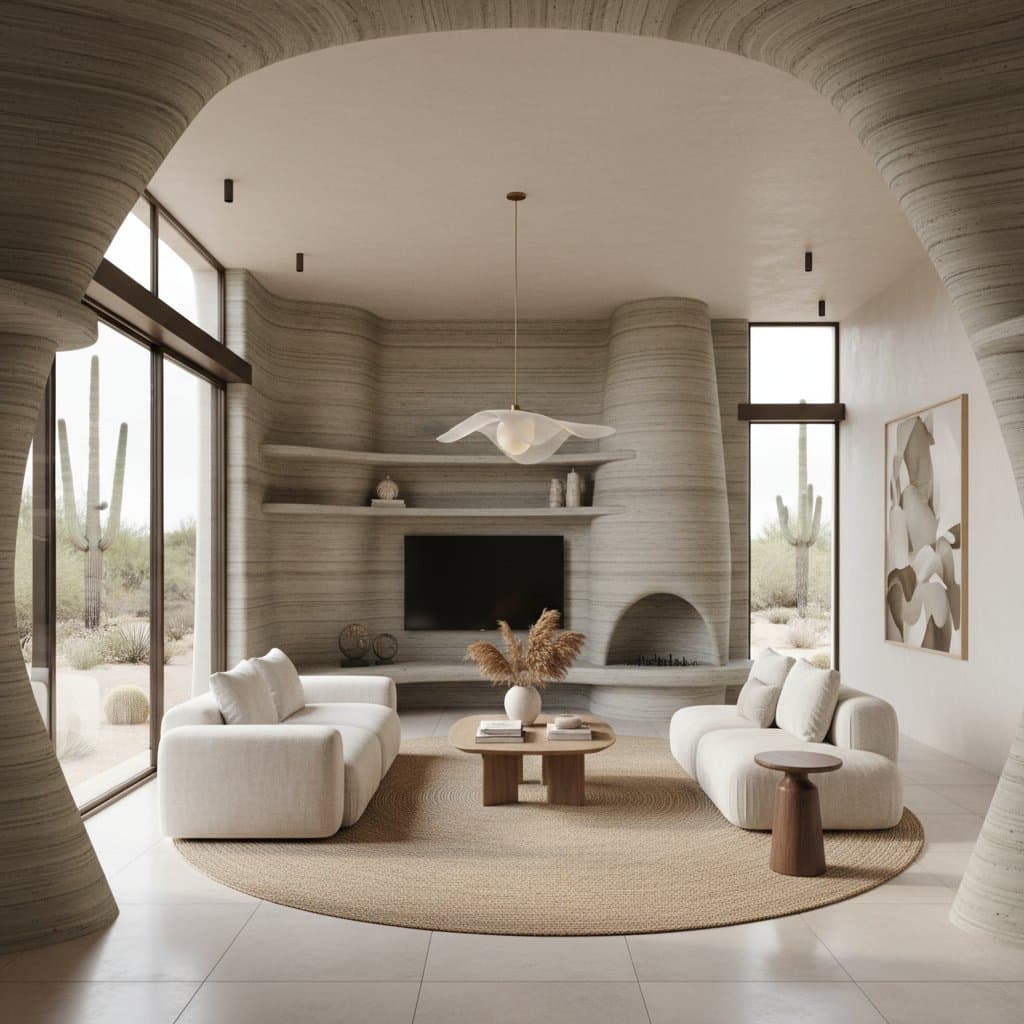
Introduction to 3D-Printed Concrete Homes
3D-printed concrete homes represent a significant advancement in residential construction. These structures emerge from large-scale robotic printers that extrude layers of specialized concrete, forming walls and foundational elements with precision. The process accelerates building timelines to as little as 48 hours for a basic single-story home, while maintaining costs around $150 per square foot, far below traditional methods that often exceed $200 per square foot.
This efficiency stems from minimized labor and material waste, alongside improved sustainability through lower energy use during production. Homeowners benefit from customizable designs that incorporate energy-efficient features, such as insulated walls and integrated solar readiness. Before embarking on such a project, evaluate site suitability, local regulations, and budget allocations to ensure a seamless experience.
Planning Your 3D-Printed Home Project
Effective planning forms the cornerstone of any successful 3D-printed home. Begin by assessing your land for soil stability, access to utilities, and compliance with zoning laws. Engage architects proficient in parametric design software to create 3D models that optimize space and integrate structural reinforcements.
Budgeting requires detailed cost breakdowns. Expect $150 per square foot for the printed structure, plus 20 to 30 percent more for finishes, roofing, and interior systems. Factor in permitting fees, which vary by jurisdiction but typically range from $5,000 to $15,000, and secure approvals early to avoid delays.
Material selection influences both performance and aesthetics. Choose concrete mixes with recycled aggregates for eco-friendliness, ensuring they meet compressive strength standards of at least 4,000 psi. Consult geotechnical engineers to tailor the foundation to local conditions, preventing settlement issues.
Essential Equipment for 3D Printing
Assembling the right equipment ensures operational reliability during the printing phase. Key components include the gantry or robotic arm system, which moves the print head along X, Y, and Z axes to deposit concrete accurately.
- Mixing and pumping unit: This system prepares and delivers concrete through reinforced hoses to the printer nozzle, maintaining consistent flow rates of 10 to 20 gallons per minute.
- Power and control systems: Depend on a stable 480-volt electrical supply and high-speed data links to synchronize printer movements with the digital blueprint, preventing operational interruptions.
- Safety gear: All personnel must wear hard hats, safety glasses, heavy-duty gloves, and respirators to protect against dust, noise, and chemical exposure during active printing.
Additional tools encompass laser levels for site alignment and environmental sensors to monitor temperature and humidity, which affect concrete setting times.
Execution: Printing the Structure
With preparations in place, the printing process unfolds methodically. Calibrate the printer using the digital model to align the nozzle with the foundation footprint, verifying coordinates through test prints on a small scale.
-
Printing the base layers: Deposit initial layers to secure adhesion to the foundation slab. Maintain nozzle height at 1/8 inch above the previous layer, using visual inspections and laser sensors to confirm even alignment and prevent shifts.
-
Building the wall height: Extrude concrete continuously at a rate of 1 to 2 feet per hour, achieving wall thicknesses of 8 to 12 inches. Insert steel reinforcement rods or fiber mesh every 4 to 6 layers, or at predefined intervals, to enhance tensile strength against seismic activity.
-
Embedding utilities: Integrate conduits for electrical wiring and plumbing sleeves during extrusion pauses. Collaborate with licensed electricians and plumbers to map embed locations, ensuring pathways align with post-print installations and code requirements.
-
Curing and protection: Upon completion, allow the concrete to cure for a minimum of seven days to reach full structural integrity. Apply moisture-retaining blankets or curing compounds to the surface, shielding it from direct sunlight and wind to minimize shrinkage cracks.
Throughout execution, maintain ambient temperatures between 50 and 85 degrees Fahrenheit for optimal material performance.
Troubleshooting Common Challenges
Automation reduces errors, yet vigilance addresses potential issues promptly. Regular monitoring preserves print quality and structural safety.
- Uneven layers: Arise from fluctuating pump pressure or deviations in nozzle elevation. Halt operations immediately, adjust settings via the control interface, and resume after a calibration check to restore uniformity.
- Cold joints between prints: Develop if interruptions exceed 30 minutes, weakening bonds. Abrade the exposed surface with a wire brush, apply a cementitious bonding agent, and proceed with fresh extrusion to achieve seamless integration.
- Cracking during curing: Results from excessive evaporation or imbalanced water in the mix. Control the environment with misting systems to sustain 95 percent humidity, and cover structures with plastic sheeting if temperatures drop below 50 degrees.
- Surface defects: Such as air voids or protrusions require patching with polymer-modified mortar before final finishing. Sand smooth after 24 hours of setting to prepare for stucco or siding applications.
Document all adjustments in a project log to inform future builds and refine operational protocols.
DIY Potential and Professional Guidance
3D-printed homes offer accessibility for hands-on enthusiasts, yet complexity demands expertise in critical areas.
When to Hire Professionals
Certain elements necessitate certified specialists to uphold safety and legality.
- Structural engineering: Essential for load calculations and certification, ensuring the design withstands environmental stresses like wind and earthquakes.
- Printer operation: Involves skilled technicians trained on the equipment model, managing software inputs and real-time adjustments to avoid costly reprints.
- Mix design: Requires input from materials engineers to formulate concrete with precise ratios of cement, aggregates, and admixtures for desired workability and strength.
- Electrical and plumbing: Licensed professionals handle installations within printed walls, adhering to national and local codes for inspections and warranties.
For DIY approaches, start with smaller prototypes like garden walls to gain familiarity with printer controls and concrete handling. Scale up only after mastering basics and obtaining necessary training.
Integrating 3D Printing into Sustainable Home Building
3D-printed concrete homes advance residential construction by combining rapid execution with environmental responsibility. Digital modeling minimizes material overuse, while the process cuts construction waste by up to 60 percent compared to conventional techniques. Resulting structures feature superior insulation, reducing long-term energy demands for heating and cooling.
Homeowners gain customizable options, from modular expansions to integrated smart home systems, all achieved efficiently. Partnering with experienced contractors unlocks these benefits without overwhelming complexity, while personal involvement fosters a deeper connection to innovative living spaces. This approach positions 3D printing as a practical path to durable, affordable housing tailored to modern needs.