
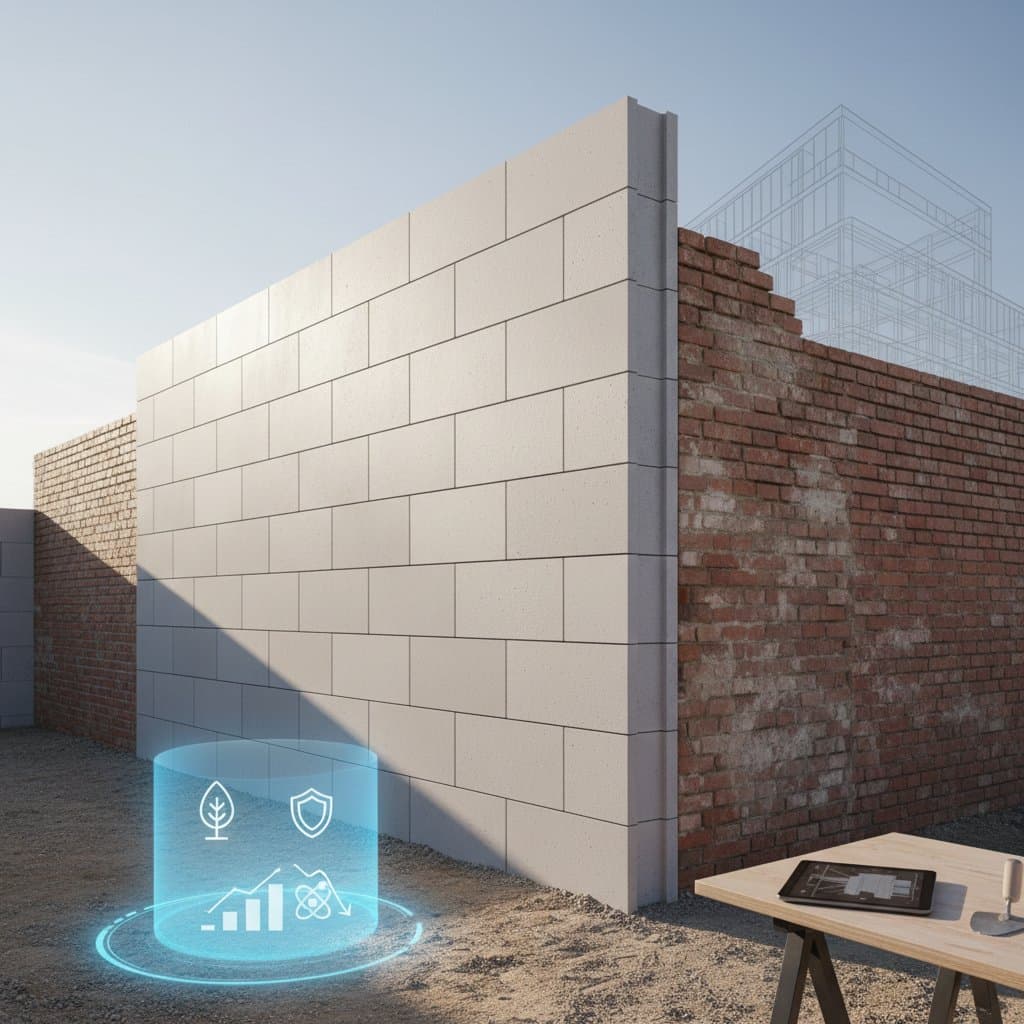
Geopolymer Blocks Outperform Traditional Brick
Geopolymer blocks represent an innovative masonry material formed by blending industrial byproducts such as fly ash or slag with alkaline activators. This process yields a robust, low-carbon alternative to conventional clay bricks or concrete masonry units. These blocks achieve full strength through room-temperature curing, demonstrate exceptional resistance to heat and chemicals, and frequently exceed standard materials in both structural integrity and environmental benefits.
Pros and Cons
Pros
- Lower carbon footprint. Production incorporates recycled materials and eliminates the need for energy-intensive high-temperature kilns.
- High compressive strength. Values match or exceed those of fired bricks or concrete blocks, often reaching 4,000 psi or more.
- Excellent fire and chemical resistance. Ideal for buildings in industrial zones or areas prone to high temperatures and corrosive substances.
- Fast curing. Blocks attain sufficient strength within hours, enabling rapid construction timelines without additional heating.
- Durable in varied climates. They withstand freeze-thaw cycles, high humidity, and extreme weather without significant degradation.
Cons
- Limited local supply. Availability depends on proximity to sources of fly ash or activators, which may require shipping.
- Higher upfront cost. Emerging production methods result in premiums compared to established brick manufacturing.
- Special mixing knowledge required. Precise ratios of materials ensure uniform quality and performance.
- Limited color range. Standard finishes appear in gray or tan shades, necessitating additional coatings for varied aesthetics.
Costs
Geopolymer block material typically costs between $3 and $6 per square foot, influenced by specific mix formulations, block dimensions, and local sourcing options. Installation expenses range from $10 to $18 per square foot, aligning closely with high-quality clay brick applications or slightly surpassing them. Factors such as custom configurations, specialized finishes, or extended transportation increase these figures, while bulk orders and regional production reduce them.
Lifespan and Maintenance
Structures built with quality geopolymer blocks endure beyond 75 years under routine conditions. The material exhibits superior resistance to cracking, efflorescence, and moisture ingress relative to many traditional fired bricks. Perform annual inspections to identify mortar joint deterioration, sealant breaches, or foundational shifts. Maintenance involves low-pressure washing or application of a mild detergent; optional sealing further bolsters resistance to stains in high-exposure areas.
Specs to Check
Verify these key specifications when selecting geopolymer blocks:
- Compressive strength. Minimum 3,000 psi for standard walls; opt for 5,000 psi or higher in load-bearing scenarios.
- Density. Ranges from 110 to 140 pounds per cubic foot, impacting thermal insulation and overall structural load.
- Water absorption. Maintain levels under 10 percent to ensure suitability for exterior use.
- Freeze-thaw rating. Confirm certification against spalling and degradation in freezing environments.
- Unit size. Standard dimensions mirror concrete blocks at 8 by 8 by 16 inches, facilitating compatibility with existing designs.
Planning and Prep
Evaluate site conditions for adequate drainage and soil stability prior to construction. Geopolymer walls demand a flat, compacted foundation or base layer. Incorporate a gentle slope directing water away from the wall base to avoid pooling. In regions with frost, extend footings below the frost line. Ensure site access accommodates delivery pallets, on-site mixing equipment, and debris disposal. Contact utility providers and mark underground lines before excavation begins.
Installation Overview
- Layout and footing. Delineate wall alignments and confirm perpendicular corners using string lines or lasers.
- Base preparation. Compact a gravel bed or pour concrete footing to achieve precise elevation.
- Mortar or adhesive application. Select mortar formulated for geopolymer compatibility to maximize adhesion.
- Block placement. Initiate from corner points, verifying level and plumb alignment after each course.
- Joint finishing. Tool joints concave or flat to promote water runoff and enhance visual appeal.
- Curing. Mist surfaces with water for a minimum of 24 hours in warm or arid conditions to support hydration.
- Cleanup. Promptly remove excess mortar to prevent hardening; steer clear of acidic cleaners that could damage the surface.
Patterns and Options
Lay geopolymer blocks in patterns such as running bond for optimal load distribution, stack bond for modern facades, or Flemish bond for historical aesthetics. Reinforce hollow blocks with steel rebar and grout filling for structural integrity in bearing walls. Employ solid blocks for veneer or accent features. Available textures include smooth planes, rustic splits, or textured profiles to suit diverse architectural visions.
DIY vs Pro
Individuals with foundational masonry skills and tools can manage modest projects like garden borders or low partitions. Projects limited to four feet in height on firm ground prove feasible for amateurs. Engage certified professionals for endeavors involving deep foundations, heavy loads, retaining functions, or internal reinforcements. Accurate mixing proves critical for custom formulations, underscoring the value of expert oversight in demanding applications.
Common Failures and Fixes
Challenges often arise from inadequate joint adhesion, surface salt deposits, or tonal inconsistencies.
- Weak joints stem from faulty mixtures or insufficient moisture in mortar; remedy by repointing with freshly prepared geopolymer mortar.
- Efflorescence manifests as white crystalline films from soluble salts mobilized by water; eliminate through brushing and enhanced site drainage.
- Color variation results from fluctuating curing environments; mitigate with application of mineral-based paints or permeable sealers.
Cracks occur infrequently, typically from substrate settlement or thermal expansion; seal minor fissures using polymer-enhanced repair compounds.
Regional and Climate Notes
Geopolymer blocks excel over bricks in frigid areas thanks to reduced porosity and robust freeze-thaw endurance. Coastal settings benefit from inherent chemical inertness, shielding against salt-laden air. Arid, warm locales leverage the material's thermal inertia to stabilize interior climates. Tailor foundation depths and drainage systems to accommodate regional soil compositions and precipitation patterns.
Alternatives
Should geopolymer blocks prove inaccessible, explore fly ash-integrated concrete blocks or stabilized compressed earth blocks. The former delivers comparable eco-advantages yet incorporates Portland cement for binding. The latter provides natural permeability but requires protective treatments in moist conditions. Geopolymer blocks merge industrial waste utilization with negligible emissions, preserving superior mechanical properties.
Making It Happen
Geopolymer blocks empower builders to construct enduring walls, enclosures, and residences with reduced environmental impact. They repurpose industrial residues, minimize production energy demands, and require scant ongoing intervention. Evaluate supplier networks and contractor expertise in your locale prior to proceeding. Request documentation on mechanical properties, moisture retention, and durability testing. Through meticulous preparation and professional execution, achieve masonry solutions that endure across decades while advancing sustainability goals.