
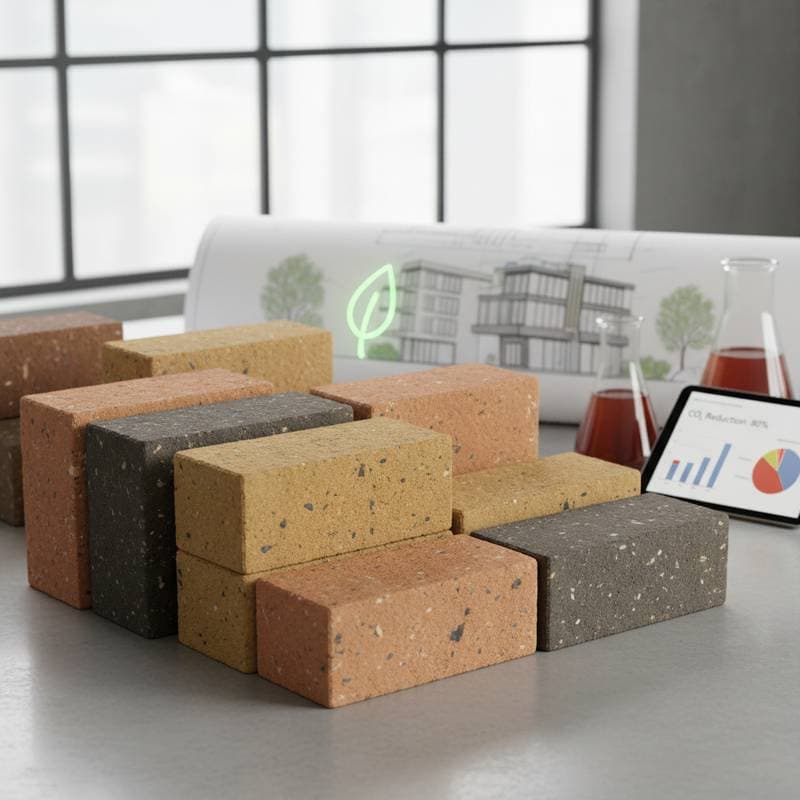
Geopolymer Bricks: Cement-Free Masonry Enters the Mainstream
Sustainable construction evolves from experimental approaches to essential practices, and geopolymer bricks lead this transformation. Builders and homeowners seek methods to lower carbon emissions and minimize waste, making geopolymer technology a reliable, robust, and environmentally sound substitute for cement-based masonry. This guide details the nature of geopolymer bricks, their distinctions from traditional options, effective implementation strategies, and integration tips for various projects.
Key Takeaways
- Cost Range: Installed costs range from $5 to $9 per square foot, with materials accounting for approximately 55 percent, labor 35 percent, and equipment 10 percent.
- Compressive Strength: Bricks achieve 6,000 to 9,000 PSI, surpassing standard clay or concrete bricks by 15 to 30 percent.
- Curing Timeframe: Ambient curing completes in 24 to 48 hours, in contrast to 7 to 28 days required for Portland cement bricks.
- Environmental Benefit: Production emits up to 80 percent less CO2 than cement-based alternatives.
- Decision Factors: Consider material sourcing, curing conditions, project scale, and compliance with local building codes.
Planning a Geopolymer Brick Project
Effective planning aligns materials, designs, and labor with performance goals and regulatory standards before any masonry work begins.
Permits and Building Codes
Certain regions view geopolymer bricks as novel materials, necessitating specific approvals from local authorities. Provide technical data sheets and test results that demonstrate compressive strength, density, and water absorption rates. Inspectors generally approve these bricks when they satisfy or exceed ASTM C62 or C216 standards for structural bricks.
Cost and Sourcing Factors
Costs vary based on the proximity to sources of fly ash or slag. Areas near power plants or steel facilities benefit from reduced material expenses. Individual bricks price at $0.80 to $1.20, higher than the $0.60 to $0.90 for clay bricks, yet savings arise from minimal curing energy needs and quicker placement due to precise dimensions and lower breakage rates.
Budget breakdowns include:
- Materials: 50 to 60 percent of total expenses
- Labor: 30 to 40 percent, influenced by available expertise
- Equipment and Tools: 10 percent, covering molds and curing supports
DIY participants may incur an additional 5 to 10 percent for equipment rentals.
Climate and Curing Conditions
These bricks thrive in temperate to warm environments. In cooler settings, use heated enclosures or protected spaces to sustain temperatures above 60 degrees Fahrenheit. High-humidity areas demand managed airflow to avoid unwanted moisture uptake during the curing phase.
Step-by-Step Guide to Producing and Installing Geopolymer Bricks
1. Prepare the Alkaline Activator
Dissolve sodium hydroxide pellets in water to reach 8 to 12M molarity. Mix with sodium silicate solution at a 1:2 weight ratio. Permit the blend to cool prior to incorporation with dry components.
2. Mix Dry Ingredients
Employ a mechanical mixer to blend fly ash, sand, and additives for a minimum of two minutes. Verify even distribution before adding the liquid activator.
3. Form the Mixture
Introduce the activator gradually during mixing. Aim for a firm, moldable consistency. Fill molds, apply compaction through manual pressure or vibration, and smooth the tops. Eliminate air pockets to avoid internal weaknesses.
4. Cure the Bricks
Enclose molds with plastic sheeting to preserve moisture. Standard ambient curing requires 24 to 48 hours at 70 to 100 degrees Fahrenheit. Accelerated thermal curing at 140 degrees Fahrenheit for 6 to 8 hours enhances initial strength by as much as 30 percent.
5. Install the Bricks
Select geopolymer-compatible mortar or low-cement variants for bonding. Apply 3/8-inch joints and monitor alignment closely. Uniform brick sizes allow for precise joints and decreased mortar consumption.
Resolving Frequent Challenges
Insufficient Strength: This issue often stems from inaccurate activator levels or inadequate blending. Review chemical proportions and confirm complete integration.
Efflorescence: Excess alkali leads to white surface deposits. Lower sodium silicate amounts or apply a dilute acid rinse to completed bricks.
Cracking on Surfaces: Rapid drying or unsuitable temperatures cause this problem. Sustain steady humidity levels and protect bricks in the initial curing period.
Inconsistent Coloring: Variations in raw materials produce uneven hues. Source verified fly ash and regulate moisture precisely.
Choosing Between DIY and Professional Installation
Skilled DIY builders manage projects like garden walls, patios, or accessory structures with geopolymer bricks, achieving 25 to 35 percent savings over professional services. Load-bearing walls, multi-level buildings, or extensive facades demand expert involvement. Professionals possess tools for temperature regulation and ensure regulatory adherence.
For contractor selection:
- Confirm credentials and coverage for masonry and innovative materials.
- Seek examples of prior work with geopolymer or comparable sustainable systems.
- Validate mortar and curing compatibility with the brick specifications.
- Obtain documented guarantees for labor and material durability.
Advancing Sustainable Masonry Practices
Geopolymer bricks mark a significant advancement in construction materials, merging proven masonry reliability with contemporary environmental priorities. Architects and property owners gain options to erect resilient buildings while curtailing ecological impact. Explore these bricks to contribute to greener building standards in upcoming projects.