
Understanding Zero-Cement Bricks
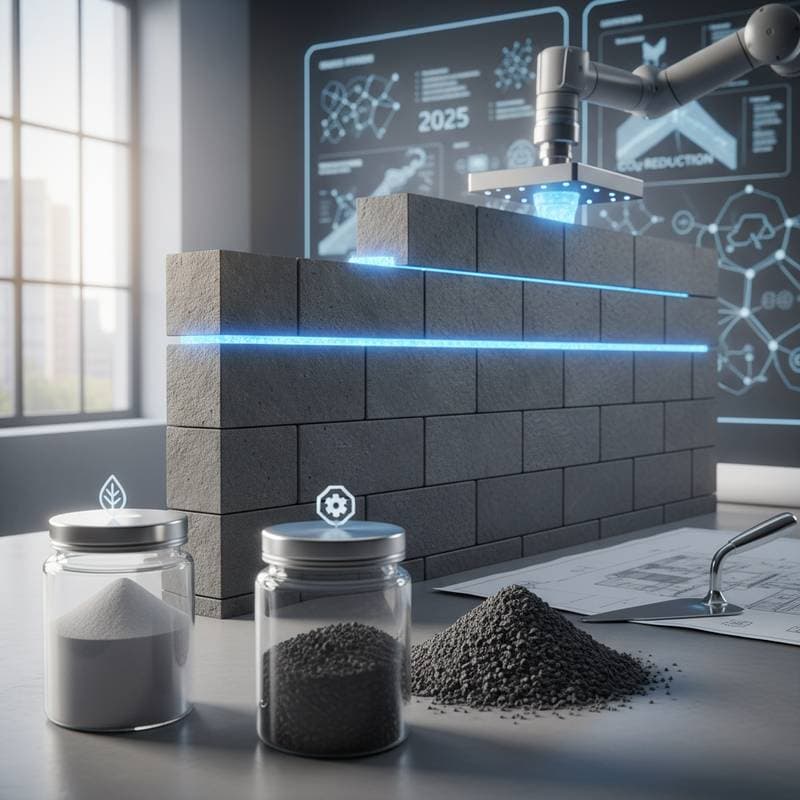
Zero-cement bricks represent a significant advancement in masonry practices. These innovative units replace traditional Portland cement with geopolymer binders derived from industrial byproducts, including fly ash and slag. When activated by alkaline solutions, these binders create a robust matrix that matches or surpasses the compressive strength of conventional bricks, while generating substantially lower carbon emissions during production.
Portland cement manufacturing contributes heavily to global carbon dioxide output through limestone decomposition and energy-intensive kiln operations. Geopolymer binders, in contrast, utilize ambient-temperature curing processes and recycled materials, which minimize energy use and environmental impact. This approach enhances not only sustainability but also the bricks' resistance to environmental stressors, such as extreme temperatures and chemical exposure.
These bricks integrate seamlessly into sustainable construction projects, providing thermal insulation, moisture resistance, and versatility in design. Builders can produce them in standard dimensions, apply various textures for visual appeal, and deploy them in both load-bearing structures and non-structural elements.
The Importance of Geopolymer Technology
Adopting geopolymer masonry extends beyond simple material replacement; it alters the fundamental properties of how structures endure over time. The aluminosilicate framework in geopolymers provides superior protection against chemical degradation and thermal fluctuations compared to cement-based alternatives. Such resilience proves invaluable in areas prone to severe weather conditions or corrosive salts.
Without cement, these bricks eliminate common issues like shrinkage and cracking that occur during hydration curing. Consequently, installations feature more secure joints, reduced maintenance needs, and extended service life for applications ranging from retaining walls to paved surfaces.
Planning a Zero-Cement Masonry Project
Thorough preparation ensures successful implementation of geopolymer bricks. Although they resemble standard masonry in handling, variations in curing mechanisms, adhesive choices, and mortar formulations demand careful consideration to achieve optimal results.
Site Assessment and Material Selection
Begin by analyzing environmental factors, including local climate patterns, soil drainage, and potential for freeze-thaw damage. Geopolymer bricks excel in sites with good drainage and solid footings. In locations susceptible to water accumulation, incorporate impermeable barriers to safeguard integrity.
Select binder types based on project demands:
Fly Ash-Based Bricks
- Advantages: Reduced weight facilitates easier handling; smooth surfaces suit finishing; high compressive strength supports moderate loads.
- Drawbacks: Extended curing periods may delay progress.
- Required Expertise: Intermediate masonry skills suffice.
- Ideal Applications: Internal partitions or ornamental facades.
Slag-Based Bricks
- Advantages: Dense composition enhances longevity; superior resistance to sulfates and abrasion.
- Drawbacks: Increased mass requires sturdy support structures.
- Required Expertise: Intermediate to advanced proficiency.
- Ideal Applications: External load-bearing elements exposed to elements.
Hybrid Geopolymer Bricks
- Advantages: Blends benefits from diverse binders for tailored performance; adaptable to specific needs.
- Drawbacks: Demands accurate proportioning to avoid inconsistencies.
- Required Expertise: Advanced techniques or consultation with specialists.
- Ideal Applications: Demanding structural or high-usage scenarios.
Essential Tools and Supplies
Assemble the following for efficient masonry tasks:
- Manual Implements: Trowel for spreading, jointer for finishing, spirit level for alignment, and hammer for trimming.
- Powered Equipment: Mixer for consistent mortar preparation and saw for precise brick division.
- Protective Equipment: Durable gloves, safety goggles, and dust mask during activator handling.
- Core Materials: Designated geopolymer units, matching adhesives or mortars, and optional reinforcing grids.
Recommendation: Acquire an additional 10 percent of bricks to accommodate cutting losses, accidental damage, and pattern variations.
Regulatory Compliance and Site Readiness
Verify adherence to regional building regulations and secure necessary permits. Authorities may mandate testing for strength metrics and fire performance when using alternative materials like geopolymers. Engage utility services to mark underground lines prior to digging, and ensure foundational designs align with projected structural demands.
Detailed Installation Process
Follow these sequential steps to construct reliable zero-cement masonry.
- Establish the Foundation. Compact the underlying soil thoroughly and add a layer of gravel or sand to promote water runoff.
- Position the Initial Layer. Employ a level and guideline to achieve precise straightness; this foundational row sets the standard for subsequent courses.
- Distribute Mortar or Adhesive. Adhere to specified mixing instructions, applying a uniform layer with joints measuring approximately 3/8 inch.
- Place and Position Bricks. Offset seams between rows to distribute stress evenly; gently tap units into position using a soft-faced mallet.
- Monitor Alignment Regularly. After every three to five layers, confirm vertical plumb and horizontal level to prevent deviations.
- Facilitate Curing. Geopolymer reactions depend on chemical activation rather than water evaporation; control humidity and temperature per guidelines to support binding.
- Complete Joint Finishing. When the mixture achieves initial set, shape joints consistently for aesthetic and functional uniformity.
Recommendation: Pre-moisten dry or powdery bricks slightly to promote stronger adhesion during placement.
Maintaining and Enhancing Your Installation
Protect visible areas by applying permeable sealants that preserve natural hues and deter discoloration. In outdoor settings, incorporate functional elements like integrated illumination or vegetation holders to elevate usability and design. Conduct yearly examinations of joints for shifts or voids, addressing issues promptly and refreshing protective coatings to sustain performance.
This approach not only lowers your project's carbon footprint but also delivers enduring, low-maintenance structures that align with forward-thinking building practices.