
Zero-Cement Bricks: Revolutionizing Sustainable Masonry
The construction industry faces mounting pressure to minimize its environmental impact, and masonry plays a central role in this challenge. Traditional cement-based bricks offer durability and versatility, yet they generate substantial carbon emissions during production. Zero-cement bricks, known as geopolymer bricks, provide a viable alternative that preserves structural strength while significantly reducing ecological harm. This guide details their functionality, production process, cost implications, and integration strategies for building projects.
Key Takeaways
- Cost Range: Zero-cement bricks cost 8 to 15 percent more than traditional clay bricks upfront, yet they lower long-term maintenance expenses by 20 to 30 percent.
- Composition Ratio: A standard mix comprises 60 to 70 percent industrial byproducts, 20 to 30 percent alkali activators, and 10 percent aggregates.
- Curing Time: These bricks require 24 to 48 hours of low-temperature curing, in contrast to the seven days of water curing needed for cement bricks.
- Compressive Strength: Strength levels range from 40 to 60 MPa, surpassing the 30 MPa average of ordinary bricks.
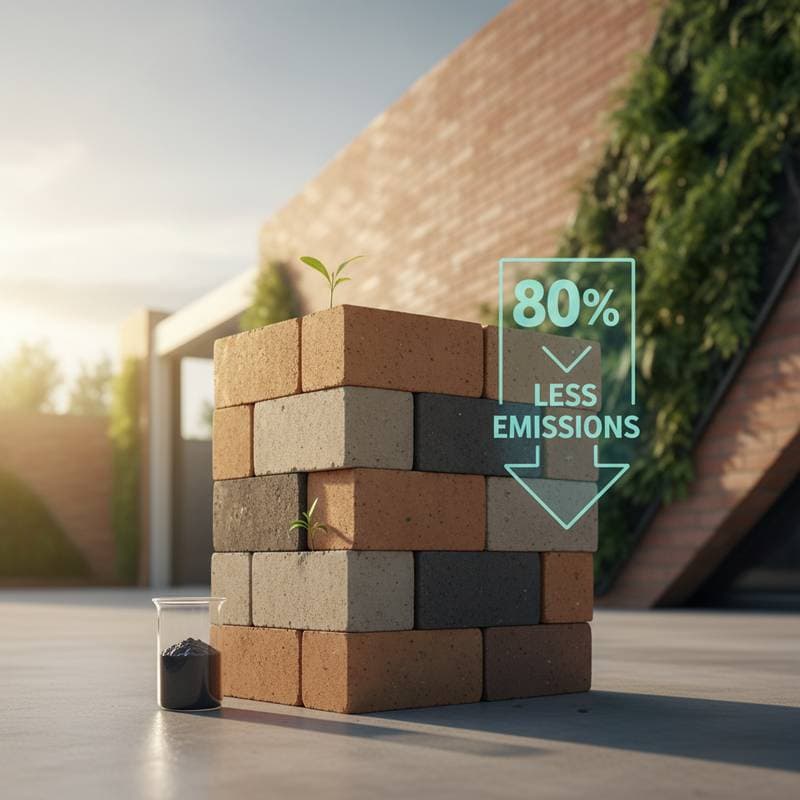
- Environmental Benefit: Production emits up to 80 percent less carbon than Portland cement manufacturing.
Planning and Design Considerations
Evaluate site conditions, climate, and structural demands before selecting zero-cement bricks. These elements shape the mix formulation, curing approach, and overall durability. Proper assessment prevents issues during construction and ensures optimal performance.
Permits and Compliance
Building codes increasingly recognize geopolymer products for non-load-bearing and select structural uses. Verify local regulations to confirm acceptability. Request manufacturer certifications for compressive strength, water absorption, and fire resistance that align with regional standards.
Cost Planning
Zero-cement bricks price between $0.70 and $1.10 per unit, higher than the $0.60 to $0.90 range for clay bricks. Breakdown includes 55 percent for materials, 30 percent for labor, and 15 percent for equipment and curing. Initial expenses yield returns through faster curing, minimal water consumption, and reduced upkeep over the project's life.
Preparing the Site and Materials
Establish a clean, ventilated workspace with temperature regulation capabilities prior to production. Contaminants like moisture or dust disrupt the essential chemical reactions. Thorough preparation supports reliable outcomes.
- Storage Setup: Store fly ash and slag in dry conditions to prevent unintended activation.
- Temperature Control: Sustain curing temperatures from 60 to 80 degrees Celsius for uniform strength development.
- Safety Preparation: Mix alkali into water gradually, avoiding the reverse order to prevent hazardous reactions or splashes.
Quality Assurance and Performance Testing
Perform standardized evaluations to confirm brick quality before widespread application. These tests validate reliability for diverse uses. Regular checks maintain consistency across batches.
- Compressive Strength Test: Measures capacity to support loads in structural contexts.
- Water Absorption Test: Limits absorption to 10 percent by weight, promoting longevity.
- Efflorescence Test: Detects salt deposits that might alter aesthetics.
- Thermal Resistance: Withstands temperatures up to 800 degrees Celsius without structural failure.
Maintenance and Long-Term Performance
Geopolymer bricks exhibit strong resistance to moisture, salts, and temperature fluctuations. Routine care further prolongs their service life. Address issues promptly to preserve integrity.
Inspection Checklist
- Examine for cracks or scaling annually, every 12 months.
- Clean surfaces with mild detergent to eliminate accumulated dirt and pollutants.
- Apply compatible geopolymer mortar to repoint joints showing separation.
Longevity and Durability
Correct production and installation enable geopolymer bricks to endure 75 to 100 years with little deterioration. Their tolerance for acids and sulfates suits them for harsh settings, such as coastal regions or industrial sites.
DIY or Professional Application
When DIY Is Viable
Skilled individuals can construct small-scale features like garden walls, outdoor kitchens, or decorative facades using prefabricated geopolymer bricks. This approach saves 20 to 25 percent on costs relative to professional services. Allocate additional time for material handling and curing processes.
When to Hire Professionals
Engage experts for load-bearing walls or extensive projects. Improper bonding or curing risks structural weakness. A certified mason experienced in cement-free materials guarantees code adherence and uniform quality.
Selecting the Right Contractor
Choose professionals with:
- Demonstrated work in cement-free masonry.
- Access to batch-specific test documentation.
Advancing Sustainable Construction Practices
Zero-cement bricks offer a tangible means to lessen the construction sector's environmental load without compromising performance. By repurposing industrial byproducts in place of cement, they convert waste into robust elements that match traditional masonry in durability and visual appeal. Homeowners and builders alike can leverage these materials to meet green standards and construct resilient structures. Through meticulous planning, expert execution, and rigorous testing, projects achieve enduring strength and reduced ecological impact.