
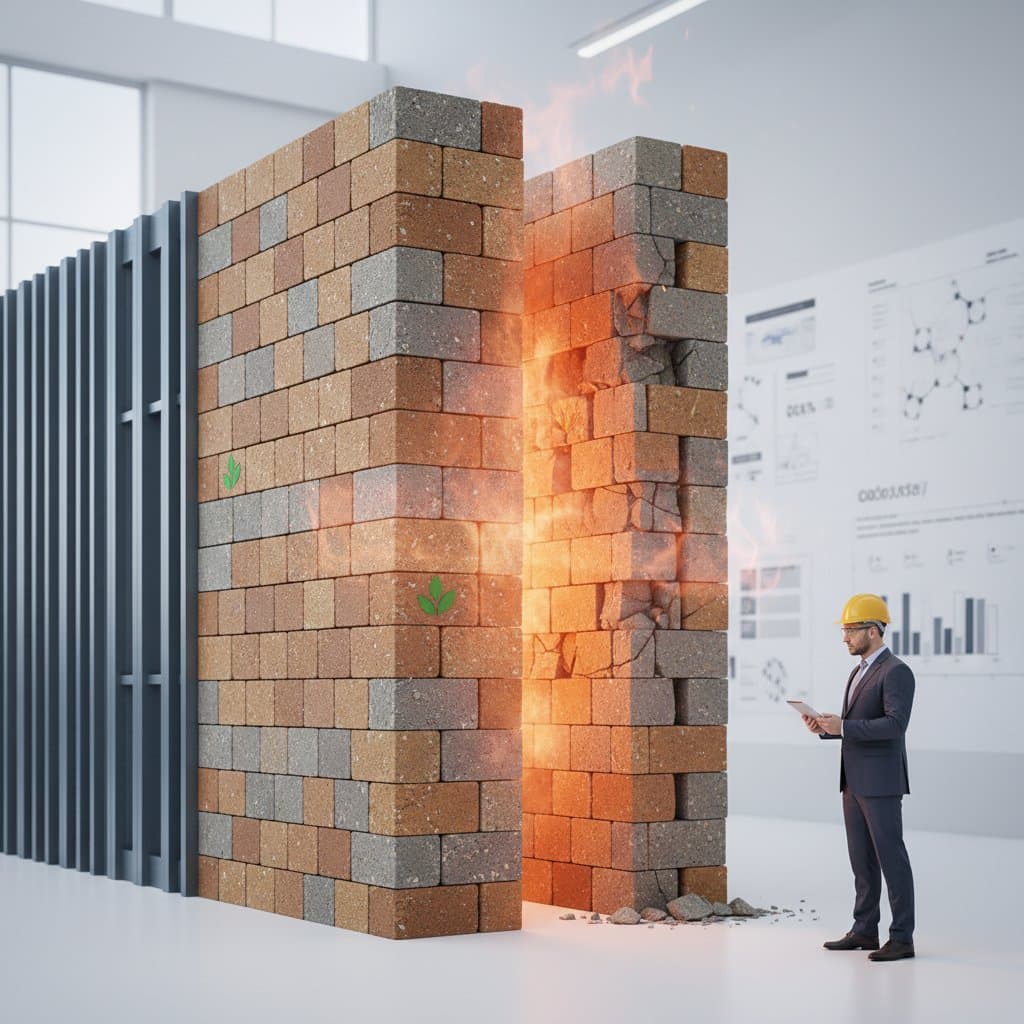
The Advantages of Geopolymer Bricks in Modern Construction
Geopolymer bricks offer a transformative approach to building materials. These innovative bricks reduce carbon emissions significantly while providing enhanced durability and fire resistance. Builders and homeowners alike find value in their eco-friendly profile and practical performance.
Traditional concrete production contributes heavily to global carbon footprints. Geopolymer bricks address this issue by utilizing industrial byproducts, such as fly ash and slag, in their composition. This method not only lowers environmental impact but also delivers a product that withstands extreme conditions better than conventional options.
Understanding Geopolymer Bricks
Geopolymer bricks form through a chemical reaction between aluminosilicate materials and alkaline activators. Unlike Portland cement-based bricks, which require high-temperature kilns, geopolymer bricks cure at ambient temperatures. This process minimizes energy use and eliminates the need for limestone, a key source of carbon dioxide in traditional manufacturing.
The raw materials come from waste products of industries like coal power and steel production. Fly ash, a fine powder residue from coal combustion, serves as a primary component. Slag, a byproduct of metal smelting, adds further strength. These elements bind together to create a dense, solid structure without emitting substantial greenhouse gases during production.
Production occurs in controlled environments where the mixture sets rapidly, often within hours. This quick curing time accelerates construction timelines. Factories can produce large quantities efficiently, making geopolymer bricks accessible for projects of varying scales.
Key Composition Elements
- Fly Ash: Provides the aluminosilicate base for the geopolymer reaction.
- Alkaline Activators: Such as sodium hydroxide or silicate solutions, initiate the binding process.
- Aggregates: Sand or gravel enhance structural integrity and texture.
- Optional Additives: Fibers or pigments improve specific properties like flexibility or color.
This composition ensures the bricks maintain consistency across batches, a critical factor for quality control in construction.
Environmental Impact and Carbon Reduction
One of the most compelling features of geopolymer bricks lies in their reduced carbon footprint. Traditional clay bricks and concrete blocks release approximately 0.8 to 1.0 tons of CO2 per ton produced due to energy-intensive firing processes. Geopolymer bricks achieve an 80 percent reduction in emissions, emitting only about 0.2 tons of CO2 per ton.
This savings stems from avoiding high-heat kilns and leveraging waste materials that would otherwise require disposal. Landfills benefit indirectly as fewer industrial byproducts accumulate. Over the lifecycle of a building, the use of geopolymer bricks lowers operational emissions, contributing to broader sustainability goals.
Water usage also decreases in production. Geopolymer mixtures require less hydration compared to cement-based alternatives, conserving resources in water-scarce regions. Builders contribute to circular economy principles by repurposing waste into valuable building materials.
Enhanced Fire Resistance and Safety
Fire safety remains a paramount concern in construction, particularly in urban and wildfire-prone areas. Geopolymer bricks excel in this domain, exhibiting non-combustible properties that withstand temperatures exceeding 1,000 degrees Celsius. Standard concrete bricks may crack or spall under intense heat, but geopolymer structures maintain integrity.
The aluminosilicate matrix forms a ceramic-like bond that resists thermal expansion. In fire tests, walls constructed with these bricks show minimal damage after prolonged exposure to flames. This resilience proves invaluable for fire-rated partitions, facades, and escape routes in residential and commercial buildings.
Beyond fire, the bricks offer superior resistance to chemicals and acids. Industrial facilities or coastal structures benefit from this durability, as the material does not corrode easily in harsh environments. Homeowners gain peace of mind knowing their investments endure natural disasters and everyday wear.
Strength, Durability, and Performance Metrics
Geopolymer bricks demonstrate compressive strengths ranging from 20 to 60 megapascals, comparable to or exceeding high-quality clay bricks. This robustness supports load-bearing applications in multi-story constructions. Flexural strength ensures they handle bending forces without fracturing, ideal for seismic zones.
Durability extends to long-term exposure. The bricks resist moisture penetration, reducing the risk of mold and structural decay. Unlike porous traditional masonry, geopolymer surfaces repel water effectively, minimizing maintenance needs over decades.
In performance comparisons:
- Compressive Strength: Geopolymer bricks often surpass concrete blocks by 20-30 percent.
- Thermal Insulation: They provide better heat retention, lowering energy costs for heating and cooling.
- Acoustic Properties: Dense composition dampens sound transmission, enhancing indoor comfort.
These attributes make geopolymer bricks a reliable choice for diverse climates and uses.
Cost Analysis and Economic Considerations
Initial costs for geopolymer bricks vary by region and scale, typically ranging from 10 to 20 percent higher than standard bricks due to specialized activators. However, long-term savings offset this premium. Reduced transportation needs arise from local sourcing of byproducts, and faster curing shortens labor timelines.
For a standard single-family home, using geopolymer bricks might add 5,000 to 10,000 dollars to material expenses. Energy-efficient properties yield annual savings of 200 to 500 dollars in utility bills. In commercial projects, insurance premiums decrease thanks to superior fire resistance, providing further financial incentives.
Bulk purchasing and government incentives for green building materials can lower upfront costs. Contractors report that installation mirrors traditional methods, requiring no specialized tools or training. Over 20-30 years, the return on investment becomes evident through minimal repairs and sustained performance.
Practical Applications and Implementation Steps
Geopolymer bricks suit a wide array of projects. In residential construction, they form foundations, walls, and veneers that enhance aesthetic appeal with customizable finishes. Commercial developments utilize them for durable exteriors that meet stringent building codes.
Restoration efforts benefit from their compatibility with existing structures. Historic buildings receive fireproof upgrades without altering original designs. Infrastructure like bridges and retaining walls gains longevity in challenging environments.
To implement geopolymer bricks effectively:
- Assess Project Needs: Evaluate site conditions, fire risks, and sustainability requirements.
- Source Materials: Partner with certified suppliers to ensure quality and compliance.
- Design Integration: Collaborate with architects to incorporate bricks into plans, optimizing for strength and insulation.
- Construction Phase: Follow standard masonry techniques, allowing for ambient curing.
- Testing and Certification: Verify performance through on-site tests for compressive strength and fire rating.
Engineers recommend starting with pilot sections to familiarize teams with the material. This approach builds confidence and refines techniques for larger applications.
Embracing Geopolymer Bricks for Resilient Futures
Geopolymer bricks stand at the forefront of sustainable innovation in construction. Their ability to slash carbon emissions by 80 percent while delivering unmatched fire resistance and durability positions them as a superior alternative to traditional materials. Projects adopting these bricks not only meet environmental standards but also enhance safety and efficiency.
Builders who integrate geopolymer solutions contribute to a greener planet. Homeowners enjoy structures that last longer with less upkeep. As demand grows, availability expands, making resilient, low-impact construction accessible to all.