
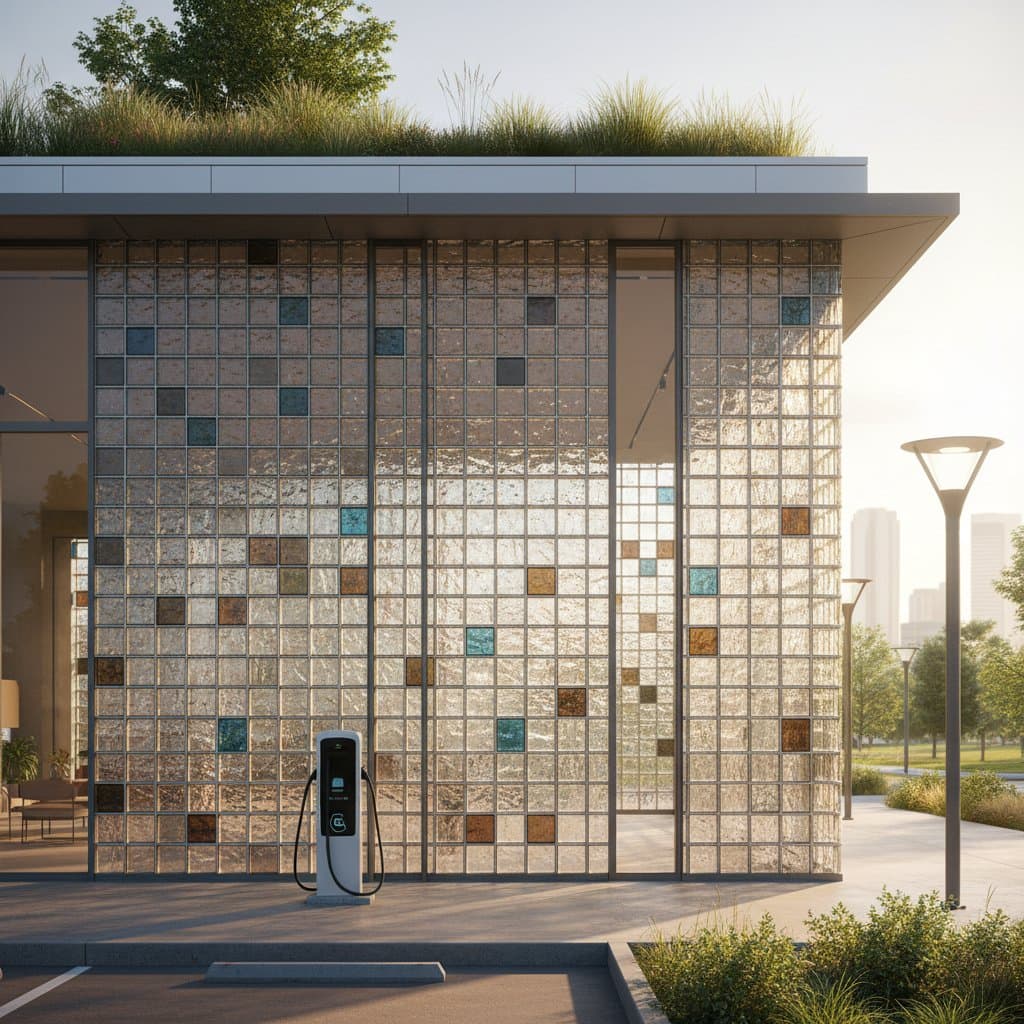
Why Recycled Glass Bricks Are 2025's Eco Game-Changer
Quick Take
Recycled glass bricks repurpose waste into robust building components. They decrease landfill volumes, limit the need for virgin material extraction, and allow natural light to penetrate solid walls. Prices exceed those of conventional blocks, yet the gains in environmental impact and design versatility prove substantial. Key challenges include variable supply availability, a steeper installation process, and the need for reliable sealing over time.
What To Check
Begin with fundamental evaluations if recycled glass bricks enter your renovation or expansion plans. Confirm compliance with essential standards prior to purchase.
- Ensure the bricks satisfy local requirements for structural load and fire resistance. Certain decorative variants suit only infill or surface applications.
- Request supplier certification for the exact percentage of recycled content, beyond mere assertions.
- Examine sample bricks for consistency in shape, color, and edge alignment. Variations in edges can prolong assembly.
- Feel the brick surface for texture, which aids bonding and minimizes reflective glare.
- Assess light passage by placing a lamp behind a sample. Translucent properties may alter hues under varying light sources.
- Inquire about recommended sealants and mortars. Certain glass types interact adversely with alkaline-rich cement formulations.
Detect evidence of mishandling, such as corner chips or surface scratches, which indicate lapses in quality assurance. Bricks showing hazy inclusions might harbor chemical instabilities that lead to expansion or cracking in the future.
Red Flags
- Absence of documented compressive strength figures.
- Assertions of full recyclability without independent validation.
- Dimensions that deviate beyond accepted masonry standards.
- Opacity or air pockets near potential stress areas.
- Thermal efficiency claims lacking empirical support.
- Subtle mentions of mortar incompatibilities in documentation.
- Color discrepancies across production batches for bulk orders.
Such problems often result in fractured seams, water penetration, or visual inconsistencies post-installation.
Likely Fixes and Rough Costs
Recycled glass bricks typically command 25 to 60 percent higher prices than traditional clay or concrete alternatives, varying by finish and dimensions. Labor extends by 10 to 20 percent due to the specialized handling. Polymer-enhanced mortars, which offer flexibility, incur modest additional expense per unit but avert fissures from material shifts.
Address post-installation fogging or discoloration with pH-neutral cleaners rather than acidic solutions. Apply glass-specific sealers to preserve transparency. Steer clear of silicone sealers, which can retain moisture within the assembly.
Opting for standard mortar as a cost-saving measure risks edge damage or salt deposits. Remediation expenses frequently surpass upfront economies. Project expansions, like extending a glass wall feature, may necessitate supplementary bracing or lighting adjustments.
Repair vs Replace
Windows: Recycled glass bricks do not replace windows unless engineered as light-diffusing panels. Employ them for soft illumination rather than unobstructed sightlines. For existing windows, prioritize repairs and secondary glazing over brick integration.
Walls: Position glass bricks as decorative or light-admitting elements, not primary load supports unless certified. Swap out units only if they exhibit full cracks or separation. Surface chips warrant on-site polishing.
Roof or Foundation: Avoid glass bricks in weight-bearing roof or base applications. They endure compression yet falter under bending or seismic forces.
Interior Partitions: These suit moisture-prone areas like bathrooms, staircases, or basements requiring indirect light. Implement moisture barriers as needed.
Team and Process
Engage an architect at the outset to integrate glass bricks seamlessly into design and structural frameworks. Projects often incorporate them within framed sections instead of complete walls. A general contractor must validate labor estimates and timelines, as glass installation typically follows initial framing but precedes finishing touches.
Consult a lighting specialist when translucency or tint plays a role in the vision. Light sources influence the glass appearance. For elevated or exposed walls, a structural engineer ensures stability against wind or height.
Simultaneous review of suppliers and crews minimizes compatibility issues. Seek references for prior recycled glass projects specifically. Expert oversight increases indirect expenses by 10 to 20 percent but curbs delays from misalignment.
Scope Priorities
Sustainable renovations emphasize air tightness, thermal barriers, and moisture management as initial steps. Recycled glass bricks follow as enhancements for style and ecology, not core energy safeguards.
Select applications that displace carbon-intensive options like fresh concrete or distant stone. Exclude perpetually wet or subsurface locations, where temperature fluctuations strain connections.
Bypass low-impact uses, such as narrow decorative strips that complicate work without meaningful light or efficiency boosts. Target zones where attributes yield tangible results, like illuminating internal pathways or cutting reliance on electric lights.
Budget and Sequencing
Allocate funds for glass masonry in alignment with envelope construction phases.
- Manage water ingress first. Install proper flashing and runoff systems before placing glass elements.
- Secure the framework. Strengthen supports or headers ahead of aesthetic additions.
- Complete plumbing and wiring preliminaries. Prevent later disruptions to glass areas.
- Position glass bricks toward the close of exterior work, prior to interior detailing.
- Apply joint sealants meticulously, then shield surfaces through subsequent trades.
Premature placement invites harm from adjacent activities. Established glass resists discreet repairs.
Making It Work Long Term
Recycled glass bricks thrive alongside resilient, easy-care companions. Match them with lime or elastic mortars to handle expansions. Maintain superior drainage and weatherproofing above outdoor glass features. Stains emerge prominently on clear surfaces.
Conduct yearly reviews for seam fissures or sealant degradation. Prompt fixes block water entry behind the material. Unit swaps demand precise joint removal, proving labor-intensive.
Heat transfer remains lower than in steel frames but exceeds insulated assemblies. Pair with nearby thermal breaks for balanced results. Hybrid systems achieve illumination alongside insulation.
Why They Matter Environmentally
Each recycled glass brick redirects approximately one bottle's volume of refuse from disposal sites, scaled across project quantities. Production melting requires reduced heat compared to virgin sand processing, yielding energy and emission reductions per batch.
Glass maintains chemical inertness over years, free from volatile emissions or UV breakdown. At project end, units crush for reprocessing, sustaining a circular system.
Sourcing locally trims transport emissions beyond recyclability merits. Collaborations with nearby recyclers enable tailored batches, shrinking logistics and excess.
Maintaining Your Investment
Well-executed recycled glass bricks endure for decades under routine care. Wipe with gentle fabrics and mild solutions to sustain clarity. Eschew harsh scrubbers that mar shine.
Strategize illumination thoughtfully. Low-energy LEDs or natural conduits amplify glow while conserving power. For later updates, record mortar specifications and color codes for seamless matches.
As one seasoned mason from Vancouver observed, "Glass masonry rewards patience. Rushed work shows forever." This captures the balance: elegance and eco-benefits demand deliberate execution.
Sustain vigilance through inspections. Monitor runoff, scan for splits, and test seals post-weather events. Routine actions safeguard appearance and green credentials.
Recycled glass bricks signal a enduring pivot to resourceful, versatile materials.