
Understanding Zero-Cement Bricks
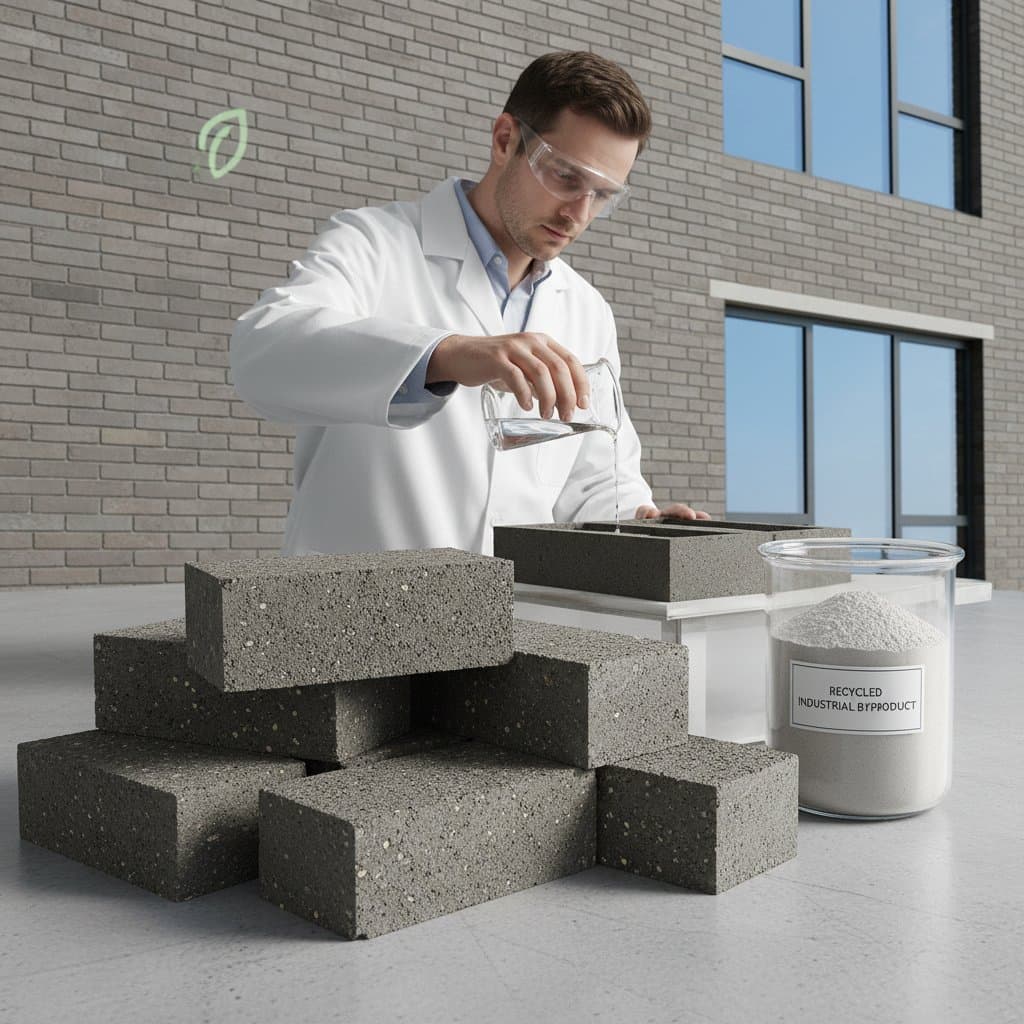
Zero-cement bricks, commonly known as geopolymer bricks, mark a significant advancement in sustainable masonry. These bricks employ industrial byproducts including fly ash, slag, or rice husk ash, along with alkaline activators, to serve as binders rather than traditional Portland cement. The outcome is a robust, compact material that matches the performance of standard bricks yet imposes far less strain on the environment.
Cement manufacturing releases substantial carbon dioxide, primarily through the calcination of limestone. Zero-cement bricks mitigate this issue by incorporating recycled mineral resources, thereby decreasing emissions and redirecting waste away from landfills. Production of these bricks demands lower energy inputs, appealing to builders pursuing green certifications or minimized carbon profiles.
Why This Technology Matters
Conventional bricks and concrete blocks have prevailed in construction due to their reliability and accessibility. However, their environmental toll and energy-intensive processes render them suboptimal for eco-conscious initiatives. Zero-cement bricks preserve essential structural integrity while remedying these drawbacks through geopolymer chemistry, which forms enduring aluminosilicate bonds that solidify at room temperature. This method reduces both emissions and the energy required for curing.
Geopolymer masonry provides advantages such as enhanced thermal insulation, minimal shrinkage, and outstanding fire resistance. These attributes suit a range of applications, from homes to commercial structures, particularly in areas prone to temperature fluctuations or subject to rigorous energy standards. Adoption of this technology supports broader goals of resource conservation and climate resilience in the building sector.
Planning Your Masonry Project with Zero-Cement Bricks
Transitioning to geopolymer masonry requires thorough preparation, as the material handles differently in mixing, setting, and curing compared to traditional bricks. Evaluate project objectives, material availability, and regional codes prior to proceeding.
Assessing Site and Project Scope
- Site conditions: Examine soil composition, drainage patterns, and moisture exposure. Geopolymer bricks function effectively in diverse environments, though proper foundation drainage proves essential to prevent issues.
- Structure type: For load-bearing walls, consult a structural engineer. Non-structural or aesthetic walls offer suitable opportunities for hands-on projects.
- Climate considerations: These bricks withstand heat and humidity adeptly, yet initial curing should steer clear of subzero temperatures or excessive aridity to ensure optimal bonding.
Incorporate these factors to align the project with long-term durability and compliance requirements.
Choosing Materials
Zero-cement bricks vary by formulation, each offering unique characteristics tailored to specific needs.
Fly Ash-Based Bricks
- Description: Composed of fly ash, an alkaline activator, and sand.
- Advantages: Achieve high compressive strength, feature smooth finishes, and maintain uniform dimensions.
- Disadvantages: Depend on a steady fly ash supply and precise activator dosing.
- Cost: Typically economical.
- Required Expertise: Intermediate level.
Slag-Based Bricks
- Description: Incorporate ground granulated blast furnace slag as the primary binder.
- Advantages: Demonstrate superior longevity, reduced water permeability, and reliable coloration.
- Disadvantages: Exhibit a marginally extended setting period.
- Cost: Moderately priced.
- Required Expertise: Intermediate to advanced.
Agricultural Ash-Based Bricks
- Description: Blend rice husk ash or comparable residues with an alkaline solution.
- Advantages: Emphasize sustainability and yield lighter-weight builds.
- Disadvantages: Quality can fluctuate based on ash variability.
- Cost: Ranges from low to moderate.
- Required Expertise: Suitable for beginners.
Select based on project scale, local resources, and performance priorities to optimize results.
Gathering Tools and Materials
Hand Tools
- Trowel for applying and finishing mortar joints.
- Mason's hammer for shaping bricks as needed.
- Level and plumb line to verify straightness and verticality.
Power Tools
- Masonry saw for accurate brick cutting.
- Drill equipped with a mixing paddle for blending geopolymer mixtures.
Rental Equipment
- Compact concrete mixer for on-site brick production.
- Vibrating table to densify bulk mixtures.
Materials List
- Geopolymer bricks, including a 10 percent surplus for cuts and breakage.
- Alkaline activator or pre-mixed geopolymer binder.
- Fine sand to form bedding mortar.
- Water for hydration, cleaning, and curing processes.
Acquire a 10 percent excess of bricks to account for potential waste during handling.
Building with Zero-Cement Bricks
Follow these steps to construct a stable, high-quality wall using geopolymer bricks.
-
Prepare the base. Dig and compact the foundation thoroughly. Ensure a flat, even surface using concrete or stabilized soil to avoid future settling.
-
Mix the mortar. Adhere to specified ratios of geopolymer binder and sand. Introduce water incrementally to reach a pliable, non-slumping consistency.
-
Lay the first course. Position the initial row with a level tool for precision. Imperfections at this stage propagate upward, affecting overall stability.
-
Continue stacking. Offset joints by half a brick width for interlocking strength. Maintain consistent mortar layers, approximately half an inch thick.
-
Check alignment. Regularly employ level and plumb line to monitor progress. Adjust deviations promptly before the mortar hardens.
-
Finish joints. Profile or smooth joints while the mortar remains workable to achieve a professional appearance.
-
Cure the wall. Sustain light moisture on the surface for several days to promote complete polymerization. Prevent accelerated drying through exposure to wind or direct sun.
Quality Checkpoints
- Confirm each course remains vertical and horizontal throughout construction.
- Verify mortar joints appear even and completely filled without voids.
- Tap the wall surface to detect solid contact; hollow tones indicate potential weaknesses.
If cracks form during curing, apply a fine water mist rather than additional binder to maintain integrity.
When to Call a Professional
Engage a qualified mason or engineer for projects involving load-bearing elements or integration with reinforced structures. The distinct chemistry of geopolymer materials necessitates specialized knowledge in mix proportions and curing protocols for large or critical applications. Professional oversight ensures safety, code adherence, and performance in demanding scenarios.
Maximizing Long-Term Benefits
Integrating zero-cement bricks extends beyond initial construction to yield ongoing advantages. These materials contribute to lower operational energy costs through improved insulation, reducing reliance on heating and cooling systems. Their resistance to environmental stressors minimizes maintenance needs, preserving structural value over decades.
Furthermore, using geopolymer bricks aligns with global sustainability trends, potentially qualifying projects for incentives or certifications. Builders who adopt this approach position themselves at the forefront of innovative, low-impact design. As production scales, expect wider availability and refined formulations to further enhance accessibility and efficiency in green building practices.