
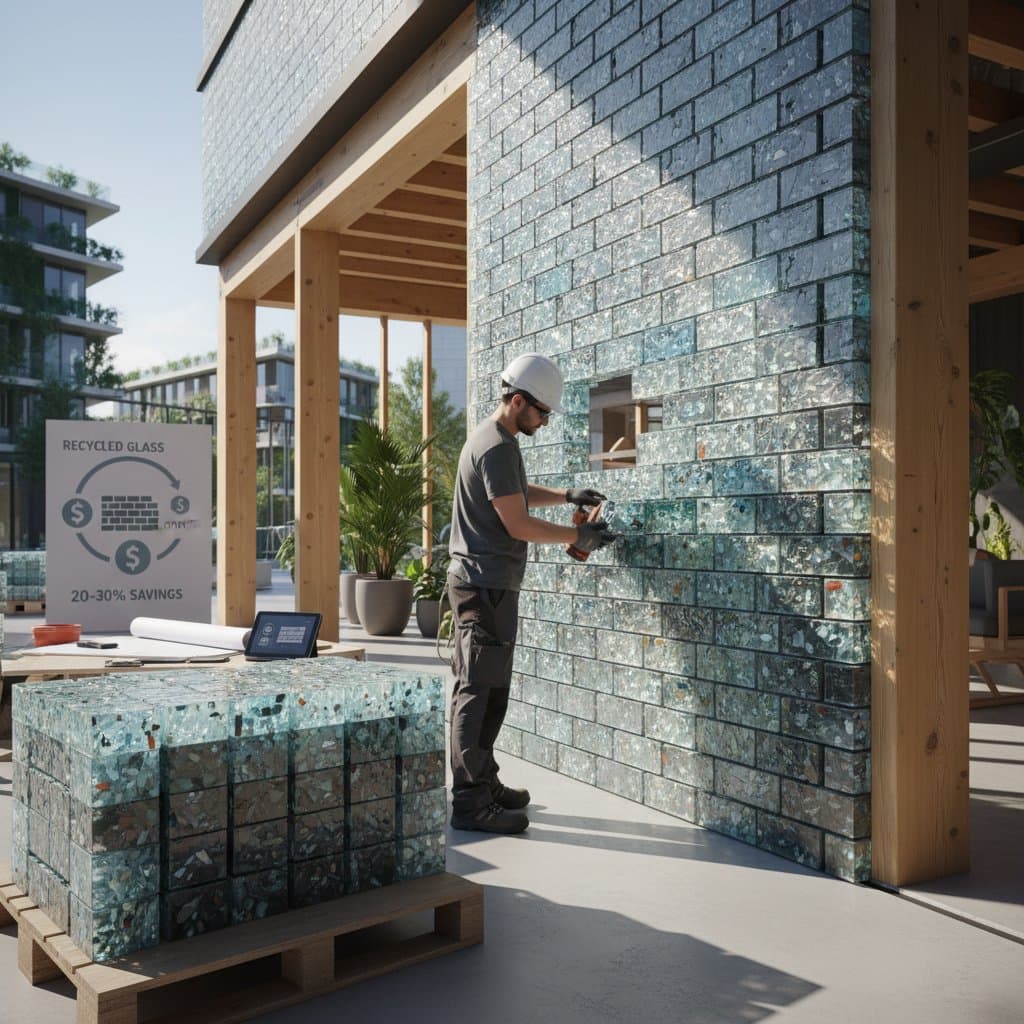
Discover Recycled Glass Eco-Bricks for Sustainable Builds
Building materials define the appearance, performance, and environmental footprint of structures. Recycled glass eco-bricks stand out as a leading advancement in sustainable masonry. These units convert waste glass into strong, attractive, and environmentally friendly blocks that match or surpass conventional clay and concrete in key areas. This guide details their production, advantages, and incorporation into construction or renovation plans.
Essential Insights
- Pricing structure: Bricks cost $8 to $14 per square foot, comprising 60 percent materials, 30 percent labor, and 10 percent equipment.
- Physical properties: Density measures 120 to 140 pounds per cubic foot, with compressive strength reaching 3000 to 4000 PSI.
- Efficiency gains: Installation proceeds 20 to 30 percent faster than standard masonry, thanks to precise dimensions.
- Energy efficiency: The glass composition reflects heat, lowering absorption by 10 to 15 percent relative to clay brick walls.
- Selection criteria: Evaluate local recycling access, regional climate, aesthetic goals, and adherence to building codes.
Prepare Your Eco-Brick Project
Assess the fit of recycled glass bricks for your needs before proceeding. Balance structural demands, visual appeal, and logistics such as expenses and supply chains.
Navigate Permits and Regulations
- Code adherence: Ensure glass masonry meets local standards for load-bearing and insulation. Certain areas mandate tests for strength and heat transfer.
- Fire safety: Confirm compliance with regional fire codes. Most glass brick variants provide at least a one-hour fire resistance.
- Sustainability credentials: Select items verified by established green programs to access incentives for eco-friendly projects.
Budget Effectively
Initial costs for recycled glass bricks exceed those of clay slightly, yet total ownership expenses decline over time. Their production requires less energy, and longevity minimizes replacements. Allocate approximately one-third of the budget to labor, sixty percent to materials, and the balance to tools.
Source Materials Wisely
Partner with vendors connected to nearby recycling facilities. Regional procurement cuts shipping emissions and guarantees uniformity. Obtain technical sheets detailing strength, moisture uptake, and freeze-thaw durability.
Follow This Installation Guide
1. Establish the Base Layer
Apply a half-inch mortar layer along the foundation. Position each brick firmly using a mallet. Verify levelness periodically with a straightedge for even rows.
2. Build Subsequent Layers
Spread mortar uniformly on each brick's upper surface before adding the next. Offset joints by half a brick width to bolster stability. Keep joint depths uniform for optimal looks and integrity.
3. Optimize Light and Finish
For translucent or tinted bricks, arrange them to direct light effectively. Orient reflective surfaces on sun-exposed walls to limit warmth buildup.
4. Maintain Cleanliness
Clean surplus mortar with a moist cloth after several rows. Set mortar hardens and mars the glass, complicating later removal.
5. Allow Proper Setting
Permit seven days minimum for hardening prior to stressing the structure or adding coverings. Sustain even moisture to avoid fissures.
Address Typical Issues
Prevent Cracks and Flaking
Rigid mortar or inconsistent drying often leads to these problems. Opt for pliable lime-based mixes and monitor hydration steadily.
Eliminate Efflorescence
Surface salt buildup occurs occasionally. Remove it using a diluted vinegar wash and enhance water runoff to halt repeats.
Repair Surface Damage
Buff minor scratches with a soft polishing tool or seal with a clear coat. Steer clear of abrasives that damage the glass.
Achieve Uniform Appearance
Batch variations in color arise from manufacturing. Secure all bricks from one production run for seamless results.
Weigh DIY Against Expert Help
Projects with recycled glass bricks suit capable homeowners, provided accuracy and time commitment align.
Suitable for DIY
- Non-structural features like feature walls, outdoor dividers, or ornamental panels.
- Builds without weight-bearing needs.
- Availability of standard tools and stable groundwork.
Savings typically hit 25 to 35 percent versus hiring out, although effort expands considerably.
Best for Professionals
- Major load-bearing or business-scale walls.
- Installations needing official approvals or audits.
- Intricate designs, arches, or embedded illuminations.
Select contractors with valid credentials, coverage, and glass masonry expertise. Seek client testimonials and view completed works firsthand.
Advance Eco-Friendly Construction
Recycled glass eco-bricks promote a move to efficient, waste-reducing building practices. They merge masonry's reliability with glass's sophistication, lessening dependence on new resources and diverting refuse from dumps. Adopting these bricks supports resource cycling and delivers unique, enduring designs.