
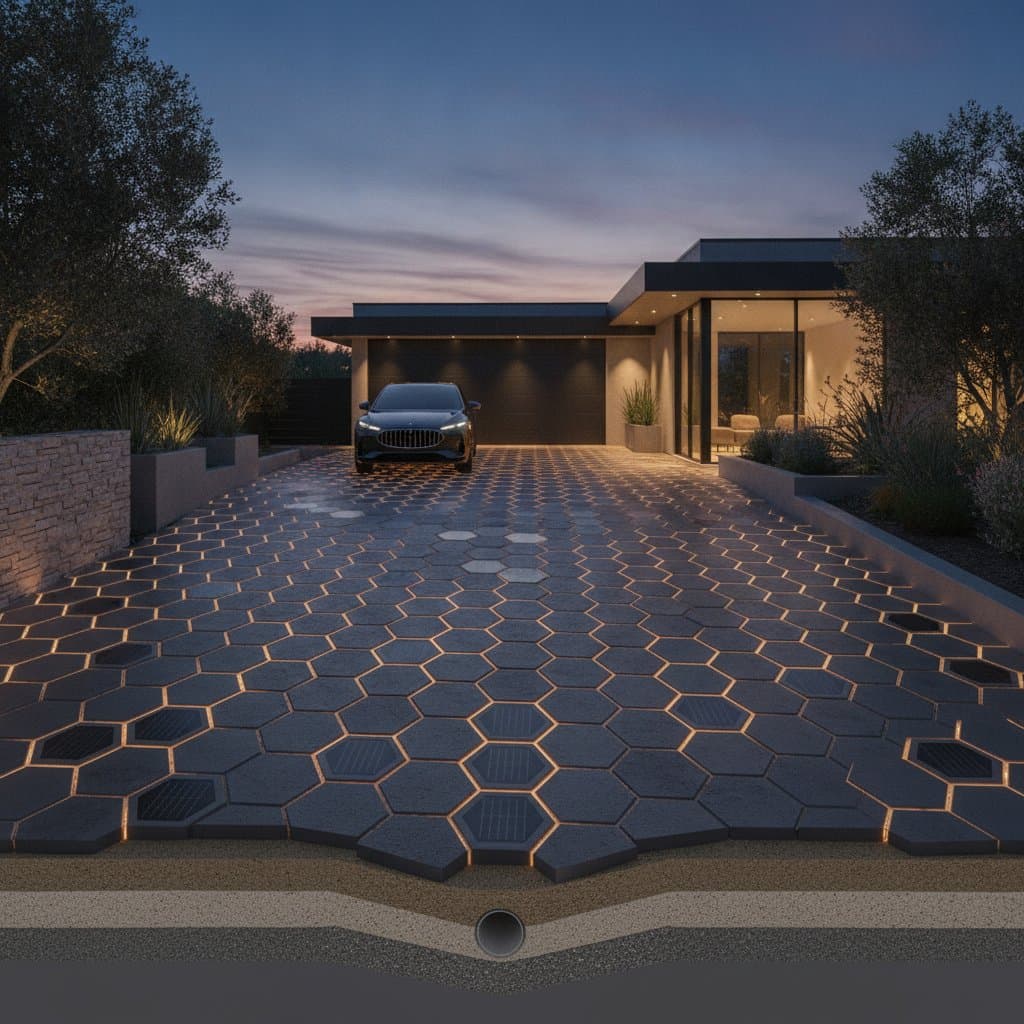
Smart Solar Pavers Light Driveways and Generate Power
Site Assessment Essentials
Smart solar pavers integrate LED lighting with photovoltaic cells in a single durable unit. They illuminate paths and driveways while producing clean energy. Success requires careful evaluation of sun exposure, drainage patterns, and base stability before installation begins.
Check sun exposure by observing shadows across the full driveway throughout the day. Shaded areas yield minimal power. Note drainage after rainfall to identify standing water locations that shorten paver lifespan. Probe the base with a screwdriver to detect weak or saturated layers prone to settlement cracks.
Locate the nearest power panel or junction box to estimate wiring distances. Review existing outdoor lighting to determine where new illuminated pavers improve safety. A dry fit of sample units on a sunny section reveals LED brightness and surface reflection qualities.
Installation Risk Indicators
Several conditions signal elevated costs or failure risks. Driveways that slope toward structures invite water intrusion. Cracked or heaving bases from frost or roots undermine stability. Chronic puddling points to subgrade drainage problems.
Heavy vehicle traffic demands reinforced bases. Distant power sources increase trenching expenses. Unknown brands without load ratings or ingress protection create uncertainty. Overstated energy projections that exceed local sunlight data warrant skepticism.
Cost Breakdown and Planning
Expect total costs between 60 and 120 dollars per square foot. Site preparation ranges from 15 to 25 dollars per square foot when regrading or drainage work is required. Paver units cost 30 to 70 dollars per square foot based on wattage and LED density.
Wiring and controls add 10 to 25 dollars per square foot. Smart integration systems range from 2000 to 5000 dollars. Laying units over existing asphalt without base correction leads to premature failure. Define all zones and circuits in advance to limit scope changes.
Component Decisions
Retain sound existing pavers and insert solar units only as edge accents or entry markers. This preserves material and manages expenses. Maintain functional low voltage landscape lights to supplement shaded zones.
Plan electrical component replacement every ten years. Inspect connectors regularly to prevent corrosion spread. Engage a landscape contractor experienced in both paving and low voltage systems alongside a licensed electrician for grid connections.
Project Sequence
Correct grading first to direct water away from buildings. Stabilize the base with compacted gravel. Install conduits and test circuits before paver placement. Work upward from the lowest point during installation.
Connect controls and verify illumination patterns last. Apply joint sand only after testing. Avoid work during freezing or wet conditions to ensure proper compaction.
Output and Care Expectations
A typical driveway produces 200 to 800 watts under peak sun, sufficient for pathway lighting or small pumps. Clean surfaces regularly to maintain output. Inspect seals twice yearly and replace failed modules promptly.
Quality systems last 15 to 20 years when drainage remains stable. Value comes primarily from combined lighting and appearance rather than energy savings alone. Request IP68 ratings and compression strength above 5000 psi for vehicle areas.
System Connections
Battery storage captures daytime generation for evening use. Smart home platforms adjust brightness automatically. Rain sensors reduce output during storms. Advanced units may incorporate snow melt functions using surplus power.
Select add ons based on clear return. Simple controls and modest storage provide the strongest balance for most properties. Preserve stable brick borders or stone curbs to frame new sections and honor original design.