
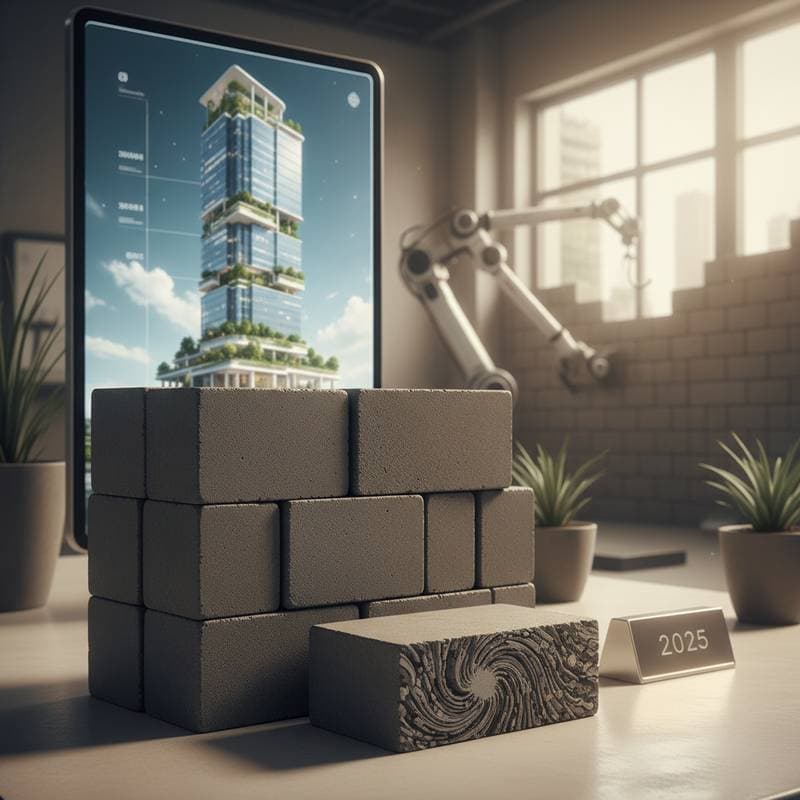
Understanding Zero-Cement Bricks
Zero-cement bricks represent a significant advancement in sustainable masonry. These units substitute ordinary Portland cement with geopolymer binders, maintaining the robustness and longevity of conventional bricks while substantially lowering the carbon footprint from cement manufacturing. Industrial by-products like fly ash, slag, and calcined clay serve as key ingredients, repurposing materials that might otherwise contribute to waste streams.
Cement production traditionally involves intense heat and chemical processes that emit substantial carbon dioxide. Geopolymers, in contrast, form through a polymerization reaction at ambient temperatures, activated by alkalis rather than limestone. This yields a compact, stone-like composition boasting high compressive strength and superior resistance to fire and chemical exposure. Architects and builders increasingly adopt these bricks for their environmental advantages, uniform performance, and adaptable design properties.
The Role of Zero-Cement Bricks in Sustainable Masonry
Sustainable masonry has evolved beyond minor optimizations to a fundamental reevaluation of building materials for walls, foundations, and pavements. Cement contributes significantly to worldwide carbon emissions. Geopolymer innovations in zero-cement bricks redefine how structures manage thermal performance, withstand environmental stresses, and integrate with their ecosystems.
Key advantages include:
- Lower emissions: Manufacturing requires reduced energy input and generates fewer greenhouse gases.
- Resource recycling: By-products from industry find productive use as essential components.
- Enhanced durability: The binder's structure withstands corrosion, salt intrusion, and fire damage.
- Improved stability: Minimal shrinkage occurs compared to cement alternatives.
- Design versatility: Incorporation of pigments and textures proves straightforward.
These attributes support contemporary construction priorities that emphasize reliability, endurance, and ecological stewardship.
Deciding Between DIY and Professional Installation
For modest endeavors like garden borders, edging, or ornamental paths, skilled DIY enthusiasts can handle zero-cement bricks effectively. The placement and assembly mirror standard masonry techniques. Structural elements, retaining walls, or load-bearing configurations, however, demand the expertise of a certified mason or engineer. Geopolymers exhibit subtle differences in curing and adhesion compared to cement, particularly under varying conditions.
Professionals ensure that designs, mortar selections, and site factors align with specified strength requirements. Structural or load-bearing applications require precise engineering assessments and supervision. Geopolymer chemistry necessitates exact mixing proportions and monitored curing; deviations may result in compromised joints or uneven strength.
Project Planning for Zero-Cement Bricks
Approach planning with the same diligence as any masonry undertaking. Though these bricks resemble traditional ones visually, optimal results hinge on suitable site preparation and moisture management.
Site Assessment
Evaluate soil stability, drainage patterns, and composition. Steer clear of low-lying areas prone to pooling water or severe freeze-thaw activity without implementing protective measures like insulation. Geopolymer bricks thrive in environments with balanced moisture and reliable drainage.
Essential Measurements
Determine wall length, height, and thickness. Calculate total volume, then divide by individual brick dimensions to estimate quantity. Include a 10 percent allowance for cuts, spoilage, and breakage. Document dimensions for doors, windows, corners, and intended bond patterns prior to procurement.
Environmental Considerations
Ambient temperature and humidity influence curing rates. Geopolymers set under normal conditions, yet extremes in cold or moisture can delay strength development. Schedule work to sustain consistent moisture and temperature levels during initial days post-installation.
Potential Challenges
Supply chains for geopolymer products remain developing, so anticipate batch inconsistencies and order ahead. Local regulations may still prioritize cement standards; consult building authorities for compliance verification before commencement.
Selecting Appropriate Materials
Zero-cement bricks vary by formulation, each offering distinct attributes.
Fly Ash-Based Geopolymer Bricks
- Overview: Composed of coal combustion by-product fly ash combined with alkaline activators.
- Strengths: Exceptional compressive strength, refined surface, strong chemical resistance.
- Limitations: Sourcing tied to local industrial output.
- Pricing: Comparable to clay bricks, occasionally elevated.
- Required Expertise: Intermediate to advanced, given mixing and curing precision.
Slag-Based Geopolymer Bricks
- Overview: Derived from granulated blast-furnace slag, a steel industry residue.
- Strengths: Compact density, prolonged durability, accelerated setting.
- Limitations: Potential color inconsistencies across batches.
- Pricing: Reasonable, justified by extended service life.
- Required Expertise: Ideal for professional installers.
Calcined Clay-Based Geopolymer Bricks
- Overview: Produced from heat-treated natural clays activated by alkaline solutions.
- Strengths: Sustainable sourcing, reliable availability, appealing earthy hues.
- Limitations: Slower initial strength buildup versus slag variants.
- Pricing: Economical with predictable costs.
- Required Expertise: Accessible for beginners to intermediates.
Opt for fly ash or slag options in high-demand strength or resistance scenarios. Choose calcined clay for aesthetic-focused residential or decorative uses.
Essential Tools and Supplies
Masonry projects with zero-cement bricks employ standard tools, with emphasis on preparation and precision.
Manual Tools
- Brick trowel: Applies mortar uniformly and profiles joints.
- Masonry hammer: Refines placements and shapes edges.
- Level and plumb bob: Verifies alignment in all planes.
- Jointing tool: Refines mortar lines for polished finishes.
Powered Equipment
- Masonry saw: Segments bricks for fits; equip with diamond blade.
- Mixing drill: Achieves homogeneous mortar blends.
- Vibrator or compactor: Prepares firm foundations if needed.
Rental Options
- Mortar mixer: Essential for volume work to ensure consistency.
- Scaffolding: Supports elevated construction.
- Wheelbarrow and mortar board: Facilitates transport and staging.
Core Materials (with 10 Percent Surplus)
- Zero-cement bricks
- Matching geopolymer or lime mortar/adhesive
- Gravel base for foundation
- Curing covers like plastic sheeting
- Water for rinsing and hydration
Installation Guide
- Foundation Preparation: Dig to 8 inches for low walls. Layer and compact gravel for drainage and support. Confirm level across all axes.
- Layout Establishment: Stake and string boundaries. Use 3-4-5 method for right angles.
- Mortar Preparation: Adhere to specified ratios. Aim for a mix that retains form yet spreads easily.
- Initial Course Placement: Begin at base. Apply 3/8-inch mortar bed; seat bricks firmly.
- Alignment Verification: Level and plumb after several units. Correct while mortar remains pliable.
- Subsequent Layers: Offset joints by half-brick for integrity. Sustain uniform spacing.
- Joint Completion: Tool seams after initial set for cohesion and aesthetics.
- Curing Process: Enclose with moist fabric or sheeting for three days minimum.
- Final Review: Scan for defects like fissures or offsets. Repair small issues with compatible filler.
Purchase 10 percent additional bricks to account for losses during handling and fabrication.
Post-Installation Strategies
Surface Finishing
Brush clean with soft bristles and neutral cleaner. Refrain from acids that may degrade the binder. Consider breathable sealants for rain-exposed areas.
Ongoing Maintenance
Inspect annually for erosion or cracks. Reapply sealants as needed. Clear debris to prevent moisture buildup. Address efflorescence with gentle washing.
Upgrade Possibilities
Integrate lighting or planters for visual appeal. Pair with green walls for insulation benefits. Experiment with modular designs for expandable features.
Pitfalls to Sidestep
- Oversight of Curing: Results in fragile bonds and fractures.
- Incompatible Mortar: Leads to adhesion failures from chemical discord.
- Poor Drainage Planning: Invites water damage and salt deposits.
- Environmental Disregard: Accelerates issues from drying or frost.
Advancing Sustainable Construction Practices
Zero-cement bricks signal a shift toward materials that harmonize environmental imperatives with structural demands. As adoption grows, they enable builders to construct resilient, low-impact edifices. Embrace these innovations to contribute to a more sustainable built environment.