
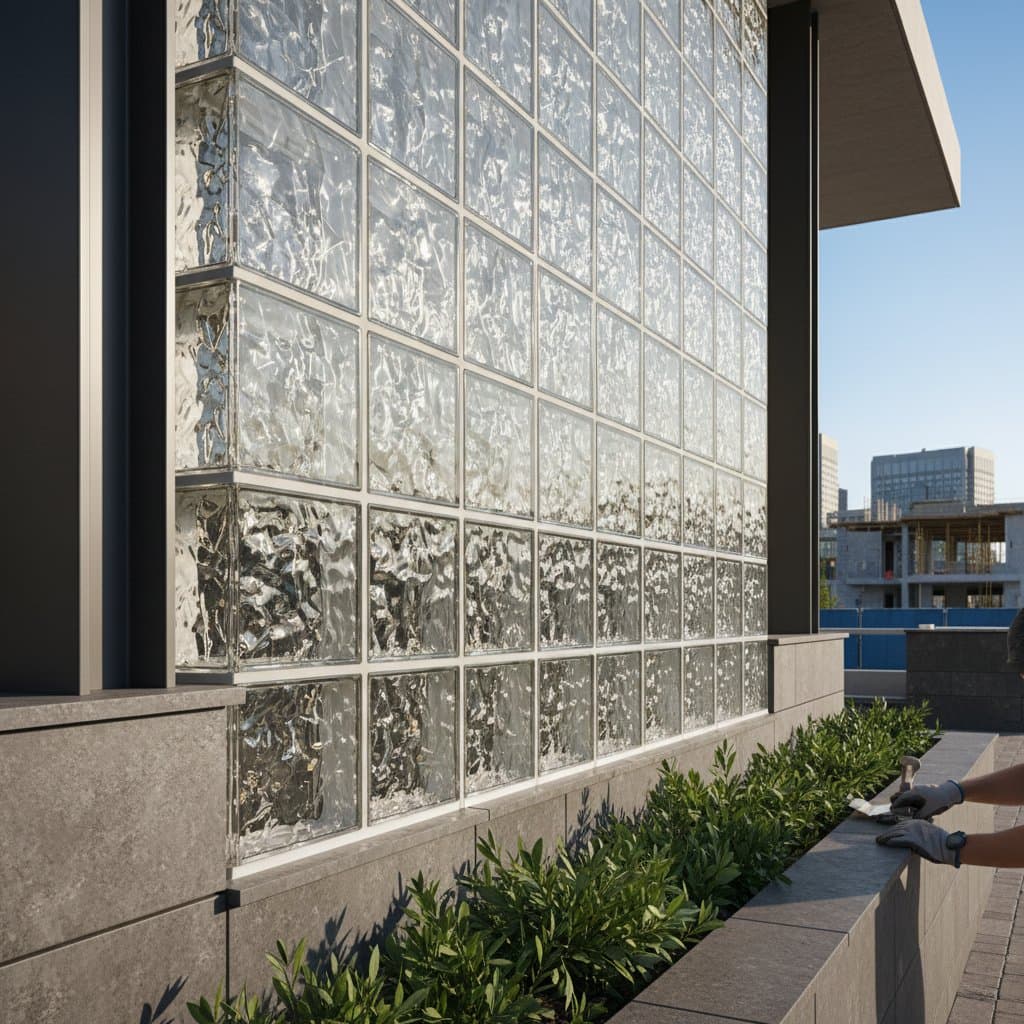
Recycled Glass Bricks: A Sustainable Masonry Choice for 2025
Key Overview
Recycled glass bricks integrate waste minimization with robust construction. Manufacturers melt post-consumer glass and form it into standardized blocks. Although initial costs exceed those of conventional clay bricks, long-term energy efficiencies and creative design options frequently balance the investment. The primary concern involves inadequate installation, which may result in fractures or moisture penetration.
Essential Site Inspections
Prior to committing resources, survey the construction site and any adjacent masonry elements. Examine how sunlight exposure, water drainage, and freeze-thaw cycles influence wall integrity. Traditional clay bricks manage moisture via mortar joints, whereas glass bricks depend on precise seals and proper bedding. Trapped water behind these bricks generates expansion pressures that compromise stability.
Conduct these on-site assessments to determine project viability:
- Inspect roof edges and flashing above intended glass brick zones to eliminate overflow or leakage risks.
- Verify that foundations or lintels support the marginally increased weight of glass units.
- Ensure surface water does not channel toward the exterior wall face.
- Perform tap tests on nearby existing bricks; hollow or loose tones indicate unstable support.
- Assess direct sunlight exposure, as differential heating induces material shifts.
Critical Warning Signs
- Fractured or irregular mortar layers signaling previous settling.
- Damp sheathing or flaking paint beneath current facings.
- Freeze damage or efflorescence at the base level.
- Walls deviating from vertical alignment by more than half an inch over eight feet.
- Absent drainage channels or ventilation near thresholds.
- Traces of adhesive or sealant from previous unsuccessful installations.
- Combinations of mismatched mortars, such as rigid cement atop flexible lime varieties.
These indicators increase the likelihood of premature deterioration and unforeseen expenses. Address substrate issues before proceeding.
Common Remedies and Estimated Expenses
A modest accent wall with recycled glass bricks typically costs 40 to 60 dollars per square foot for complete installation. Comprehensive exterior facades may climb to 80 to 120 dollars per square foot, influenced by framing needs and reinforcement requirements. Elevated pricing relative to clay bricks stems from specialized molds, high-quality sealants, and skilled labor demands.
Standard preparatory measures encompass:
- Grinding or applying parging to achieve a level surface, at 6 to 10 dollars per square foot.
- Exchanging corroded lintels, priced at 300 to 600 dollars per unit.
- Redirecting drainage through soil regrading from the foundation, ranging from 1,500 to 3,000 dollars.
- Updating flashing or edge guards, at 10 to 15 dollars per linear foot.
Steer clear of expedients such as silicone caulking between bricks without supporting rods; these appear neat initially but promote stress fractures soon after. Incorporate expansion joints at intervals of six to eight feet to mitigate such issues.
Strategies for Repair and Replacement
Integrated Windows: For walls featuring glass-block windows, scrutinize the framing. Retain current blocks if mortar remains sound and units show no fogging or cracks. Reconstruct solely upon evidence of water damage or seal degradation. Recycled glass bricks align with legacy designs, yet avoid direct attachment to wooden frames.
Wall Sections: Address minor fissures using compatible, non-shrinking mortar. Opt for complete section replacement when expansion joints lack or numerous bricks exhibit breaks. Unlike clay, glass bricks resist flexing, so ongoing structural movement necessitates thorough reconstruction.
Roof Interfaces and Flashing: Renew flashing prior to installing fresh glass courses. Moisture accumulation behind glass proves difficult to dissipate. Substitute flashing displaying rust or detachment from counterflashing elements.
Foundation Preparations: Maintain clear drainage routes before imposing additional wall loads. Prioritize grading adjustments and downspout extensions. Consider underpinning only if cracks persist post-initial corrections.
Assembling the Right Team and Workflow
Engage a mason proficient in conventional and glass-based systems. Request in-person reviews of past projects. Involve an architect from the outset for load-bearing or hybrid material applications. Secure a structural engineer's evaluation for walls exceeding eight feet or in high-wind areas.
Allocate 10 to 20 percent extra in the budget for oversight and coordination. This provision ensures precise layout, sealant verification, and curing supervision. Absent such management, errors emerge once scaffolding removal occurs. Concurrent evaluation of masons, suppliers, and designers aligns expectations effectively.
Prioritizing Project Elements
Focus on these high-impact actions initially:
- Validate site drainage and flashing reliability.
- Confirm backing masonry structural integrity.
- Establish verified bonding patterns and joint intervals.
- Source recycled glass batches devoid of impurities or color inconsistencies.
- Select sealants suitable for ultraviolet radiation exposure.
Postpone less beneficial elements, such as expansive decorative walls on shaded north-facing sides. Avoid interior glass applications in humid basements, where enclosed moisture fosters mold growth.
Retain intact original bricks or stone where feasible. Deploy recycled glass bricks as highlights rather than wholesale substitutes when existing structures hold firm. This approach conserves funds and minimizes waste generation.
Budgeting and Installation Sequence
Adhere to this sequence for optimal outcomes:
- Resolve major water ingress via gutter and downspout repairs.
- Recontour soil and add drainage tiles if dampness lingers.
- Mend foundational or planar cracks in walls.
- Renew or enhance flashing at roof and window junctions.
- Even out the backing surface to a consistent plane.
- Position and secure recycled glass bricks following specified joint configurations.
- Seal applications followed by designated curing periods prior to final cleaning.
- Conclude with water-shedding trim or coping installations.
Prioritize water management, followed by structural reinforcement, and conclude with aesthetic refinements. This progression underpins material longevity beyond any specific product selection.
Sustaining Long-Term Performance
Sealed joints in recycled glass bricks demand minimal upkeep compared to standard masonry. Employ mild detergent and a soft brush for cleaning. Refrain from acids or abrasives that etch surfaces. Conduct yearly inspections for sealant gaps, surface haze, or perimeter chips. Promptly renew compromised seals to prevent water ingress.
A Vermont mason observed, “Glass brick walls fail where people forget they are still masonry.” This underscores the necessity of treating them with equivalent attention to loading, shifting, and humidity as any brick assembly.
With meticulous planning and execution, recycled glass bricks deliver reliable durability, extended service life, and notable ecological advantages. They repurpose glass waste into functional builds, lessen reliance on natural quarries, and harness natural light to reduce energy for illumination.
Survey your site, assess drainage, and initiate with a modest test panel. A single well-constructed segment provides greater insight than promotional materials. Build from there, assured that attention to moisture, stability, and order informs each advancement.