
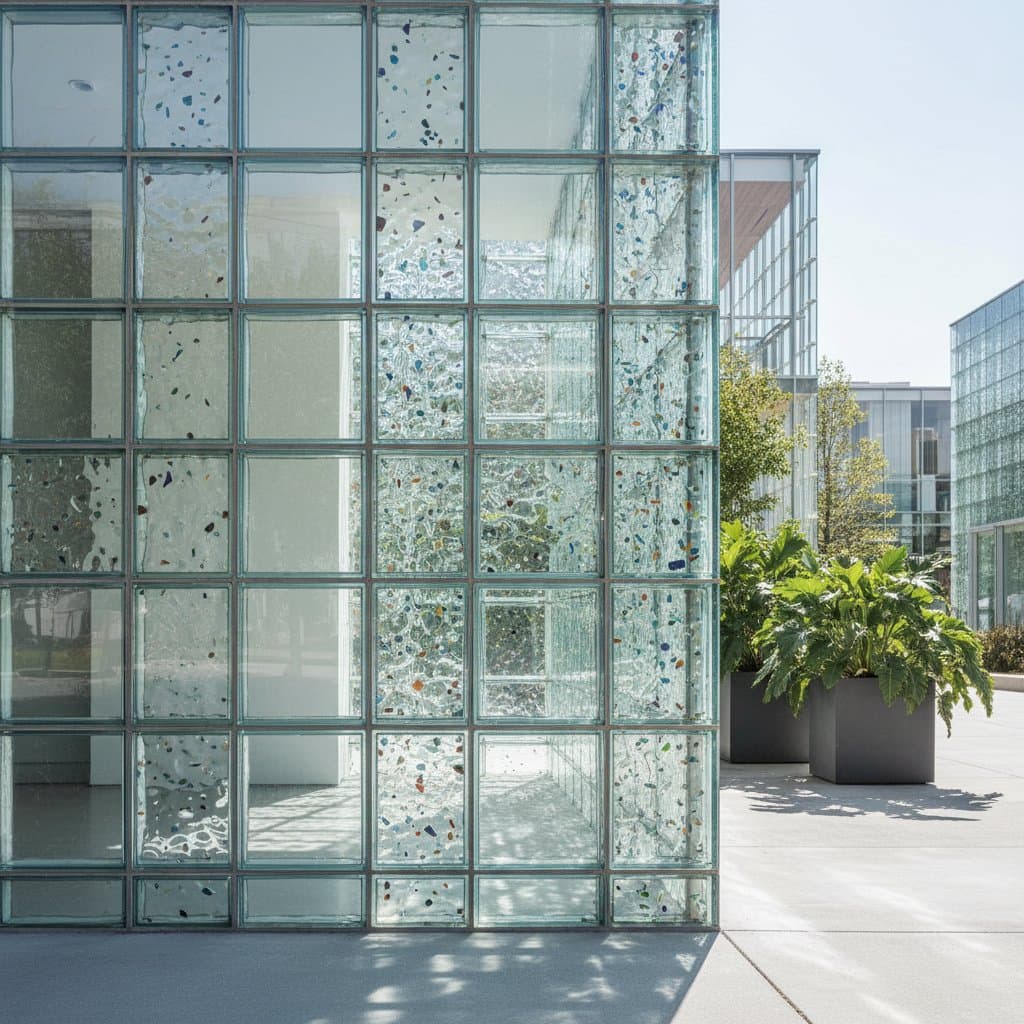
Recycled Glass Bricks: A Sustainable Choice for 2025 Masonry
Recycled glass bricks represent a forward-thinking approach to construction materials, converting post-consumer glass waste into translucent, resilient blocks. Builders mold this melted glass into forms that capture and diffuse light effectively, integrating seamlessly into contemporary and classic architectural styles. Homeowners gain an opportunity to incorporate vibrant, textured elements while supporting environmental conservation.
Advantages and Drawbacks
Advantages
- Environmental benefits. These bricks repurpose glass that might otherwise accumulate in landfills, reducing waste and energy consumption in production.
- Unique visual effects. Translucency allows natural light to filter through, illuminating spaces and creating dynamic patterns on walls.
- Robust construction. The material withstands exposure to moisture, resists color fading, and repels common stains.
- Minimal upkeep requirements. Routine cleaning involves a gentle wash with a mild solution, preserving appearance over time.
- Enhanced safety features. Non-combustible properties provide fire resistance, and the smooth surface deters pests.
Drawbacks
- Elevated pricing. Costs exceed those of conventional clay or concrete alternatives due to specialized manufacturing.
- Non-load-bearing application. These bricks serve primarily as decorative veneers or infills rather than primary structural components.
- Fragility during handling. Impacts can cause chipping, necessitating precise installation techniques.
- Insulation shortcomings. Compared to denser materials, they offer reduced thermal performance.
- Variable color options. Availability depends on the composition of recycled glass sources.
Pricing Breakdown
Expect material prices for recycled glass bricks to range from $20 to $45 per square foot, influenced by factors such as transparency level, tint, and surface treatment. Full installation costs typically fall between $40 and $80 per square foot, with labor accounting for the majority due to the need for meticulous placement using custom mortar or flexible silicone seals. Complex designs, elevated installations, or bespoke colors increase expenses. Clear, smooth varieties prove more affordable than those with patterns or frosting, while site access and required scaffolding further affect the total.
Durability and Care Guidelines
Properly installed recycled glass brick assemblies endure for 50 years or longer with basic maintenance. Examine joints periodically for signs of cracks or shifts, addressing issues promptly to maintain integrity. Employ a soft cloth and neutral detergent for cleaning, steering clear of abrasive tools that might damage the finish. For sealed installations, reapply sealant to joints as they show signs of wear or water penetration. Replacement of individual bricks remains feasible, although sourcing matching colors from aged stock may require additional effort.
Essential Specifications
Prior to purchase, verify these key attributes:
- Compressive strength of no less than 2500 psi to support wall configurations.
- Thickness ranging from 3 to 4 inches, suitable for residential projects.
- Thermal expansion coefficient that aligns with neighboring building materials.
- Fire resistance rating for applications involving interior dividers or proximity to heat.
- Light transmission percentage to achieve desired levels of privacy and illumination.
- Frost resistance rating for outdoor use in regions with cold weather.
Preparation Steps
Assess the foundation or supporting structure to confirm it bears the weight adequately; recycled glass bricks match the density of traditional glass blocks but weigh less than solid clay units. For exterior setups, incorporate drainage systems behind or beneath the wall to manage water flow. Position expansion joints at intervals of 10 to 12 feet to accommodate natural movement. Evaluate site grading to prevent water accumulation at the base, and mark underground utilities prior to any excavation.
Installation Process
- Mark the layout. Employ chalk lines and spacers to ensure uniform joint spacing.
- Condition the base. Level and firm up the foundation or sill plate thoroughly.
- Prepare the adhesive. Blend thin-set mortar or opt for glass-specific formulations; flexible silicone suits certain systems.
- Place the initial row. Position bricks with precision, as subsequent layers rely on this alignment.
- Add supports. Incorporate spacers or reinforcing rods to secure joints and enhance stability.
- Build upward. Stack rows while maintaining alignment, and remove excess mortar promptly.
- Incorporate flexible joints. Insert vinyl or neoprene materials where expansion occurs.
- Finish the joints. Tool them smoothly to promote water repellency.
- Final cleanup. Wipe surfaces with soft sponges, avoiding acids or rough implements.
Permit full curing before adding sealants or finishing elements.
Design Patterns and Variations
Opt for stack bond arrangements to achieve a sleek, modern aesthetic, or running bond for a rhythmic, heritage-inspired flow. Frosted finishes, embedded seeds, or colored glass introduce layers of texture and depth. Textured surfaces enhance privacy while softening light diffusion. Select clear bricks to maximize daylight entry, or tinted options for focal accents. In hybrid walls, position these bricks around doorways, staircases, or wet areas like showers. Exterior applications encompass garden boundaries, entrance columns, and privacy screens.
DIY Feasibility Versus Professional Services
Amateur installation suits small-scale interior features, such as accent panels, requiring tools like a level, spacers, and deliberate pacing; a 4-by-6-foot section might span a weekend. Engage certified installers for outdoor projects, curved elements, or overhead work to ensure reinforcement, precise leveling, and safe handling of components. Experts possess specialized cutting equipment and methods to minimize dust and errors.
Troubleshooting Common Issues
Joint cracks often stem from structural shifts or insufficient gaps; excise and refill the compromised areas with fresh grout. Surface clouding arises from moisture entrapment or residue buildup; improve ventilation and apply a vinegar-based cleaner. Dislodged bricks signal weak adhesion or absent supports; reconstruct the section with appropriate anchors. Refrain from high-pressure washing, as it risks injecting water into seams.
Climate-Specific Considerations
In areas prone to freezing and thawing, choose bricks with exterior certifications and low water absorption rates, paired with elastic silicone joints for flexibility. Hot climates benefit from shaded or reflective tints to mitigate solar heat. Coastal environments demand corrosion-resistant reinforcements like stainless steel or polymers. Urban installations leverage the material's tolerance for pollutant exposure without visible degradation.
Comparable Materials
- Recycled glass tiles. These lighter, budget-friendly pieces excel in accents like kitchen backsplashes.
- Concrete blocks with glass inclusions. They deliver shimmer alongside superior load capacity.
- Polycarbonate sheets. Translucent and insulating, they mimic the glow with added energy efficiency.
- Standard glass blocks. More economical, though recycled content varies by producer.
Strategies for Optimal Results
Assemble a test section without adhesive to verify fit and design intent. Procure 10 percent surplus materials to account for on-site adjustments and mishaps. Shield the work area from direct sun to promote even curing. Don protective gear, including gloves and eyewear, for edge handling and cuts. Cushion stacked bricks with foam or cardboard during transport to prevent scratches.
Long-Term Preservation
Sustain the vibrancy and function of recycled glass bricks through annual gentle washing with soap and water. Monitor sealants along perimeters and frames for deterioration. Address joint fractures without delay to avert water intrusion. In winter regions, remove accumulations of snow and ice swiftly to avoid refreezing damage at ground level.